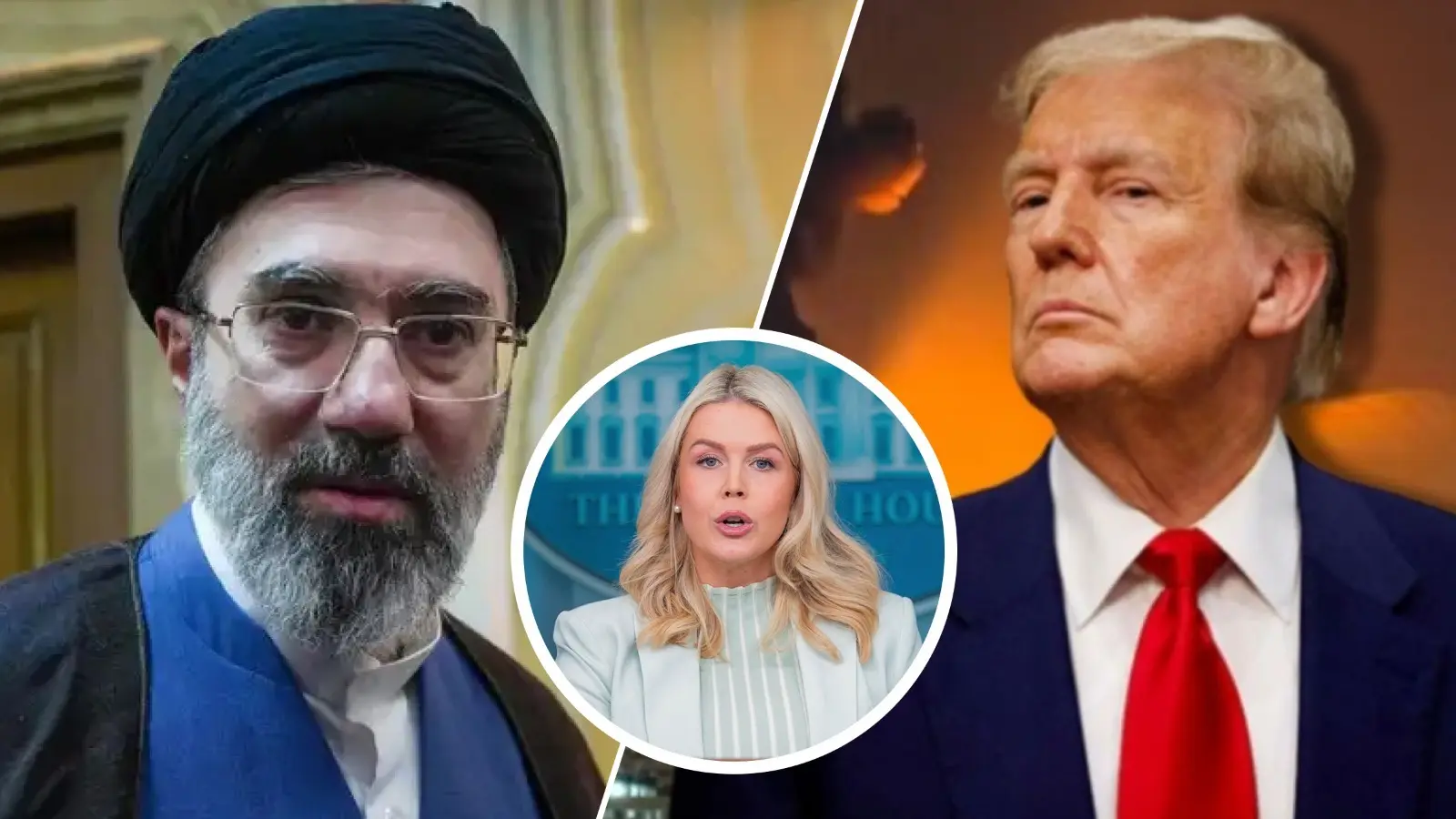
The White House has urged caution in interpreting Iran’s public statements amid ongoing ceasefire negotiations with the United States, highlighting a gap between Tehran’s public rhetoric and private communications.
White House Press Secretary Karoline Leavitt described the Iranian media’s messaging as inconsistent, advising observers to take official statements “at face value” while acknowledging that discussions behind closed doors suggest a different tone.
Her remarks follow the decision by Donald Trump to extend the US-Iran ceasefire beyond its original deadline. The extension currently has no fixed end date, reflecting ongoing diplomatic uncertainty.
White House Signals Strategic Patience
Leavitt stated that the US administration has a clear understanding of Iran’s internal decision-making processes but is waiting for a “unified response” from Tehran.
She noted that public statements from Iran often do not align with what is communicated privately to US negotiators, calling the disparity “public nonsense.” According to the White House, Washington remains in a position of strategic leverage, citing both economic pressure and military posture.
The US has continued its naval blockade in the Strait of Hormuz, a key global energy corridor, which officials believe has significantly weakened Iran’s economic position.
Iran Pushes Back, Cites Ceasefire Violations
Iranian leadership has strongly criticised the US stance, accusing Washington and its allies of violating ceasefire terms. Officials argued that ongoing restrictions and military actions have undermined trust in negotiations.
Iranian representatives stated that reopening the Strait of Hormuz is “not possible” under current conditions, citing continued blockade measures and regional tensions. Tehran has also signalled readiness to resume hostilities if diplomatic efforts fail.
President Masoud Pezeshkian reiterated that Iran remains open to dialogue but emphasised that “breach of commitments, blockade and threats” remain key obstacles to meaningful progress.
Uncertain Path Ahead for Peace Talks
Despite tensions, both sides continue to engage in negotiations. The White House maintains that the timing of any resolution will depend on US strategic interests, with President Trump retaining final authority over next steps.
Officials also indicated that Washington has offered limited flexibility to encourage a consolidated Iranian proposal, though no breakthrough has been announced.
As geopolitical tensions persist, the outcome of these talks will have far-reaching implications for regional stability and global energy markets.