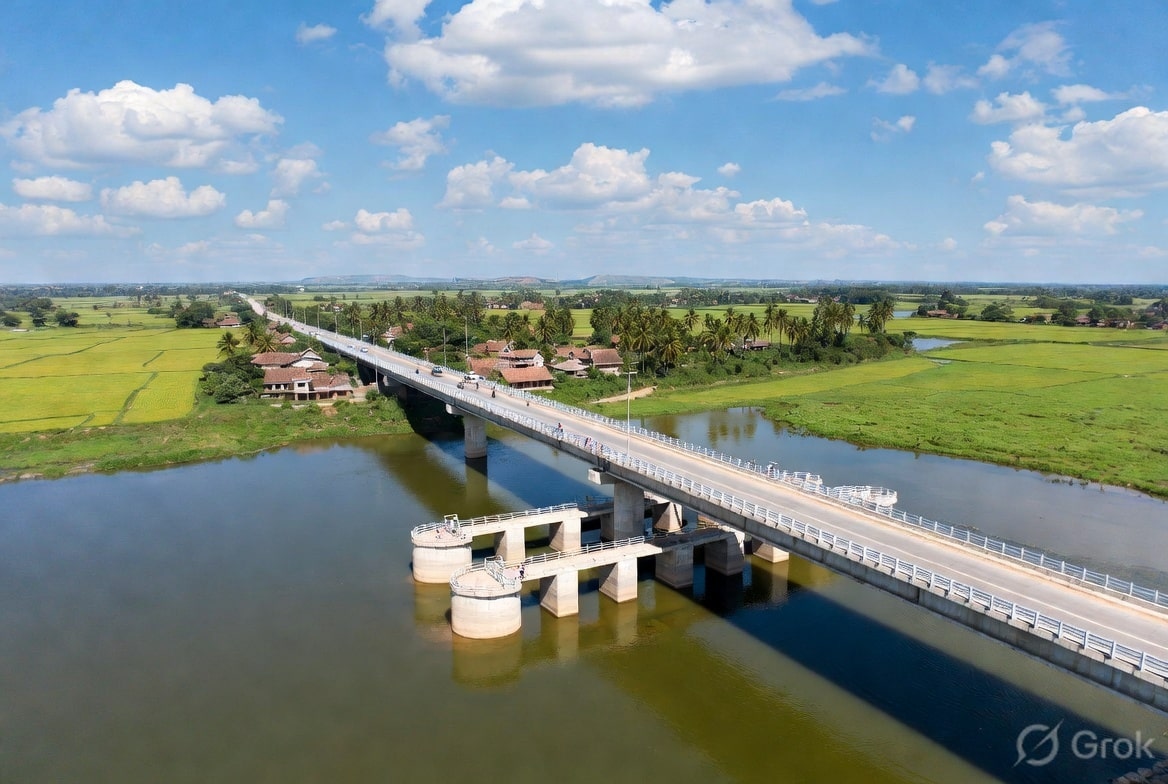
In a landmark push to strengthen rural connectivity and agricultural resilience, the Odisha government has announced a massive ₹12,400 crore investment over the next five years for bridges and water conservation structures across the state’s villages.
The Rural Development Department has issued revised guidelines for two flagship schemes — Setu Bandhan Yojana and Bridge-cum-Weir Yojana — with a clear focus on completing long-pending projects, building wider and stronger bridges, and integrating water storage solutions that will benefit farmers long after the monsoon.
Setu Bandhan Yojana: Bridging the Connectivity Gap
Under the Setu Bandhan Yojana, the government will spend ₹11,800 crore to construct or complete 3,167 bridges. This includes:
- Completing 1,417 incomplete or half-built bridges from previous schemes like Biju Setu.
- Building 1,750 new bridges at a rate of 350 bridges every year.
To handle growing rural traffic, the new guidelines make it mandatory to increase bridge width from the earlier 5.5 metres to up to 11 metres. Budget allocation stands at ₹2,200 crore for 2026-27, followed by ₹2,400 crore annually till 2030-31.
Bridge-cum-Weir Yojana: Roads That Also Store Water
The Bridge-cum-Weir Yojana has been significantly expanded with a fresh outlay of ₹600 crore. This innovative scheme constructs bridges alongside weirs on rivers and streams. The weirs will store rainwater, ensuring year-round water availability for irrigation, livestock, fisheries, and groundwater recharge.
A total of 670 projects (162 ongoing + 508 new) will be taken up. Spending will rise progressively from ₹55 crore this year to ₹150 crore in the final year.
Strong Monitoring for Quality and Transparency
To ensure timely completion and high quality, the Rural Works Dept has been made the nodal agency. A two-tier monitoring system involving departmental engineers and Independent Quality Monitors (ISQM) will conduct regular checks. Third-party agencies will also carry out independent social and economic evaluations.
These initiatives are expected to dramatically improve all-weather road connectivity for villages, ease transportation of agricultural produce, support small irrigation works, and strengthen the rural economy through better water management.