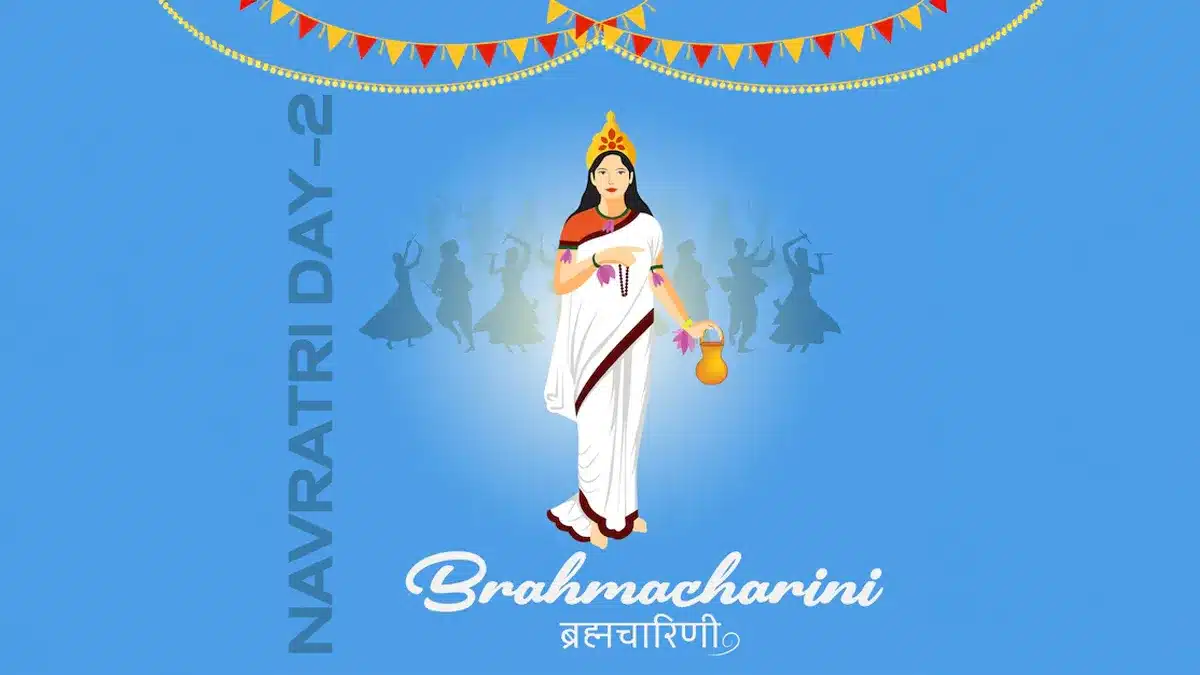
Shardiya Navratri 2026 Day 2 falls on Monday, October 12, and is dedicated to Maa Brahmacharini, the second form of Goddess Durga. Devotees worship her for patience, wisdom, discipline and spiritual growth.
Maa Brahmacharini is associated with tapasya, devotion and perseverance. The second day of Navratri reminds devotees of the importance of determination and faith while facing challenges. White is the commonly associated colour for the day, while sugar or mishri is traditionally offered as bhog.
Who is Maa Brahmacharini?
Maa Brahmacharini is regarded as the ascetic form of Goddess Parvati. According to Hindu tradition, Parvati undertook intense penance as an expression of her devotion to Lord Shiva.
The name Brahmacharini is associated with following a disciplined spiritual path. She is traditionally depicted wearing white garments and carrying a japamala, or rosary, and a kamandalu, or water pot. These symbols are associated with meditation, simplicity, restraint and devotion.
Maa Brahmacharini Puja Vidhi
Devotees can worship Maa Brahmacharini at home according to their family traditions and customary Navratri rituals. The puja does not have to be elaborate, with sincerity and devotion remaining central to the observance.
A simple puja sequence includes:
- Clean the puja space: Take a bath and prepare the prayer area with the goddess’s picture or idol.
- Continue Ghatasthapana worship: If the kalash was established on Day 1, continue its daily worship according to family tradition.
- Light a diya: Light a lamp and incense while following normal household safety precautions.
- Offer flowers and akshat: Present fresh flowers, rice grains, sandalwood paste and other customary items.
- Offer bhog: Place sugar, mishri or another suitable sattvic offering before the goddess.
- Chant the mantra: Recite Maa Brahmacharini’s mantra with concentration and devotion.
- Perform aarti: Conclude the puja with aarti and prayers for wisdom, peace and strength.
- Distribute prasad: Share the offering with family members after the worship.
Fasting practices vary among families and communities. Devotees observing a Navratri fast can follow their customary vrat rules while keeping their health and individual circumstances in mind.
Maa Brahmacharini Mantra
The traditional mantra associated with Maa Brahmacharini is:
ॐ देवी ब्रह्मचारिण्यै नमः॥
English transliteration: Om Devi Brahmacharinyai Namah.
Meaning: I bow to Goddess Brahmacharini, the divine form representing penance, devotion and spiritual discipline.
Devotees may chant the mantra 11, 21 or 108 times according to their personal practice. The number of repetitions is a matter of devotional tradition and is not compulsory for everyone.
Maa Brahmacharini Dhyana Mantra
दधाना करपद्माभ्यामक्षमालाकमण्डलू।
देवी प्रसीदतु मयि ब्रह्मचारिण्यनुत्तमा॥
The traditional verse invokes Maa Brahmacharini, who is depicted holding a rosary and kamandalu, and seeks her grace and blessings.
Maa Brahmacharini Bhog: What to Offer?
Sugar and mishri, or rock sugar, are commonly offered to Maa Brahmacharini on Navratri Day 2.
Some households also prepare panchamrit, fruits and other simple vegetarian offerings according to their traditions. The bhog is offered with prayers for the well-being and happiness of the family and is later distributed as prasad.
Navratri Day 2 Colour 2026: White
White is the commonly followed colour for Navratri Day 2 in 2026. It is associated with peace, purity, simplicity and spiritual clarity.
The colour also reflects the traditional depiction of Maa Brahmacharini in white garments. Wearing white during prayers is a popular customary observance, but it is not a compulsory condition for worshipping the goddess. Navratri colour traditions can also vary across regions and calendars.
Maa Brahmacharini Katha
Maa Brahmacharini represents the period in Goddess Parvati’s life when she undertook intense penance to win Lord Shiva as her husband. Despite the hardships associated with her spiritual practice, Parvati remained steadfast in her devotion.
Her story is remembered during Navratri as a symbol of patience, perseverance, discipline and faith. It encourages devotees to remain committed to meaningful goals instead of abandoning them at the first sign of difficulty.
Navratri 2026: 9 Days, 9 Goddesses and Colours
| Day | Date | Goddess | Colour |
|---|---|---|---|
| Day 1 | October 11 | Maa Shailputri | Orange |
| Day 2 | October 12 | Maa Brahmacharini | White |
| Day 3 | October 13 | Maa Chandraghanta | Red |
| Day 4 | October 14 | Maa Kushmanda | Royal Blue |
| Day 5 | October 15 | Maa Skandamata | Yellow |
| Day 6 | October 16 | Maa Katyayani | Green |
| Day 7 | October 17 | Maa Kalaratri | Grey |
| Day 8 | October 18 | Maa Mahagauri | Purple |
| Day 9 | October 19 | Maa Siddhidatri | Peacock Green |
The traditional colour associated with each Navratri day can vary according to regional practices and calendar traditions.