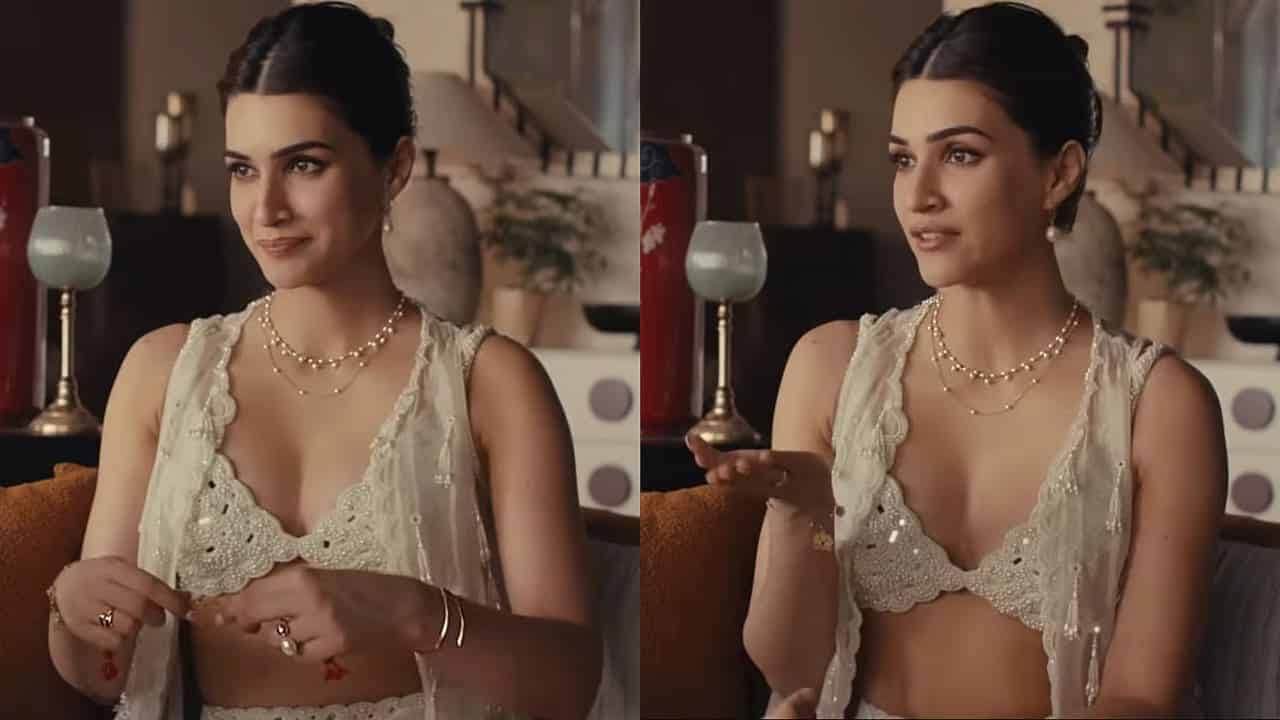
Actor Kriti Sanon has broken her silence regarding the severe online backlash surrounding her recent Raksha Bandhan advertisement, calling out the hypocrisy of self-proclaimed cultural defenders who directed abusive comments at her parents and sister.
‘Choli Became a Prime-Time Debate’: Kriti Addresses Trolling on Kareena Kapoor’s Show
Speaking as a guest on Kareena Kapoor Khan’s chat show What Women Want, Sanon addressed the national debate triggered by her attire in the festive campaign.
”Normally I don’t say anything… I felt it was not about me, it was a much larger issue where I feel women are constantly under scrutiny for everything. It is only women who are targeted for the smallest thing,” Sanon stated.
Highlighting how media coverage amplified the controversy, Sanon noted her disbelief at seeing her outfit become a “six-person panel discussion on prime-time news”.
Targeting Families and Deep-Rooted Patriarchy
Sanon expressed deep disturbance over how the trolling escalated to target her family members. She pointed out that individuals claiming to protect traditional values and culture were ironically posting nasty, abusive comments under her parents’ and sister’s social media posts.
”What is with the hate? I don’t read comments under posts… but I feel that sometimes people get so nasty. Those who talk about culture and respect were ironically the ones who commented on my parents’ and sister’s posts in the nastiest, abusive language. What have they done?” Sanon asked.
Concluding her thoughts on gender inequality, the actor emphasized that public figures remain easy targets and called for shattering embedded patriarchal mindsets.
Background on the Controversy
The backlash stemmed from a festive campaign for a jewelry brand in which Sanon wore a bralette-style top and draped skirt while celebrating Raksha Bandhan, alongside scenes showing her tying a rakhi to her pet dog. Following widespread online trolling, the brand pulled the advertisement down. Sanon previously posted a statement defending her choices, asserting that the essence of festivals lies in emotional bonds rather than clothing choices.