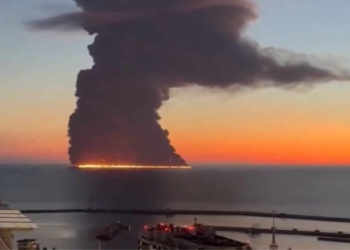
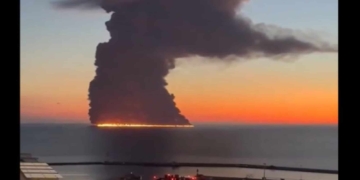
Two people were killed and two others injured after Ukrainian drones struck Russia’s Afipsky oil refinery in Krasnodar, sparking a massive fire that underscored Kyiv’s intensified campaign against Moscow’s energy infrastructure.
The attack also caused debris to fall on a nearby railway station, adding to the civilian toll.
In a separate strike, two workers were injured at the Russian-controlled Zaporizhzhia nuclear power plant, raising fresh concerns about safety at Europe’s largest nuclear facility. Ukraine’s military claimed additional hits on a gas processing plant in Astrakhan, a MiG-29 fighter jet in Rostov, and electronic warfare systems in occupied territories.
Russia’s Ministry of Defence reported destroying 148 Ukrainian drones overnight and claimed retaliatory strikes on a cargo vessel and port infrastructure near Odesa. The Kremlin has increasingly framed Ukraine’s drone campaign as a direct threat to Russia’s economic stability, particularly as fuel shortages deepen.
President Vladimir Putin responded by signing a decree allowing temporary state control of inadequately protected critical infrastructure, signaling Moscow’s intent to tighten its grip on vulnerable assets.
Meanwhile, international reactions were mixed. At a Kyiv meeting, allies pledged continued support. President Volodymyr Zelenskyy urged greater investment in drone and missile production, emphasizing Ukraine’s need to sustain pressure on Russia’s war machine. UK Prime Minister Andy Burnham and Finnish President Alexander Stubb voiced strong backing for Ukraine’s resistance, while French President Emmanuel Macron suggested negotiations should remain on the table. The Kremlin dismissed Burnham and Stubb as part of the “party of war.”
The strikes highlight Ukraine’s evolving strategy: targeting Russia’s energy and military infrastructure to weaken its war effort while rallying international support.
As both sides escalate, the conflict’s impact on global energy markets and regional security continues to grow.