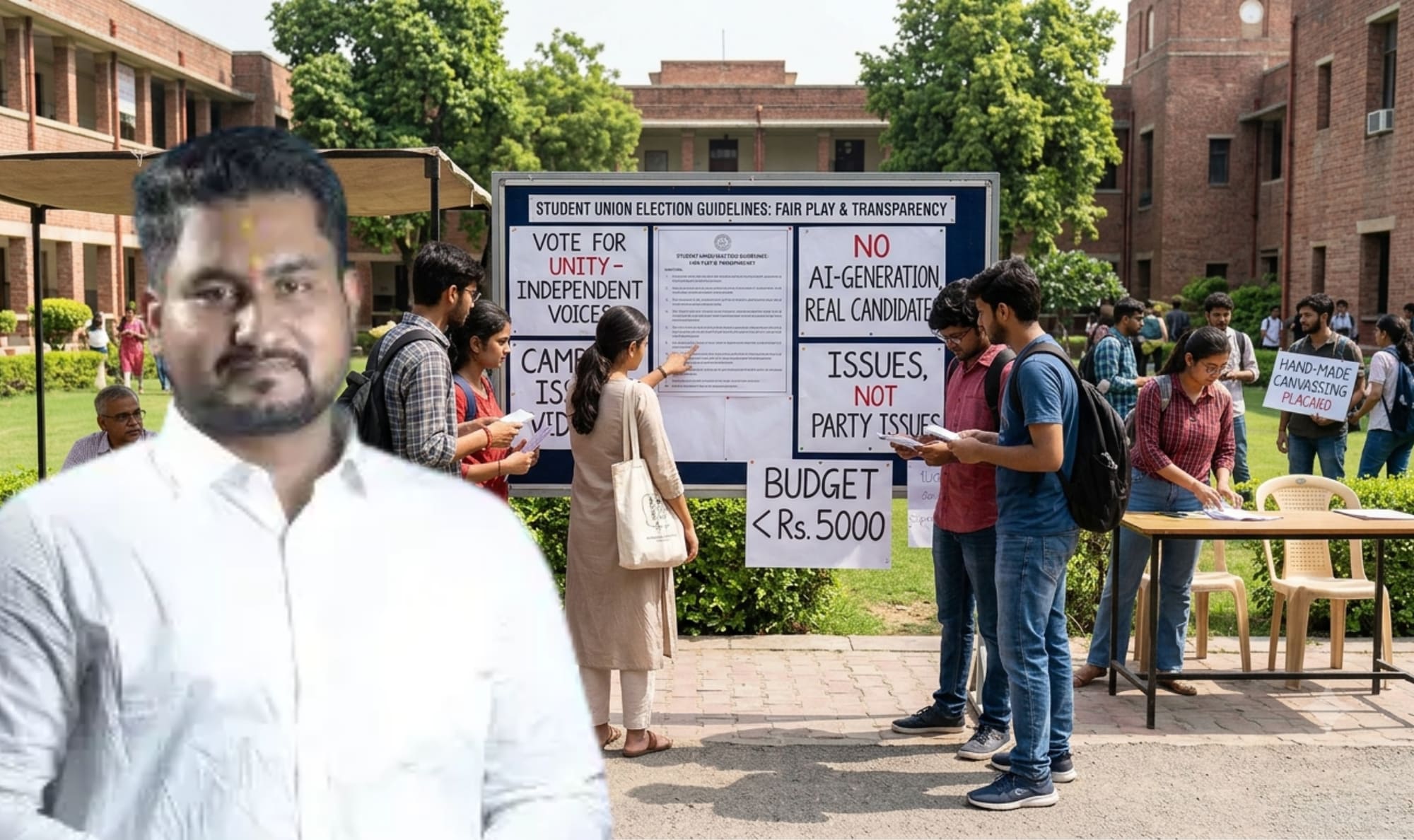
In a major effort to ensure fair play, financial transparency, and political neutrality across higher education institutions, authorities have issued comprehensive guidelines governing student union and association elections.
From complete disassociation with political parties to a total ban on AI-generated fake content and printed posters, the new rules establish a strict operational framework for upcoming campus polls.
Complete Political Disassociation and Eligibility Standard
Under the new directives, student elections and representation must maintain complete disassociation from external political parties. Non-students and individuals enrolled in distance education or Public-Private Partnership (PPP) mode courses are strictly prohibited from participating or contesting in any capacity.
To contest for posts, undergraduate candidates (+3 Degree) must be between 17 and 22 years of age, while postgraduate students can participate up to a maximum age of 25. Candidates are required to hold regular, full-time enrollment via SAMS, maintain a minimum classroom attendance of 75%, and have zero academic arrears in the election year. Furthermore, candidates must have no past or pending criminal record, prior convictions, or disciplinary proceedings initiated by university or college authorities. A student can contest for an office-bearer post only once, and an executive member post up to two times.
Financial Limits and Account Auditability
To prevent excessive spending and external influence, campaign budgets have been capped at a maximum of Rs 5,000 per candidate. Candidates are explicitly barred from using external political party funds and may rely solely on voluntary contributions from the student body. Within two weeks of result declarations, candidate-certified expenditure reports must be submitted to the authorities, who will make them public within two days via the HIMS Portal. Non-compliance or overspending will render a candidate’s election liable to nullification.
Digital Decorum, Environmental Standards, and Code of Conduct
The code of conduct imposes strict decorum across physical and digital platforms. Candidates and supporters are forbidden from engaging in personal attacks, defamation, or circulating false, misleading, manipulated, or AI-generated fake content online.
On campus, printed posters, printed pamphlets, loudspeakers, vehicles, and animals are strictly prohibited during canvassing. Only hand-made posters placed at pre-notified campus locations are permitted. The guidelines also bar canvassing within 100 meters of polling stations, any campaign activities outside campus bounds, defacement of college property, or appeals based on caste and religion. Within 48 hours of polling, candidates must collectively ensure the polling area is cleaned, or face a joint penalty of Rs 1,500 along with potential cancellation of candidature. Serious violations will also attract penalties under the relevant provisions of the Bharatiya Nyaya Sanhita, 2023.
Fast-Track Grievance Redressal Cell
To address election disputes and code violations, institutions will establish a Grievance Redressal Cell headed by the Dean (Student Welfare) or Teacher in charge of student affairs, along with senior faculty, an administrator, and two final-year student members. Operating as a court of original jurisdiction, the cell has the authority to issue summons, inspect financial records, and grant temporary restraining orders.
Complaints must be submitted in writing within 3 weeks of result declarations by non-member students, and the cell is required to act or schedule a public hearing within 24 hours of receipt. Final decision appeals rest with the institutional head.
RELATED STORY:
Odisha to Hold Student Union Elections on October 15 After 8-Year Break