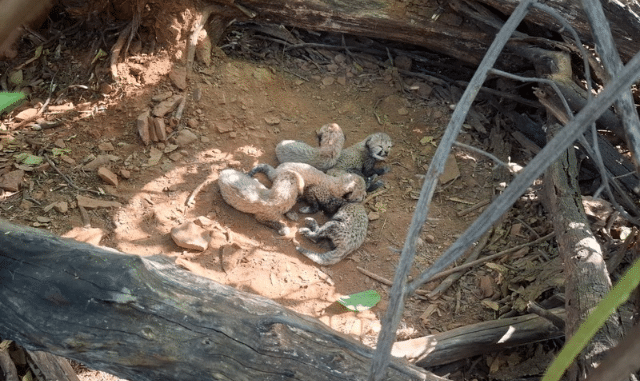
In a major success for India’s wildlife conservation efforts, an Indian-born female cheetah named KJP21 has given birth to five healthy cubs at Kuno National Park.
The new arrivals push India’s total cheetah population to 60, which includes 41 cheetahs born on Indian soil.
Union Minister for Environment, Forest and Climate Change Bhupender Yadav announced the news on X, highlighting the event as a landmark moment for the next generation of India’s cheetah population.
Another historic and joyous milestone for Project Cheetah! 🐆❤️
KJP21, a 32-month-old Indian-born female cheetah, has given birth to five healthy cubs in Kuno National Park today.
KJP21 is the third Indian-born female cheetah to give birth, after Mukhi and KGP12—an important milestone in the emergence of the next generation of India’s cheetah population.
With the arrival of these five cubs, the cheetah population in India has reached 60, including 41 Indian-born cheetahs.
Importantly, these cubs also mark the beginning of the Botswanan lineage in India, as their father is a Botswanan male cheetah—adding a new genetic lineage to India’s growing cheetah population.
Another generation born on Indian soil, adding yet another beautiful chapter to the remarkable story of cheetah reintroduction in India.
Heartfelt congratulations to the veterinarians, field staff, managers and everyone associated with Project Cheetah, whose dedication, commitment and tireless efforts have made these moments possible.
Welcome to the world, little ones 🐆
#WildlifeWeek2026
— Bhupender Yadav (@byadavbjp) October 5, 2026
At 32 months old, KJP21 is the third female cheetah born in India to successfully reproduce, following Mukhi and KGP12. The litter also introduces a fresh genetic lineage to the country’s population, as the cubs’ father is a male cheetah brought from Botswana.
Minister Yadav described the birth as another historic chapter in the story of cheetah reintroduction in India. He commended the dedicated efforts of the veterinarians, field staff, project managers, and frontline teams associated with Project Cheetah, whose continuous monitoring and care made this milestone possible.
With 41 Indian-born cheetahs now thriving alongside adults reintroduced from Africa, Project Cheetah continues to demonstrate positive progress toward establishing a sustainable, self-perpetuating big cat population in India.