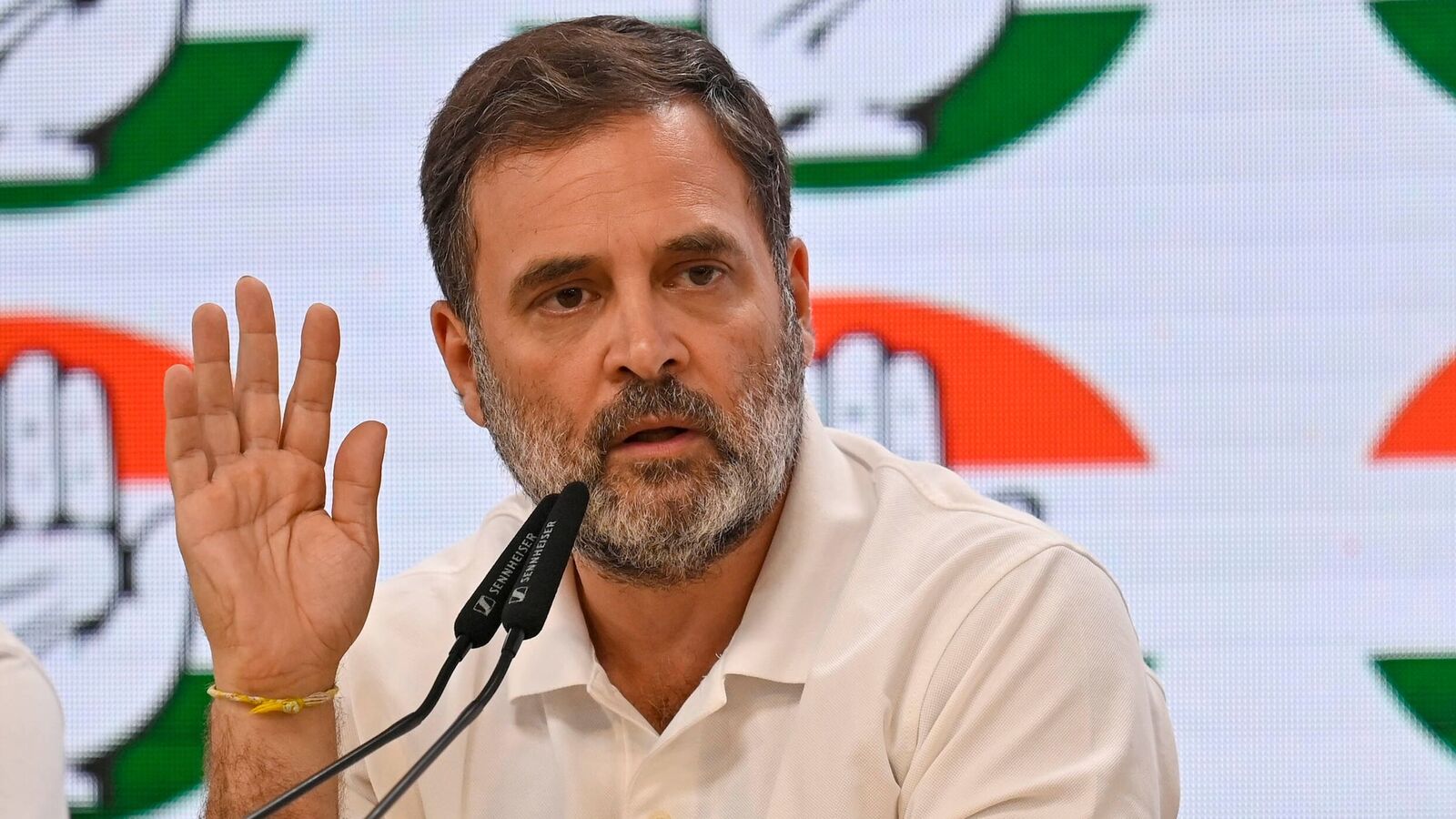
Leader of the Opposition in the Lok Sabha Rahul Gandhi stated that dialogue and cooperation between India and Pakistan remain impossible unless Islamabad halts its support and encouragement of cross-border terrorism, responding directly to a Pakistani national during a student interaction at the University of Chicago.
When asked by the participant whether the two neighbours could “move beyond the blame game and work together for mutual benefit” without allowing external powers to exploit their differences, the Congress MP underscored that terror attacks against Indian citizens stand as the primary barrier to engagement.
On India–Pakistan Dialogue & Cross-Border Terrorism
-
- Ending Terror Support as a Precondition: Addressing the student’s query, Rahul Gandhi stated that while space for cooperation exists in principle, Pakistan’s backing of terrorism in India makes talks untenable while innocent lives continue to be lost.
- Timeline for Potential Engagement: He added that a meaningful conversation between the two countries can only begin the moment Islamabad ends support for militant activity.
“There is room, but there is a big problem, which is the support and encouragement of terrorism by Pakistan in our country. And it is impossible for us to accept our innocent people being murdered and having a conversation with Pakistan. So the moment that stops, then a conversation can potentially begin.”
— Rahul Gandhi, Leader of the Opposition in Lok Sabha (at the University of Chicago)
Critique of Centre’s Foreign Policy & Multipolar Global Order
During the session—and in follow-up remarks posted on X on Thursday, November 19—Gandhi criticised the Narendra Modi government’s handling of foreign affairs, arguing that India had stepped back into a “side player” role despite its size, history, and legacy of leading the Non-Aligned Movement (NAM). He expressed surprise that Pakistan was actively mediating in talks between the United States and Iran while India remained on the sidelines.
Questioning a diplomacy model centred on personal rapport between leaders, Gandhi remarked that international actors make decisions based on national interests and economic structures rather than personal friendships, while adding that the emerging global security architecture will be multipolar—shaped collectively by India, the United States, China, Russia, and the Middle East.