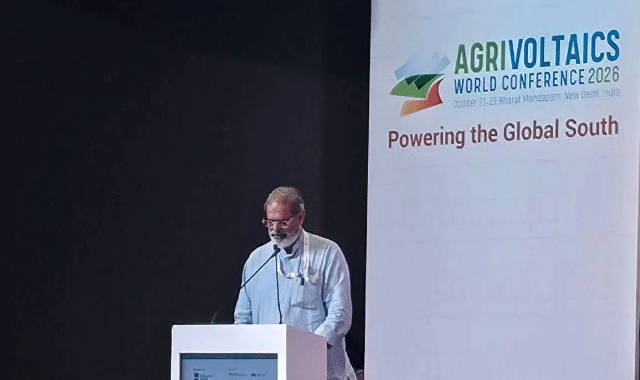
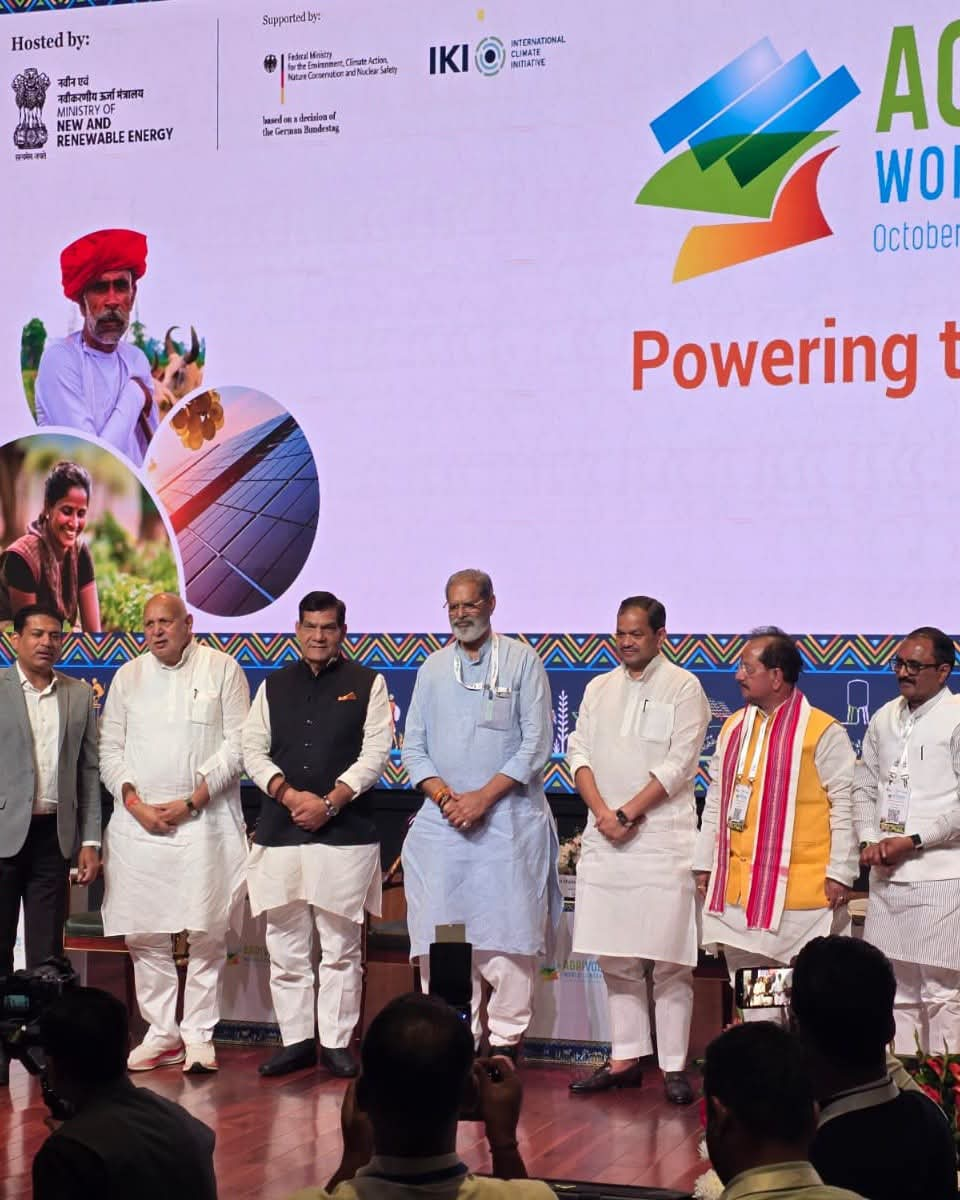
Marking a historic milestone for India’s clean energy and agriculture sectors, Odisha has officially announced the finalization of its landmark Agri-PV Policy 2026. Unveiled at the 7th Agrivoltaics World Conference at Bharat Mandapam, New Delhi, the policy positions Odisha as the first state in India to introduce a dedicated framework for agrivoltaics.
Addressing international delegates, policymakers, and investors during the Ministerial Session, keynoted alongside the Ministry of New and Renewable Energy, IISD, and CEEW, Odisha’s Deputy Chief Minister Kanak Vardhan Singh Deo outlined the state’s visionary guiding principle: “One Field, Two Harvests.” The mandate ensures that the farmer comes first and the solar panel second.
“We want to make our farmers empowered with Annadata se Urjadata tak [from food giver to energy giver],” emphasized the Deputy CM, highlighting how elevated solar arrays shield smallholders against rising temperatures and erratic rainfall by creating cooler microclimates, conserving soil moisture, and protecting crops.
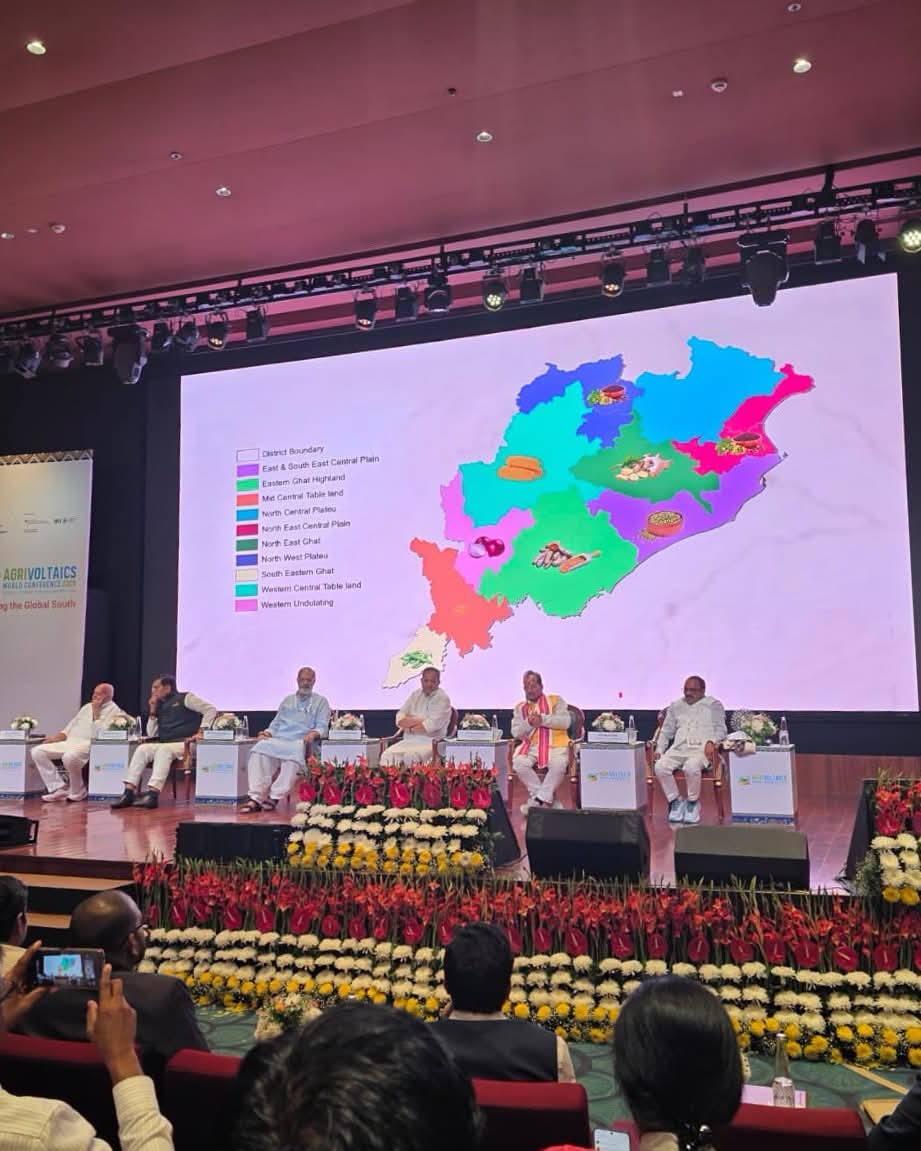
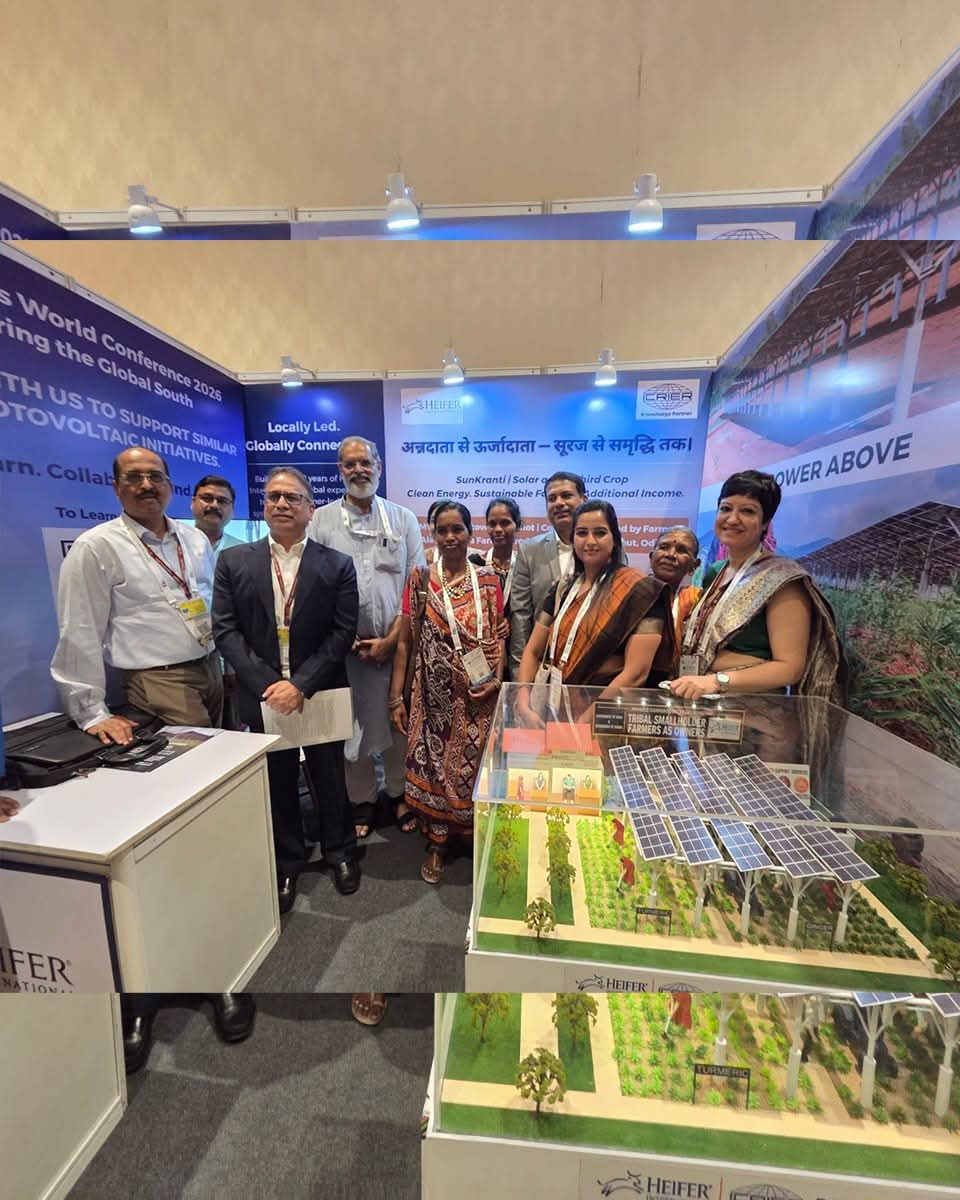
The proposed policy sets an ambitious goal to deploy 1 GW of agrivoltaic capacity across Odisha by 2030. To safeguard agricultural interests, strict legislative measures require at least 90 percent of every project site to remain under active cultivation, preserving the land’s original agricultural classification and crop insurance eligibility.
Farmers can choose to own systems directly to generate dual income streams from crop sales and electricity, or partner with solar developers under assured long-term lease rents. To attract institutional investment, Odisha offers 25-year Power Purchase Agreements (PPAs) with GRIDCO, guaranteed offtake, grid connectivity, and open-access rights.
Ground-level execution is already underway with an operational 1 MW Agri-PV project and a strategic pilot collaboration with Nanyang Technological University, Singapore. With 40.7 lakh acres of suitable cropland and 47.7 lakh acres of fallow land, Odisha invites global researchers, private investors, and sister states to join hands in building a farmer-centered national agrivoltaics movement.