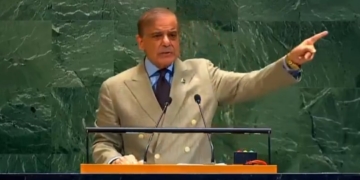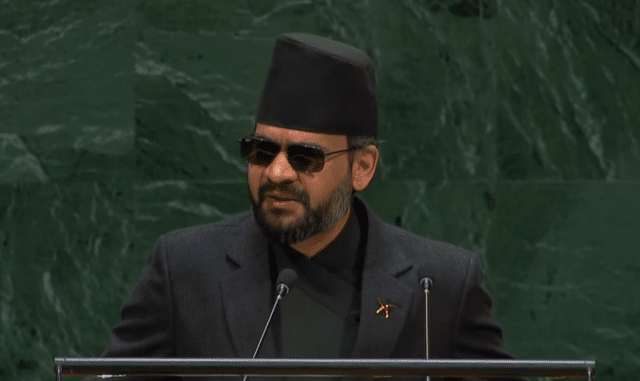
Nepal’s Prime Minister Balen Shah, a rapper-turned-politician, made his debut at the United Nations General Assembly with a fiery critique of the global system.
At just 36, Shah is the youngest head of government to address this year’s UNGA, and he used the platform to spotlight the struggles of South Asia against climate disasters and systemic inequities.
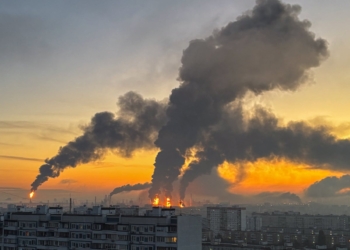
Shah declared that the world has “flawless logistics for war but broken logistics for food,” underscoring the imbalance in global priorities. His remarks came as Nepal continues to recover from the devastating Bhotekoshi floods in August, which killed over 1,400 people and left more than 6,000 missing.
He urged India, China, and Nepal to establish a Himalayan climate resilience system, warning that the region’s fragile ecosystems and vulnerable populations cannot withstand repeated shocks. Shah emphasized that countries like Nepal, Bangladesh, and India are bearing the brunt of climate change and conflicts they did not cause, yet remain sidelined in global decision-making.
The Prime Minister’s speech resonated as both a warning and a call to action. By framing Nepal’s tragedy within the larger failures of international systems, Shah positioned his country as a voice for the marginalized. His debut at the UNGA was not just symbolic—it was a demand for fairness, resilience, and recognition of the disproportionate burdens carried by smaller nations.
As Nepal rebuilds from the floods, Shah’s words highlight a pressing reality: without collective action, the Himalayas—and the millions who depend on them—face an uncertain future.