Odisha is set to rollout a comprehensive, multi-layered Lightning Safety Strategy designed to drastically reduce fatalities and property damage across the state.
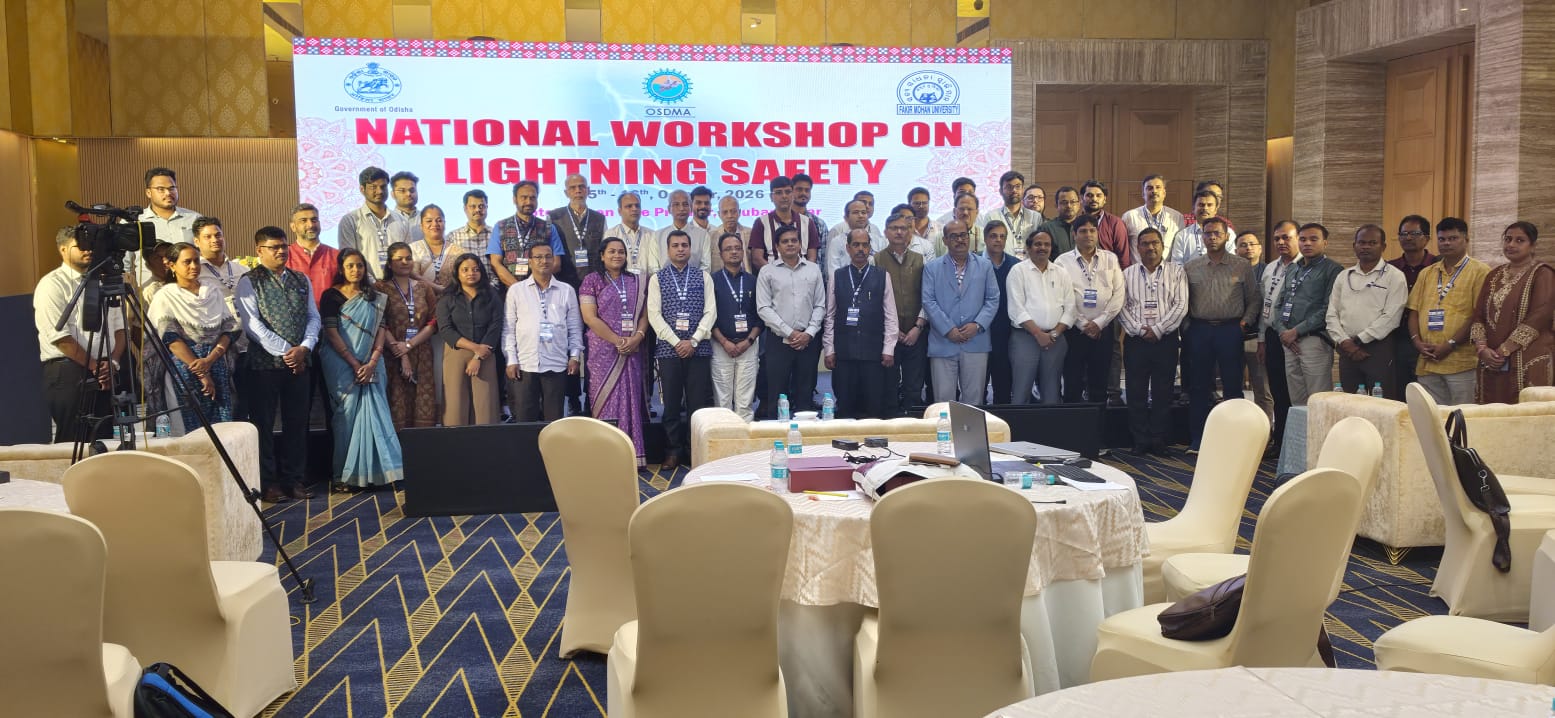
The roadmap emerged at the conclusion of the two-day National Lightning Safety Workshop organized by the Odisha State Disaster Management Authority (OSDMA) at Hotel Lemon Tree Premier in Bhubaneswar.
Bringing together top scientists, academics, public health experts, and disaster management officials, the national workshop focused on building an integrated lightning safety ecosystem for Odisha. Key discussions revolved around strengthening early warning systems, constructing safe shelters, and expediting emergency medical services tailored to high-risk groups like farmers, agricultural laborers, outdoor workers, students, and rural residents.
Panchayat-Level Sirens and Tech Interventions
Delivering the keynote address at the valedictory session, Rajesh Prabhakar Patil, Managing Director of OSDMA, emphasized moving beyond mere demonstrative pilots toward full-scale statewide execution.
“Implementing automated siren systems at the Panchayat level alongside accessible, early alerts will play a game-changing role in saving precious human lives during lightning storms,” stated Patil.
Technical sessions at the workshop highlighted international safety standards, cost-effective lightning-safe shelter construction, and next-generation warning technology:
- Dr. Sailendra Kumar Mandal (Associate Professor, NIT Patna) presented on integrating low-cost sensors with agricultural lightning shelters to protect farmhands.
- Dr. Biswas Chitale (CEEW, Pune) shared a data-driven lightning vulnerability study focused on Mayurbhanj district as a model for state-wide replication.
- Dr. M.C. Sahu (AIIMS Bhubaneswar) and Dr. A.B. Jena (FM Medical College, Balasore) detailed vital first-aid and critical trauma-response protocols to save lightning strike victims during the crucial golden hour.
Unified SOP and 2027 Action Plan
To ensure timely alerts reach rural populations, experts advocated leveraging SMS, mobile applications, IVRS, localized sirens, public announcements, and community-based warning networks in simplified regional language.
The workshop identified 10 priority areas, presented by Prof. Manoranjan Mishra of Fakir Mohan University, to shape Odisha’s forthcoming Lightning Safety Standard Operating Procedure (SOP). The draft SOP assigns explicit inter-departmental roles to OSDMA, District Administrations, IMD, the Health Department, educational institutions, and Panchayati Raj Institutions (PRIs) to guarantee seamless emergency coordination.
This strategic blueprint sets a clear target: a robust 2027 Action Plan and an actionable implementation framework spanning 2027–2030 to drastically lower lightning-related risks across Odisha.
The event concluded with a vote of thanks delivered by Dr. Kamal Lochan Mishra, Advisor to OSDMA.