To create a safe, inclusive, and fear-free urban environment for women and girls, the Sambalpur district administration is rolling out a comprehensive safety blueprint under the Nirbhaya Framework.
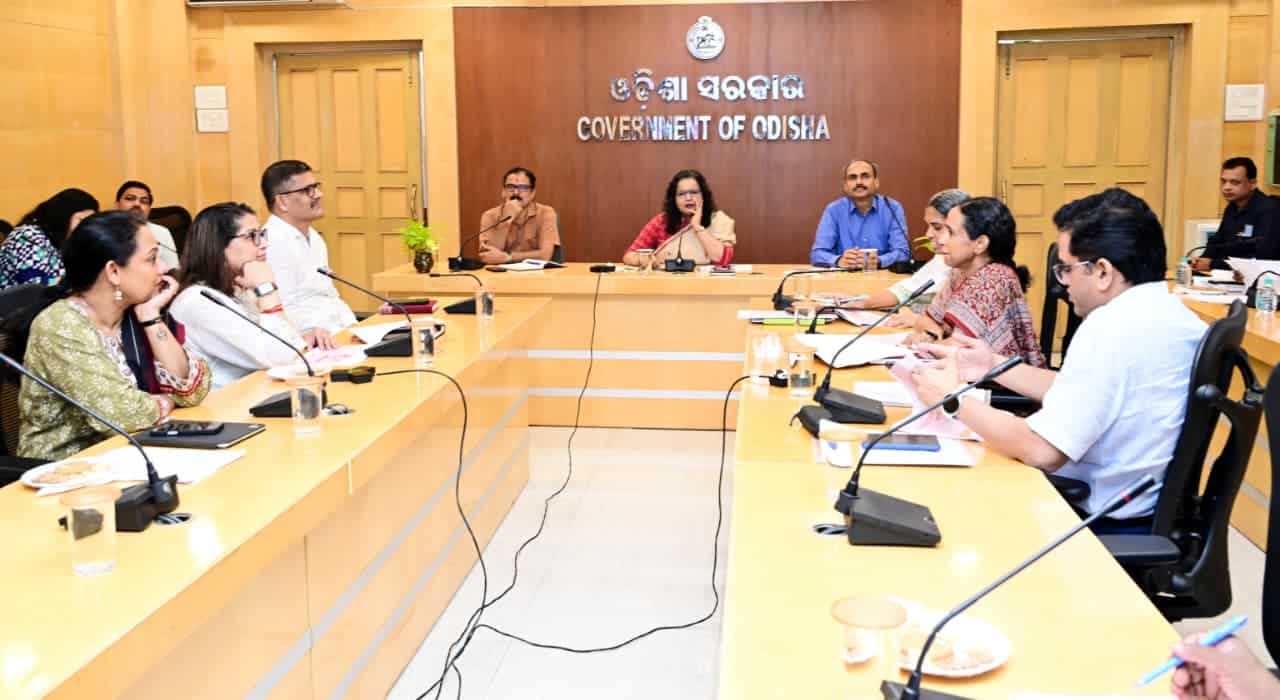
The initiatives were thoroughly reviewed on Tuesday during a high-level meeting at Lok Seva Bhawan, chaired by Chief Secretary Anu Garg.
The meeting witnessed participation from key state dignitaries, including Additional Chief Secretary of the Home Department Hemant Sharma, Director General of Police Binay Tosh Mishra, and Sambalpur Collector Siddheshwar Baliram Bondar, who joined via video conference to present the strategic roadmap.
Backed by an estimated budget of INR 10 crore, the ambitious plan introduces nine core initiatives aimed at strengthening emergency response, leveraging smart technology for surveillance, ensuring secure public transportation, and boosting community awareness.
Key Highlights of the 9 Proposed Interventions:
-
Surveillance & Tech (
Drishti&Pratikriya): Around 800 CCTV cameras will be installed across 210 strategic locations to tighten monitoring. Additionally, 15 emergency response vehicles equipped with drone technology will ensure rapid rescue and assistance. -
Patrolling & Quick Aid (
Shakti Sarathi&S-Stop): Fifteen two-wheelers manned by women police personnel will conduct active patrolling, supported by 5 dedicated police assistance booths. -
Safe Mobility (
Sahajatra&Yatra): To ensure secure and affordable transit, 40 pink e-rickshaws will hit the streets. Furthermore, real-time tracking systems will be installed in 50 educational institution buses. -
Public Facilities & Support (
Nirbhaya Sadan&Sathi): Four support centres are proposed at vital city hubs—including the district court premises, railway station, Burla medical area, and the District Headquarters Hospital. Six dedicated restrooms with nursing facilities will also be established. -
Community Awareness (
Sachetana): Beyond infrastructure, the drive places heavy emphasis on self-defence training, health education, and gender sensitisation workshops—specifically engaging adolescent boys to foster a culture of respect and social responsibility.
To ensure seamless execution, top officials from the Health and Family Welfare, School and Mass Education, and Women and Child Development departments collaborated during the review to coordinate multi-agency implementation. With these robust measures in place, Sambalpur is poised to set a benchmark for women’s safety and empowerment across Odisha.