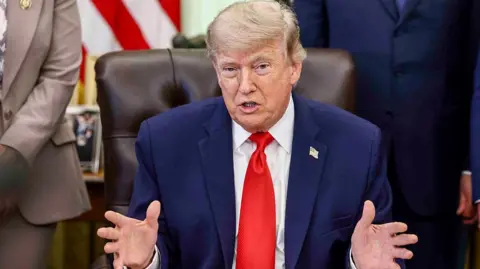
In a significant diplomatic breakthrough, the United States and Iran have formally signed a peace agreement aimed at ending months of conflict in West Asia. US President Donald Trump confirmed the development, stating that the deal has already taken immediate effect.
The agreement is expected to reshape regional geopolitics, ease tensions in global energy markets and pave the way for future negotiations on Iran’s nuclear programme.
Trump Confirms Signing of Agreement
Speaking after meetings in Versailles, President Donald Trump announced that the agreement had been signed and was now in force.
According to officials, the signing took place following discussions involving international leaders and diplomatic representatives. The agreement had also been electronically endorsed earlier by senior representatives from both countries before receiving final approval from the respective presidents.
Iranian authorities likewise confirmed the signing of the memorandum of understanding, describing it as a framework for peace and future cooperation.
Focus Shifts to Implementation
Iranian officials said the text of the agreement has been finalised and attention must now shift toward implementation.
The statement signals that both countries will be judged not merely on diplomatic commitments but on their ability to carry out the provisions outlined in the accord.
Observers say implementation will be critical to determining whether the agreement can deliver lasting stability after months of military confrontation and heightened regional tensions.
Strait of Hormuz Set to Reopen
One of the most important provisions of the agreement involves the reopening of the Strait of Hormuz, one of the world’s most strategic maritime trade routes.
The waterway is a crucial channel for global oil shipments, and disruptions in recent months contributed to volatility in energy markets.
The reopening is expected to restore confidence among shipping companies, improve trade flows and help stabilise global oil prices.
Industry experts will closely monitor how quickly commercial traffic returns to normal levels.
Oil Sanctions Relief for Iran
The agreement includes immediate waivers on certain oil-related sanctions that have heavily impacted Iran’s economy.
The sanctions relief is expected to provide Tehran with greater access to international energy markets and improve export opportunities.
Economic analysts believe the move could increase global oil supply while providing Iran with much-needed economic breathing room.
Future Talks on Nuclear Programme
While the agreement addresses immediate security and economic concerns, it also establishes a pathway for future negotiations regarding Iran’s nuclear programme.
Both sides have agreed to continue discussions aimed at reaching a broader and more comprehensive settlement.
Diplomats view these upcoming talks as one of the most challenging aspects of the peace process, given the long history of disagreements over nuclear activities and international monitoring.
Reconstruction and Economic Development Plans
The agreement also outlines support for a large-scale reconstruction and development initiative intended to assist economic recovery in the region.
According to officials, additional financial mechanisms may be introduced once further agreements are reached on nuclear and security matters.
The development programme is expected to involve regional partners and international stakeholders rather than direct funding from the United States government.
Global Markets Watching Closely
Financial markets and energy traders are closely monitoring the implementation of the agreement.
A sustained reduction in tensions could lead to improved investor confidence, greater energy market stability and stronger regional economic cooperation.
However, analysts caution that the success of the agreement will depend on compliance by all parties and the ability to address unresolved issues through continued diplomacy.
A Potential Turning Point for West Asia
The signing of the US-Iran peace agreement represents one of the most significant diplomatic developments in the region in recent years.
If successfully implemented, the accord could reduce the risk of future conflict, improve economic conditions and create momentum for broader regional stability.
For now, attention remains focused on whether both sides can translate diplomatic promises into lasting peace and meaningful cooperation.