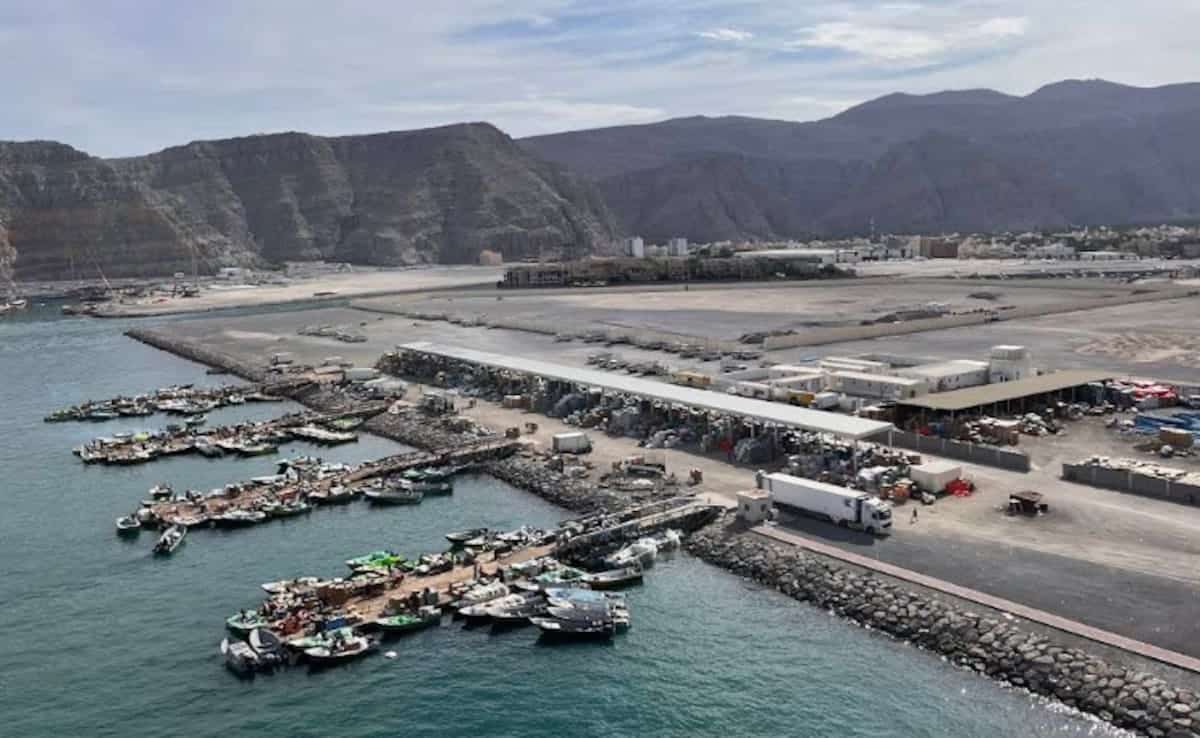
In a major escalation of the ongoing conflict, the United States launched precision airstrikes on Iranian missile installations near the strategic Strait of Hormuz, deploying powerful 5,000-pound “bunker buster” munitions.
According to a statement from the US Central Command, the strikes targeted hardened missile sites along Iran’s coastline, which were assessed as a threat to international shipping routes in the region.
Strategic Waterway Under Threat
The Strait of Hormuz is one of the world’s most critical oil transit chokepoints, with nearly one-fifth of global oil supply passing through it.
The latest strikes come amid heightened tensions after Iran reportedly moved to restrict access to the waterway, raising global concerns over energy security and maritime safety.
What Are ‘Bunker Buster’ Bombs?
The weapons used in the operation—described as “deep penetrator munitions”—are designed to destroy fortified underground targets.
-
Each bomb weighs approximately 5,000 pounds
-
Built to penetrate hardened structures before detonation
-
Estimated cost: around $288,000 per unit
These bombs are less powerful than the 30,000-pound variants previously used in strikes on nuclear facilities but remain highly effective against reinforced missile bases.
Iran Responds with Warning
Senior Iranian leader Mohammad Baqer Qalibaf warned that the situation in the Strait of Hormuz will not return to its pre-conflict state, signaling a prolonged period of instability.
Projectile Reported Near Nuclear Facility
In a separate development, a projectile reportedly struck near the Bushehr Nuclear Power Plant.
The International Atomic Energy Agency confirmed that:
-
No damage was caused to the facility
-
No injuries were reported
IAEA chief Rafael Grossi reiterated calls for restraint to avoid the risk of a nuclear incident.
Rising Casualties and Regional Spillover
The conflict has intensified following the reported killing of senior Iranian figure Ali Larijani in earlier strikes.
In retaliation, Iran launched multiple missile and drone attacks targeting Israel and parts of the Gulf region, including Saudi Arabia and Kuwait.
-
At least two fatalities were reported in Ramat Gan, near Tel Aviv
-
Several incoming threats were intercepted by air defence systems
A Region on Edge
With both sides escalating military actions, the situation in the Middle East remains volatile. The targeting of critical infrastructure and strategic routes has raised fears of wider regional instability and disruptions to global oil markets.