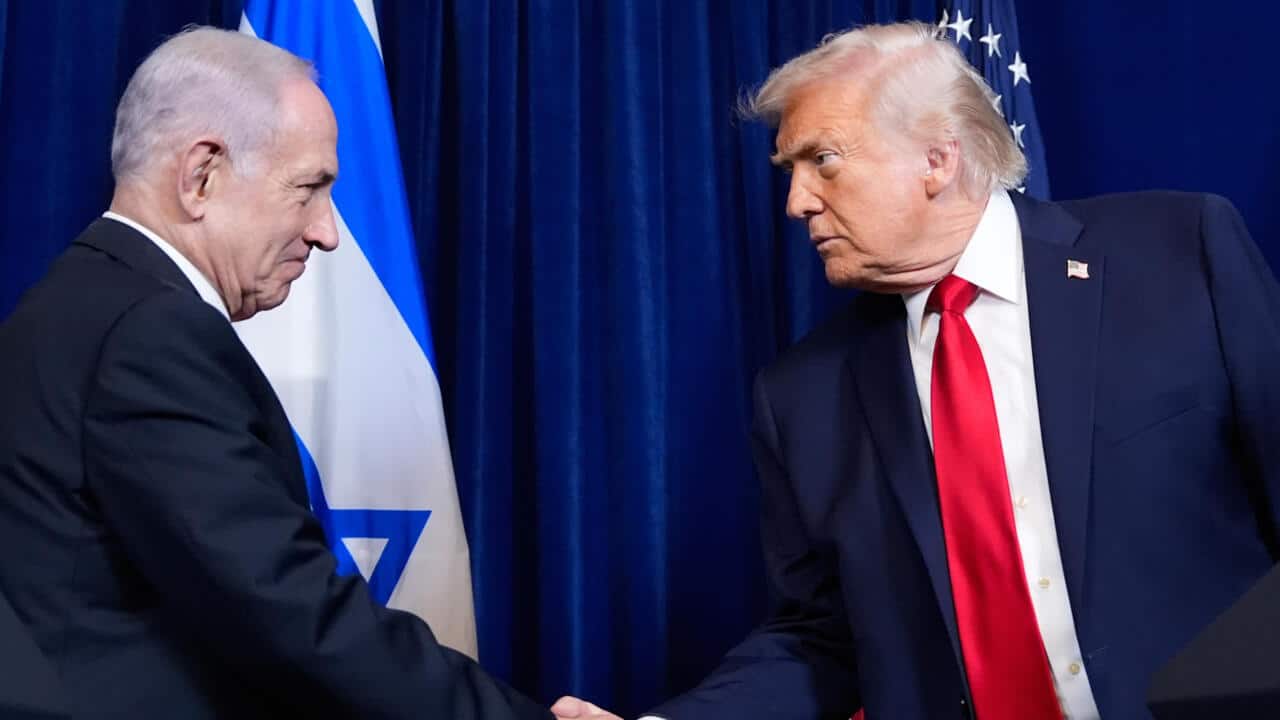
US President Donald Trump reportedly issued a direct warning to Israeli Prime Minister Benjamin Netanyahu, urging him to halt planned military strikes against Iran amid fears of a wider regional conflict in West Asia.
According to a report by Axios, Trump personally called Netanyahu after learning that Israel was preparing a large-scale military operation targeting dozens of sensitive locations inside Iran. The intervention came at a critical moment as tensions between Tehran and Tel Aviv threatened to spiral into a broader confrontation.
Trump’s Strong Message to Netanyahu
Citing Israeli officials, the report stated that Trump cautioned Netanyahu against further escalation and warned that continued military action could leave Israel increasingly isolated.
“I said, ‘Bibi, you better be careful, or you will be on your own very soon,’” Trump reportedly told Netanyahu during the conversation.
The warning reflects growing concern within Washington that renewed hostilities could undermine diplomatic efforts and further destabilise an already volatile region.
Planned Strikes Reportedly Cancelled
According to sources familiar with the discussion, Israel had been preparing what would have been its largest wave of attacks on Iran since April.
The report indicated that the conversation between the two leaders included sharp disagreements. However, Netanyahu ultimately agreed to suspend the planned operation on the condition that Iran refrained from launching further attacks.
Following the call, Israeli military commanders were reportedly instructed to cancel the planned strikes.
Temporary Pause in Hostilities
The diplomatic intervention came after Iran and Israel exchanged attacks over the weekend in one of the most dangerous escalations since a temporary ceasefire was established earlier this year.
Iran launched missile attacks against Israel following renewed Israeli military operations in Lebanon, where hostilities involving Hezbollah have continued despite international calls for restraint.
Israel responded with retaliatory strikes, prompting another round of Iranian missile launches before Tehran announced it would suspend military action.
By Monday, both countries signalled a temporary halt in direct hostilities.
Israeli Prime Minister Netanyahu stated that “the fire on that front is contained,” while Iranian officials warned that any renewed attacks would trigger a fresh response.
Iran Links Ceasefire to Lebanon Conflict
Iran has repeatedly tied regional stability to developments in Lebanon, arguing that continued Israeli military operations against Hezbollah threaten broader peace efforts.
Tehran warned that further attacks in Lebanon could force Iran to re-enter direct military confrontation with Israel.
Meanwhile, Israel has maintained that it will continue responding to threats from Hezbollah and other Iran-backed groups operating along its borders.
Israeli Defence Minister Israel Katz reiterated that military operations against Hezbollah would continue and vowed retaliation for any future attacks targeting northern Israel.
Strategic Differences Between Washington and Tel Aviv
The latest developments have also highlighted increasingly visible differences between the United States and Israel regarding the future direction of the conflict.
According to officials quoted in the Axios report, Washington is prioritising de-escalation and diplomacy, while elements within the Israeli leadership continue to favour sustained military pressure.
One US official described the growing divergence in stark political terms.
“Netanyahu needs the war to continue to remain politically relevant in Israel, while Trump needs the war to end to remain politically relevant in the United States,” the official was quoted as saying.
Global Concerns Over Regional Stability
The renewed exchange of attacks has raised concerns among world leaders about the potential for a broader regional war involving multiple countries and armed groups.
The conflict has already affected global energy markets, disrupted diplomatic initiatives and heightened security concerns across West Asia.
International observers warn that while the current pause in fighting may provide temporary relief, underlying tensions remain unresolved.
For now, Trump’s intervention appears to have prevented an immediate escalation. However, analysts believe the fragile situation could change rapidly if hostilities resume in Lebanon or if either side perceives a new threat.
As diplomatic efforts continue, the future of the West Asia conflict remains uncertain, with both military and political calculations shaping decisions in Washington, Tel Aviv and Tehran.