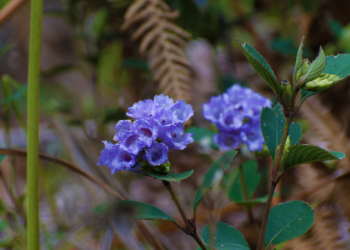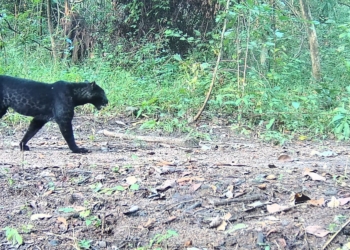
A remarkable biodiversity observation made during the Wiki Commons of the Wild 2026 – India’s Wildlife Expedition has attracted the attention of researchers, highlighting once again the hidden natural treasures of India’s Western Ghats.
As part of the expedition, conservation storyteller and wildlife documentarian K. Shiva Kumar undertook the ambitious mission of documenting more than 1,000 species from diverse ecosystems across India for Wikimedia Commons, creating open-access resources for researchers, students, conservationists, and nature enthusiasts worldwide.

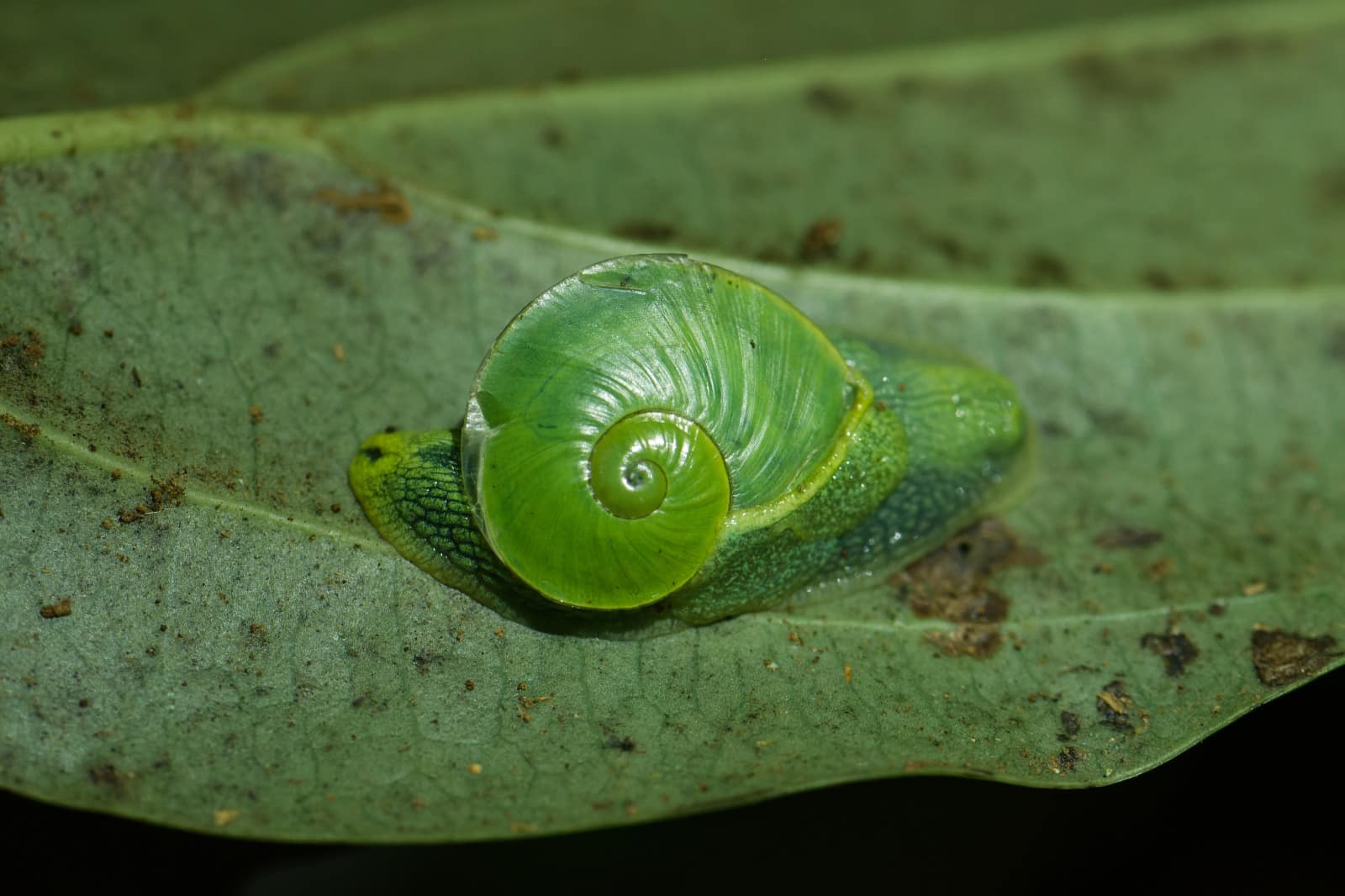
While exploring the forest floor inside one of Kerala’s protected landscapes, Kumar documented an unusual emerald-green terrestrial snail. Initially appearing to be an overlooked forest invertebrate, the specimen was photographed and later shared with senior scientists and taxonomic experts for verification.
The species was identified as Tanychlamys peringundensis, a member of the Order Stylommatophora (Common Land Snails and Slugs). The identification has generated scientific interest, with experts continuing to examine its distribution and biogeographical significance. The observation has opened new discussions regarding the evolutionary history and distribution of land snails in the Indian subcontinent.

Unlike migratory birds capable of travelling thousands of kilometres, terrestrial snails disperse only over very short distances. Their limited mobility makes them important indicators in understanding ancient geological connections, climatic history, and long-term ecosystem evolution. Such discoveries reinforce the importance of documenting even the smallest organisms, as they often provide valuable insights into biodiversity and evolutionary science.
The finding also highlights the extraordinary ecological richness of Kerala, widely recognised as God’s Own Country. Beyond its scenic beauty, the state harbours globally significant biodiversity within its evergreen forests, shola ecosystems, medicinal plant diversity, endemic wildlife, and countless lesser-known invertebrate species.
Throughout the expedition, Kumar documented a wide range of birds, mammals, reptiles, butterflies, insects, and other wildlife, contributing valuable records to Wikimedia Commons. These openly accessible photographs are expected to support scientific research, biodiversity education, conservation planning, and future ecological studies.

Speaking about the expedition, Kumar emphasised that nature often rewards patience, adding that every observation, no matter how small, has the potential to contribute to scientific knowledge and conservation.
Kumar expressed his sincere gratitude to the Wikimedia Foundation, Wildlife Trust of India (WTI), collaborating scientists, conservationists, local communities, and all supporters whose encouragement made the expedition possible.
About Tanychlamys peringundensis


Contributed by K. Shiva Kumar: Master’s in Journalism and Mass Communication | Conservation Storyteller | Wildlife Photographer