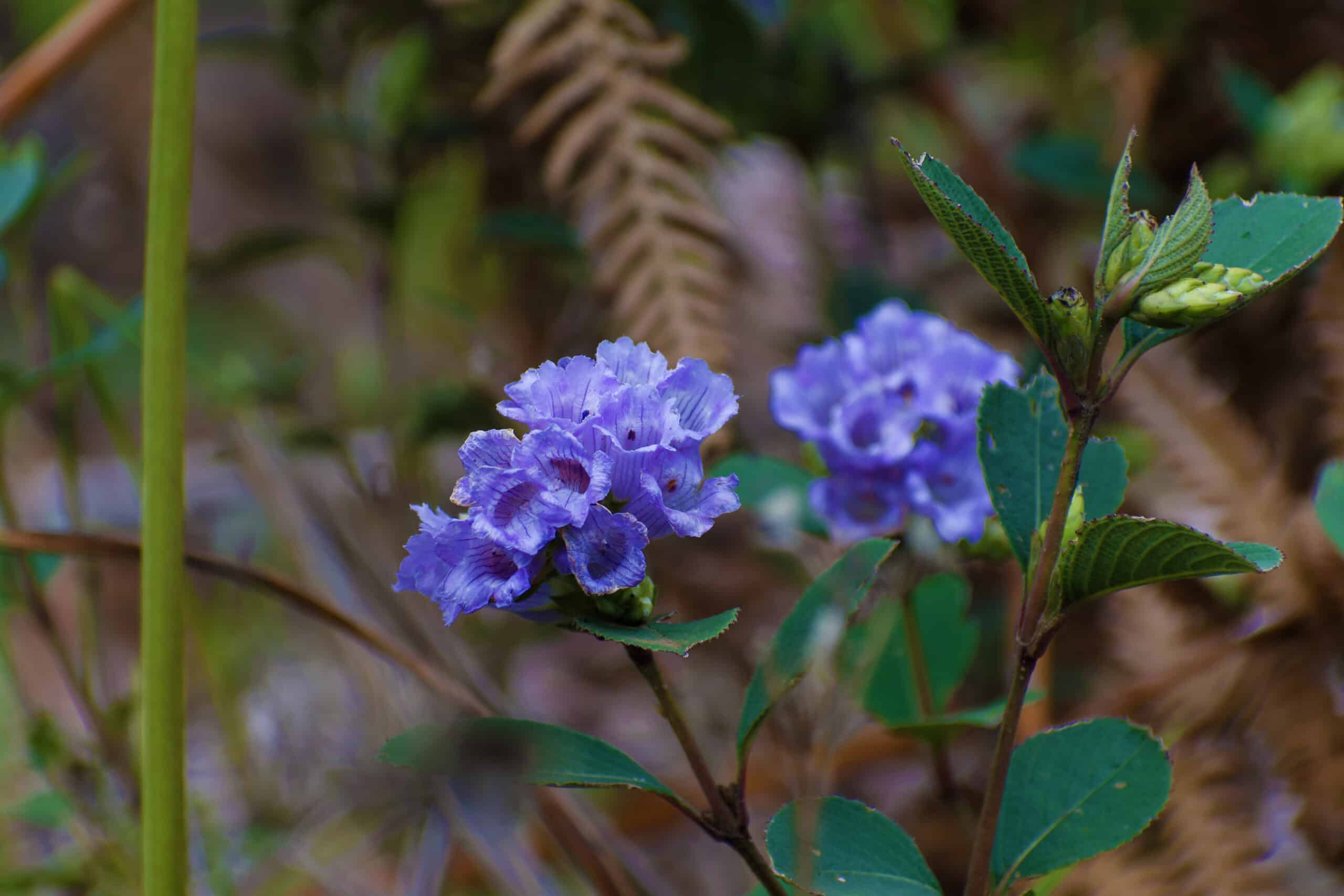
High in the rolling highlands of Kerala, a quiet transformation has taken place. The mountain slopes, typically clad in deep greens, have dissolved into a sea of blue, violet, and purple hues.
This extraordinary transformation marks the blooming of Strobilanthes kunthiana, locally known as Neelakurinji—a plant celebrated for its rare 12-year flowering cycle.
For wildlife photographer and conservation storyteller Shiva Kumar, witnessing this fleeting phenomenon was more than just a visual treat; it marked the official launch of the second phase of his flagship project, Wiki Commons of the Wild.
Joining Kumar in documenting this rare natural event was Atul Nivrutti Karpe, a dedicated Wikimedian from Pune, Maharashtra. Together, the duo captured high-resolution media and detailed field notes to ensure that one of nature’s most elusive spectacles becomes freely available to the global public through Wikimedia Commons.
The Mystery of the 12-Year Cycle
Unlike the annual or seasonal blooms familiar to most nature enthusiasts, Neelakurinji operates on an extraordinary ecological clock. Under natural conditions in the Western Ghats, Strobilanthes kunthiana flowers once every 12 years in an event known as “gregarious” or mass flowering.
During a mass bloom, thousands of individual plants mature simultaneously, completely altering the landscape. This surge of flowers creates a vital seasonal pulse in the local ecosystem, providing an abundant source of nectar for bees, butterflies, and other vital pollinators. Once the flowering period ends and seeds are set, the parent plants die off, leaving behind a new generation of seeds to begin the decade-long cycle anew.
While different species within the genus Strobilanthes exhibit varying reproductive timelines, the 12-year rhythm of kunthiana remains one of the most iconic natural phenomena in Indian ecology.
A Flower as the First Chapter
The decision to kick off Phase 2 of Wiki Commons of the Wild with a flower—rather than a celebrated mammal or a rare bird—was a deliberate choice by Kumar, reflecting his core conservation philosophy.
While mainstream wildlife communications frequently prioritize apex predators and charismatic megafauna like tigers and elephants, flora forms the foundational bedrock of terrestrial ecosystems. Plants regulate soil and water systems, shape microclimates, and support entire food chains.
By centering the initiative’s new chapter around Neelakurinji, Kumar highlights the necessity of documenting all tiers of biodiversity. A single flower can open critical conversations regarding habitat loss, pollination cycles, climate shifts, and ecosystem health.
From Mountain Fieldwork to Open Knowledge
Wiki Commons of the Wild is a field-based documentation initiative dedicated to building a comprehensive, high-quality visual archive of India’s flora and fauna. By publishing these media files under open licenses on Wikimedia Commons, the project removes traditional copyright barriers, allowing educators, researchers, journalists, and conservationists worldwide to access freely usable educational resources.
The project emphasizes that documentation goes far beyond taking a photograph. Each entry is paired with precise species identification, geographical context, and ecological metadata, bridging the gap between raw fieldwork and public education.
The collaborative field trip between Kumar and Pune-based Wikimedian Atul Karpe exemplifies the multi-disciplinary ethos required for modern conservation. By bringing together field photography, scientific interpretation, and open-knowledge infrastructure, the initiative aims to build a lasting digital legacy for India’s natural heritage.
Though the blue hues across Kerala’s peaks will eventually fade as the plant completes its biological cycle, the open-access documentation generated during this rare bloom ensures that the story of the Neelakurinji will remain accessible to the world for generations to come.

Contributed by K. Shiva Kumar: Master’s in Journalism and Mass Communication | Conservation Storyteller | Wildlife Photographer