Relentless monsoon rains have pushed Odisha into a serious flood situation, with water levels rising sharply in major rivers and inundating vast stretches of the state.
Officials reported that nearly 7.05 lakh people have been affected across 20 districts, while close to 1.90 lakh residents have already been shifted to safer locations.
The situation is particularly critical in northern Odisha. Balasore, Bhadrak, Mayurbhanj, Keonjhar and Jajpur are among the worst-hit districts where floodwaters have entered homes and cut off villages. Authorities also warned of a fresh threat in the Mahanadi system. With 9 to 10 lakh cusecs of water expected to flow through Munduli by Thursday night, coastal districts including Puri, Jagatsinghpur, Kendrapara and Cuttack remain on high alert.
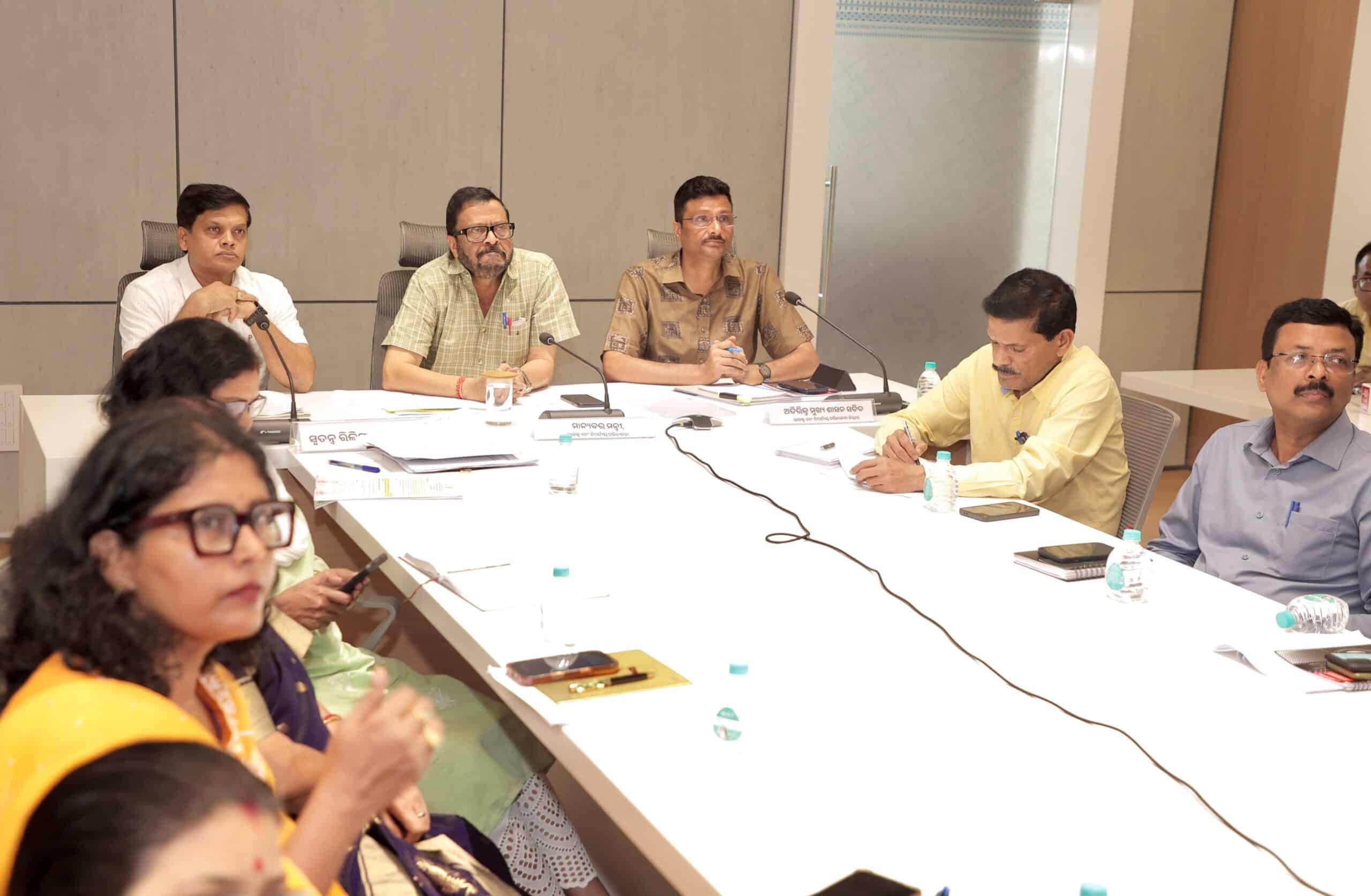
Revenue and Disaster Management Minister Suresh Pujari reviewed the crisis at a high-level meeting at Lok Seva Bhawan on Thursday before undertaking an aerial survey of flood-affected areas in Jajpur, Bhadrak, Balasore and Keonjhar. He directed collectors to complete damage assessment within 72 hours of water receding and ensure immediate compensation. “Every human life is precious. The government is fully committed to people’s safety,” the minister said.
Floodwaters have entered 100 blocks covering 539 panchayats and 1,458 villages, along with 176 wards in 14 urban areas. Twenty-one villages remain completely cut off from the outside world. In response, the state has opened 520 relief camps that are currently providing cooked food to over 1.82 lakh people. Bhadrak alone accounts for more than 1.20 lakh of those sheltered, while Balasore has over 23,000 residents in camps. Nineteen cattle camps have also been set up, and essential supplies including rice, chuda, jaggery, cattle feed and polythene sheets are being distributed.
Seventy-six rescue teams — including 24 ODRAF, six NDRF and 46 fire service units — are deployed across the state. Additional ODRAF teams have been sent to downstream districts in anticipation of a medium to major flood in the Mahanadi.
At Naraj, the Mahanadi water level stood at 26.36 metres against the danger mark of 26.41 metres, with nearly 9 lakh cusecs entering the system, though officials said the situation remained under control. Other rivers were also running high: Subarnarekha at Jamsholaghat (46.20 m), Bansadhara at Gunupur (80.97 m), Ib at Sundargarh (218.17 m) and Brahmani at Jenapur (21.70 m).
Western districts such as Subarnapur, Boudh, Nuapada, Nabarangpur, Bolangir and Kalahandi received rainfall but have so far managed the situation under close administrative watch. Minister Pujari held detailed discussions with collectors in the morning and instructed senior officers to remain present on the ground to oversee operations.
With the monsoon showing little sign of easing and major rivers still swollen, Odisha’s disaster machinery remains on full alert as the state works to protect lives, provide relief and prepare for any further rise in water levels.