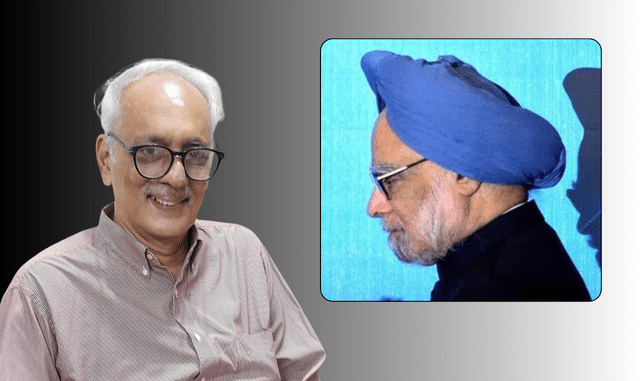
The Supreme Court on Wednesday closed the long-pending criminal proceedings against the late former Prime Minister Dr Manmohan Singh in the Talabira-II coal block allocation case, accepting the Central Bureau of Investigation’s (CBI) earlier closure reports that had given him a clean chit.
A bench comprising Chief Justice Surya Kant and Justices Joymalya Bagchi and V. Mohana set aside the 2015 summoning order issued by a special CBI court and found no sufficient material or good reason to proceed against Singh. The case related to the alleged irregular allocation of the Talabira-II coal block in Odisha to Hindalco Industries in 2005, when Singh held charge of the coal ministry. The CBI had filed closure reports in 2014 clearing him and others, but the special court had rejected them and summoned Singh, industrialist Kumar Mangalam Birla, former coal secretary P.C. Parakh, and company officials.
Although Singh’s appeal had become infructuous following his death in December 2024, the apex court examined the matter on the merits and closed the proceedings, providing posthumous relief nearly two years after his passing and more than a decade after the summons were issued.
The decision has drawn reactions from those who knew Singh closely. Retired IAS officer Dr U. Sarat Chandran (1974-batch, Odisha cadre), who worked under him in key roles, shared a detailed personal reflection on the judgment.
Chandran served as Special Assistant to Dr. Manmohan Singh during his tenure as Deputy Chairman of the Planning Commission (1985-87) and later as Joint Secretary in the Department of Economic Affairs when Singh was Finance Minister (1995-1999). Drawing on this close professional and personal association, he said:
“I read today that the Supreme Court has closed the case against the late former Prime Minister, Dr. Manmohan Singh, in the so-called coal block allocation matter. While this just decision should have come during his lifetime, there is comfort in knowing that justice has finally been served.”
He expressed a profound sense of relief that the legacy of “such an outstanding public servant and intellectual remains unsullied.” Chandran described it as “a grave mistake to bring such charges against a leader who was personally and professionally far above petty machinations.” He called Singh “a true stalwart of economic policy—a rare statesman who deeply understood the necessity of opening up our economy to drive rapid growth” and “unmatched in his holistic grasp of economics,” ranking him among the finest Finance Ministers, Heads of the Planning Commission, and Prime Ministers India has seen.
“Having had the privilege of working under him and knowing him closely both professionally and personally, I felt compelled to share these thoughts today. His legacy is secure, just as it always should have been,” Chandran added.
The closure ends one chapter of the broader “Coalgate” controversy that dominated public discourse during the UPA years. While the Supreme Court’s order specifically addresses the Talabira-II matter and the summoning of Singh, it has been welcomed by many as a formal affirmation of the CBI’s earlier finding that there was no case against the former Prime Minister.