Cuba is a small island with no mountain of minerals and no overflowing treasury. That, its ambassador to India said on Saturday, is precisely why the world should pay attention to what it does have.
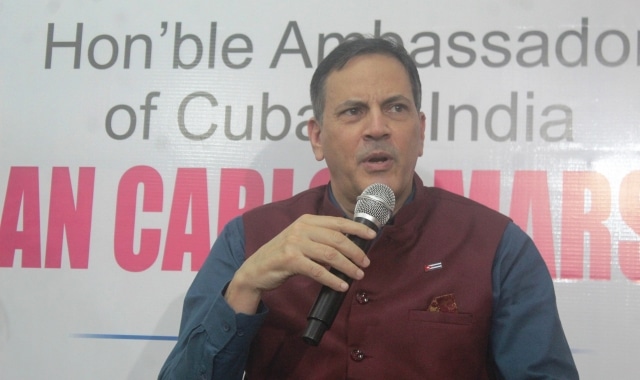
“We will never surrender to America,” Juan Carlos Marsán told intellectuals and journalists at the Pragativadi premises here.
Marsán, on his second visit to Odisha, framed Cuba not as a rich state but as a strong one. The country’s real asset, he said, is not oil or ore. It is intellectual wealth — the product of a long bet on classrooms.

Former President Fidel Castro, he recalled, never treated education as an afterthought. Literacy and public learning were treated as the foundations of national survival. That choice, the envoy argued, is why Cuba still stands: united at home, resistant abroad, and unwilling to live as anyone’s dependent.
He was careful, even in the sharpest passages, to draw a distinction. Cuba, he said, does not oppose the United States, any other country, or any organisation as such. What it opposes is exploitation, imperialism and the misuse of power.

The two nations were once friends, he noted, and ordinary Americans and Cubans still share an “unbreakable” human bond. The quarrel, in his telling, is with policy, not people.
That quarrel, he said, now runs through Venezuela and the wider energy map. Marsán accused Washington of using force in Venezuela, detaining that country’s president, and trying to bring Venezuelan oil under its control — a course Cuba rejects. He also claimed that American wars in Iran and across the Middle East are being fought to seize oil.

Those are the ambassador’s charges, delivered without apology in an Odisha newsroom. They will be contested in other capitals. In Bhubaneswar, they were offered as the moral core of Havana’s foreign policy: resist domination, even when the ledger looks thin.

On India, his tone changed. Friendship between New Delhi and Havana, he said, remains intact. Cuba would stay grateful for India’s moral support. Odisha itself drew an unusually personal tribute. The state, he said, is “extremely beautiful.” He was struck by its hospitality and would leave with a good memory of the visit. Cubans, he added, would return that welcome if people from Odisha travelled the other way.

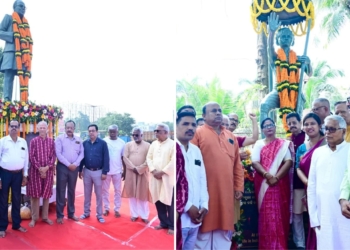
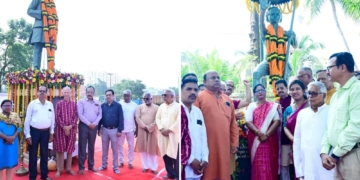
The diplomatic stop had a local ritual as well. On arrival, Marsán was received by Pragativadi Director Dr Monalisa Bal. Executive Editor Birupakshya Tripathy, Editorial Director Lalit Pattjoshi, and Justice Manoranjan Mohanty, chairman of the state-level Pradyumna Bal Jayanti Committee, were among those present. The envoy toured the campus and offered a floral tribute to founding editor Pradyumna Bal.

Later, he felicitated Dr Abash Parida, Dr Satyanarayan Mishra, Jayshree Mahapatra, Chandrasekhar Mahapatra and Professor Sarat Chandra Pradhan.


The picture he left behind was deliberate: a small country insisting it is not for sale, a long friendship with India, and a compliment to Odisha that sounded less like protocol than pleasure.
ALSO READ:
Cuban Ambassador Visits Pragativadi, Backs India Ties and Warns Against U.S. Tariff Push