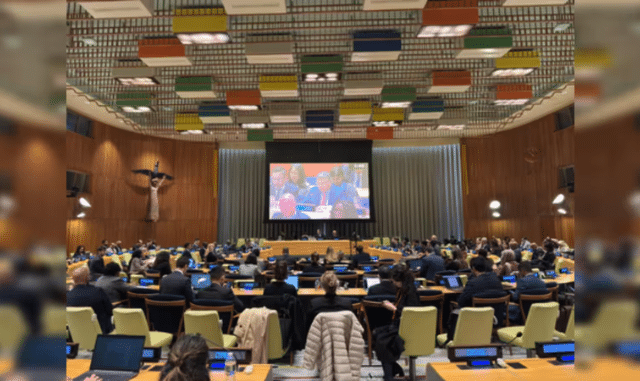
At the ongoing 81st session of the United Nations General Assembly’s First Committee, Indian diplomat Anmol Sher Singh Bedi delivered a sharp rebuttal to Pakistan, rejecting “nuclear blackmail” and reasserting New Delhi’s right to defend itself against cross-border terrorism.
Exercising India’s right of reply, Bedi addressed Islamabad’s remarks following the Pahalgam terror attack that claimed 26 civilian lives.
He clarified that India’s military response in May was a measured, non-escalatory act of self-defence. Warning against treating nuclear weapons as routine instruments of statecraft, Bedi stressed that relying on nuclear overhang to shield non-state actors increases escalation risks rather than fostering restraint.
Bedi laid down three principles guiding India’s security policy: any terror attack will face a fitting response, India will not succumb to nuclear blackmail, and New Delhi will make no distinction between sponsors and masterminds of terrorism.
He also raised concerns regarding the Indus Waters Treaty and global nuclear proliferation linked to the AQ Khan network.
Reaffirming that Jammu and Kashmir remains an integral and inalienable part of India, Bedi warned that without state accountability for reckless actions, “peace merely becomes a pause between crises.”