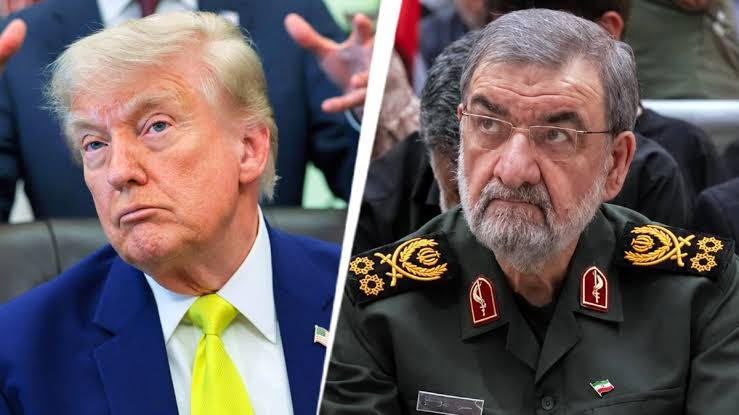
Iran has conveyed seven conditions to the United States through Qatar for restarting negotiations aimed at ending the ongoing war, according to Mohsen Rezaei, secretary of Iran’s Supreme National Security Council.
Rezaei said Qatar had communicated Tehran’s conditions to Washington and that Iran was waiting for US President Donald Trump’s response.
While Rezaei did not publicly disclose all seven conditions, he identified three demands that Tehran wants addressed: an end to fighting on all fronts, the release of frozen Iranian funds and an end to the US naval blockade.
Tehran warns of ‘decisive war’
Alongside the diplomatic message, Rezaei issued a warning that Iran was prepared for further conflict if Washington rejected its terms.
“It is in Washington’s interest to accept these conditions. Trump’s threats will not achieve any results. We are prepared for a decisive war,” he said, according to Al Jazeera.
Rezaei also said Tehran was seeking to end the conflict as soon as possible, describing the current situation as one in which the war was still continuing in practical terms.
The combination of renewed diplomatic contacts and warnings of further military escalation comes as Qatar and Pakistan work to revive negotiations between Washington and Tehran.
Iran warns of possible US attack
Rezaei said Iranian military assessments indicated that another US strike remained a possibility.
He said Iran had altered its military planning after earlier rounds of fighting and was now focusing on US naval assets operating from the Persian Gulf through the Gulf of Oman and into the Arabian Sea.
He also claimed that Iran had recently tested a multi-warhead anti-ship missile near a US vessel or aircraft carrier. The claim was reported by Al Jazeera based on Rezaei’s interview.
Rezaei further warned that a new US attack could prompt Iranian strikes against American military bases in the region as well as US commercial interests and companies operating there.
Qatar and Pakistan push for talks
Qatar and Pakistan have been involved in efforts to restart negotiations between Iran and the US after an earlier memorandum of understanding expired.
The latest communication through Qatar follows broader regional diplomatic efforts aimed at finding a route towards ending the conflict.
Iran has previously linked the reopening of the Strait of Hormuz to conditions including an end to the US war and blockade and the release of frozen Iranian assets.
The strategic waterway has remained a major point of contention in the conflict because of its importance to global energy shipments.
Iran’s position on nuclear programme
Rezaei said Iran had not decided to withdraw from the Nuclear Non-Proliferation Treaty, despite pressure over its nuclear programme.
He said Tehran’s nuclear doctrine had not changed and that Iran continued to observe a religious decree prohibiting nuclear weapons. However, he warned that continued US actions could eventually lead Tehran to reconsider its position.
The nuclear issue remains a central point of disagreement between Washington and Tehran. The US and Israel have said their military campaign is aimed in part at preventing Iran from developing a nuclear weapon, while Tehran maintains that its nuclear programme is peaceful.
What happens next?
For now, Tehran says it is awaiting Trump’s response to the conditions conveyed through Qatar.
The public details provide only part of Iran’s seven-point proposal, as Rezaei has not disclosed the remaining four conditions.
The latest development therefore leaves two tracks open: mediated efforts to restart negotiations and Iran’s stated preparations for further military confrontation if its demands are rejected.