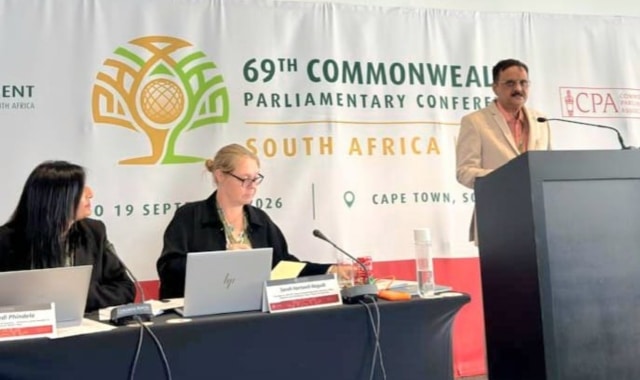
Odisha’s rich democratic history and modern digital legislative reforms received international acclaim at the Commonwealth Parliamentary Association (CPA) conference held in Cape Town, South Africa.
Representing the state, Odisha Legislative Assembly Secretary Satyabrata Rout presented a paper on the “Best Practices of the Odisha Legislative Assembly” before an international audience of 180 assembly secretaries from 56 countries.
Outlining the state’s legislative progression, Rout highlighted how Odisha’s assembly has evolved continuously since gaining separate statehood in 1936. Beginning with just 60 members in 1937, the assembly strength has grown to 147.
“The journey from pre-independence democratic practices to today’s modern, digital assembly is a continuous process of evolution and reform,” Rout remarked. “Odisha does not claim its experience is complete; rather, in the spirit of professional exchange, we remain open to learning from traditions and new innovations.”
Highlighting legislative productivity, Rout revealed that during the first two years of the 17th Odisha Legislative Assembly, the House sat for 103 days, completing nearly 470 hours of legislative work—one of the highest productivity rates among Indian state assemblies.
Key institutional reforms presented at the global summit included:
-
Digital Transformation: Complete digitisation of assembly proceedings and legislative records.
-
Capacity Building: Dedicated orientation programs for first-time members.
-
Youth Engagement: Educational exposure visits for school and college students to familiarise them with democratic institutions.
-
Budget Scrutiny: Active role of 35 assembly committees, including 10 departmental committees that scrutinise budget proposals, expenditure estimates, and resource allocation before final approval.
Delegates and secretaries from major Commonwealth nations—including Canada, Australia, and Bangladesh—praised Odisha’s legislative framework and operational efficiency.
The CPA summit was attended by assembly secretaries from 21 Indian states—including Andhra Pradesh, Assam, Himachal Pradesh, Nagaland, West Bengal, and Uttar Pradesh—alongside Dr Yumnam Kumar, Director of the Delhi Legislative Assembly.