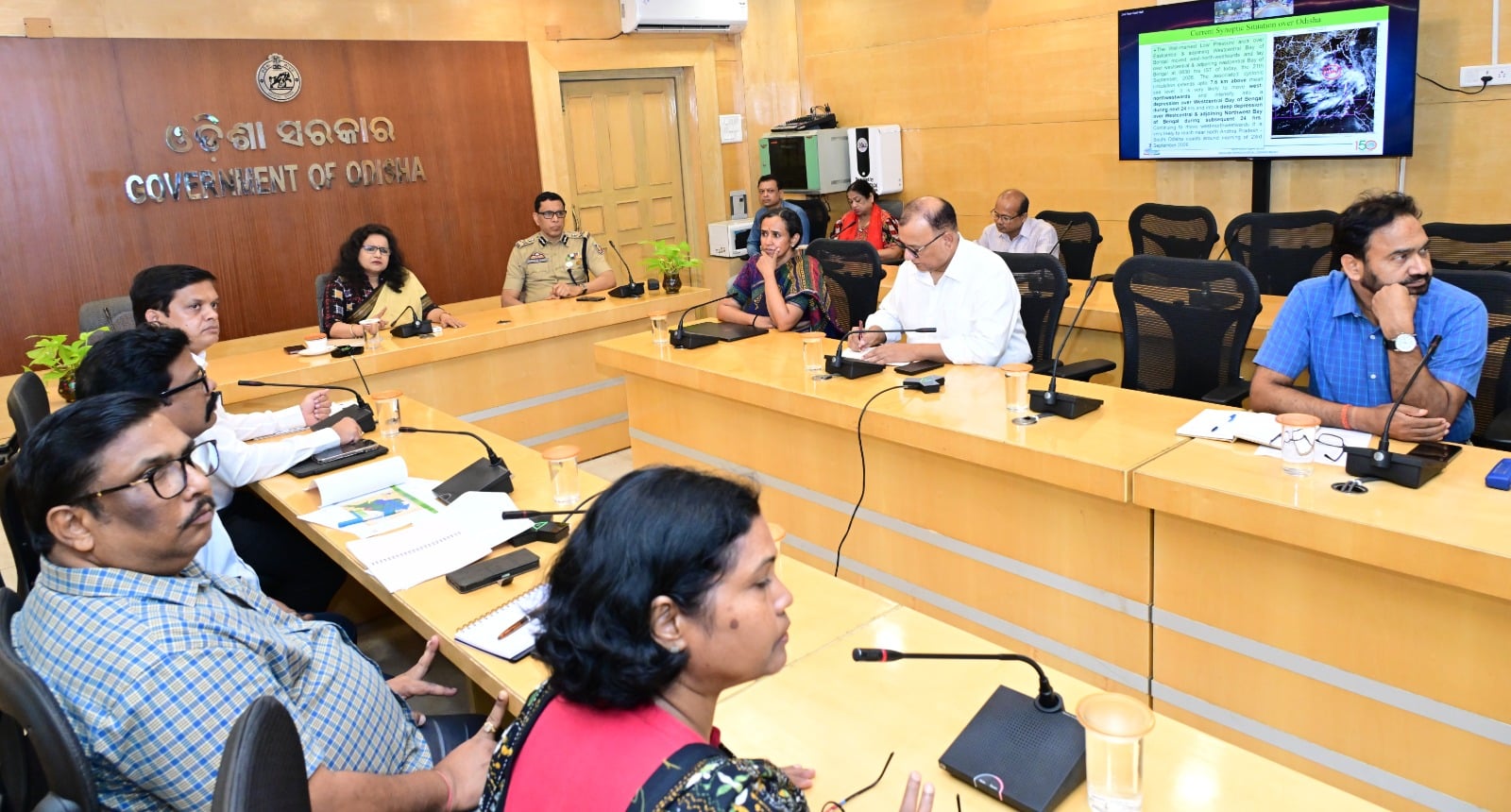
Odisha is treating the next 48 to 72 hours as a test of preparedness, not a waiting game. With a well-marked low-pressure area over the Bay of Bengal likely to intensify and push heavy rain into southern districts, Chief Secretary Anu Garg on Monday ordered departments and collectors to stay fully ready and to treat the situation with zero casualness.
The high-level review was held at the conference hall of Lok Seva Bhawan. Fire Services Director Dr Sudhanshu Sadangi, Special Relief Commissioner Rajesh Prabhakar Patil, secretaries of concerned departments, the Engineer-in-Chief of Water Resources, SRC officials and other senior officers attended. Collectors of the 11 districts expected to feel the brunt of the system joined by video conference.
What the weather office is saying
Dr Manorama Mohanty, Director of the IMD’s Bhubaneswar centre, briefed the meeting on the current system and the short-range outlook. According to the assessment shared with the government, the well-marked low-pressure area over the east-central and adjoining west-central Bay of Bengal is likely to become a depression within 24 hours and a deep depression in the following 24 hours. Moving west-northwest, it is expected to reach near the north Andhra Pradesh–south Odisha coast around the morning of 23 September.
Rain is likely to begin in parts of south Odisha from 22 September and continue through 24 September. Coastal winds may blow at 45–55 kmph, while speeds of around 70 kmph are possible over the central Bay. After the meeting, Garg told the media that there is no cyclone possibility in the present assessment. The immediate concern, she said, is low-pressure-induced heavy rain, especially in the south.
That distinction matters. Odisha has already lived through a wet monsoon, and another concentrated spell can quickly turn low-lying pockets, drainage channels and river catchments into trouble spots.
The political and administrative line is simple: be ready early
Garg directed every department to stay 100 per cent prepared and alert. Collectors were told to keep a continuous watch on their districts, take advance steps and not treat preparedness as a formality. She reviewed ground arrangements with district collectors and additional district magistrates, including those of Ganjam, Gajapati and Malkangiri.
Officials in likely affected districts have been told that leave stands cancelled. Expectant mothers have been advised to move to hospitals in advance. Departments were also asked to look ahead at waterlogging, drainage bottlenecks and river basins if rainfall intensity rises.
Reservoirs get as much attention as rain forecasts
Water Resources officials reviewed reservoir levels and flood-cushion planning. Balimela and Kolab reservoirs are at comfortable levels and have room to absorb incoming rain. Indravati, however, is holding about 84 per cent of its capacity. Garg directed that its water level be brought down as required. The Telengiri irrigation project was also reviewed, with emphasis on managing extra inflows.
The Engineer-in-Chief said all southern river reservoirs would be watched closely and releases managed if inflows surge. Officials were told to act in advance wherever drainage, embankments or other vulnerable points could fail under a heavy spell.
Rescue teams, sea advisory and a 24-hour control room
SRC officials said flood and cyclone shelters are being checked for power and basic facilities. Steps have been taken to position ODRAF and NDRF teams. The Special Relief Commissioner’s control room will function round the clock. Coastal districts have also been told to stay ready.
Fishermen have been advised not to venture into the sea from today until 24 September. Those already at sea have been asked to return to safer waters. The Fisheries and Animal Resources Department has been tasked with spreading that message.
Garg’s closing instruction was coordination: weather, water, relief, health, power and district administrations must work as one system, not as separate files. For now, Odisha is not preparing for a named cyclone. It is preparing for what often does more damage in September — three days of relentless rain on already soaked ground.