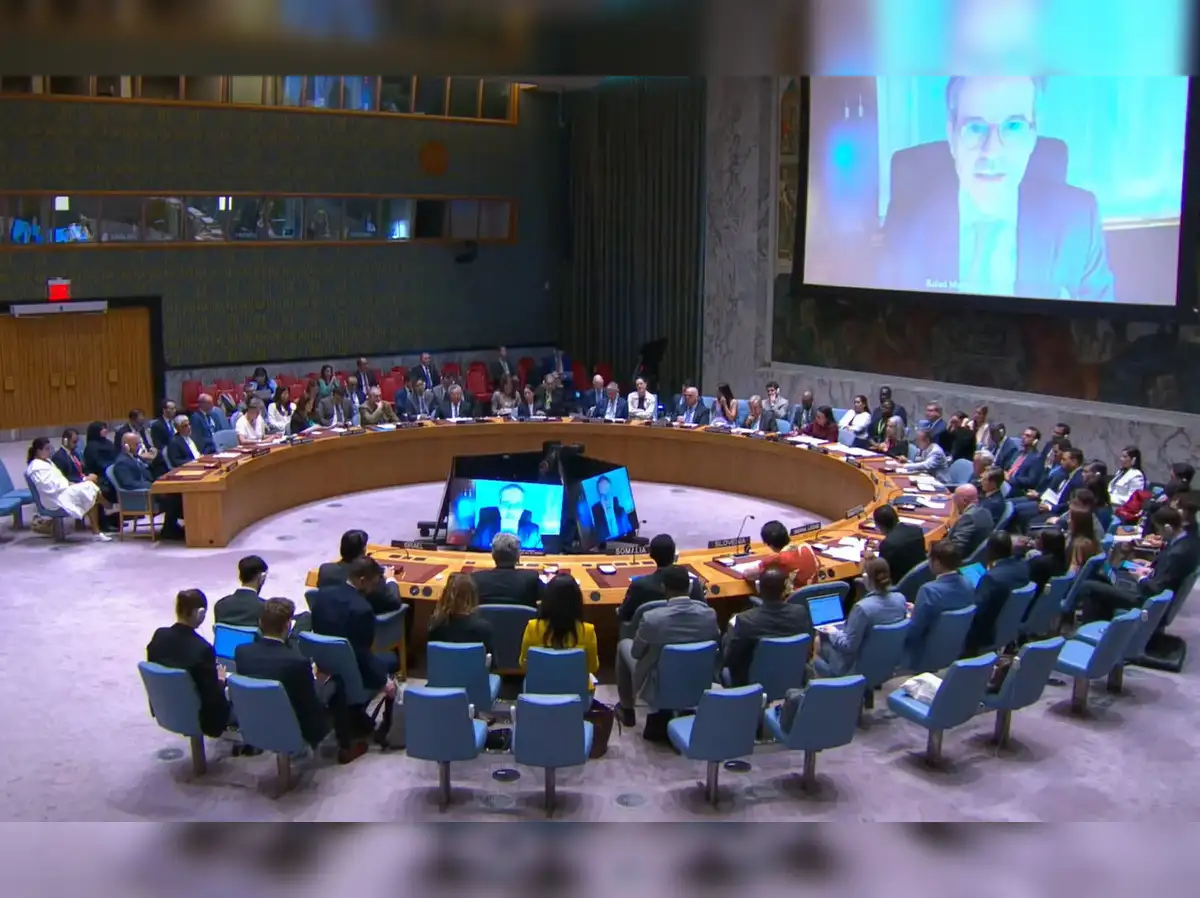
India has reiterated its call for comprehensive structural reforms within the United Nations Security Council (UNSC), advocating that any new permanent members must share equal veto rights rather than creating a multi-tiered hierarchy.
Addressing the United Nations General Assembly, India’s Permanent Representative to the UN, Parvathaneni Harish, stressed that veto powers currently enjoyed exclusively by the five permanent members (P5)—the United States, the United Kingdom, France, Russia, and China—must not serve narrow political interests.
Veto Rights Must Not Serve ‘Narrow Political Expediency’
Delivering India’s position, Ambassador Harish emphasized that holding a veto carries a profound global obligation that requires immense diplomatic restraint.
”India has always maintained that the veto, which is right now a prerogative only of the five permanent members of the UN Security Council, is a responsibility that must be exercised with great restraint, especially on matters bearing upon the maintenance of international peace and security,” Ambassador Harish stated. “It should not be an instrument of narrow political expediency.”
Highlighting historical usage, Harish pointed out that the veto has been exercised 331 times across approximately 200 resolutions throughout the UN’s history. He noted that the disproportionate exercise and threat of vetos by a small subset of permanent members has severely undermined the Council’s credibility.
Comprehensive Reform Across Five Key Clusters
Rejecting piecemeal approaches, India urged member states to initiate text-based negotiations addressing all core elements of UNSC restructuring:
- Holistic Framework: India argued that limiting or extending the veto cannot be decoupled from categories of membership, regional representation, council size, and working methods.
- Equal Status: “Fairness and justice demand that all permanent members enjoy the same rights and responsibilities,” Harish said, warning that creating permanent seats without veto rights would only further complicate negotiations.
- Alignment with Africa: India reaffirmed its alignment with the Common African Position (Ezulwini Consensus), advocating for equitable regional representation for underrepresented regions.