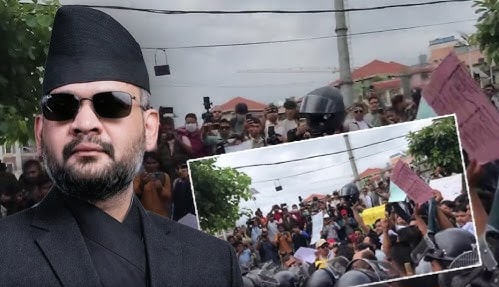
Less than four months after taking office on promises of sweeping reforms, Nepal Prime Minister Balendra Shah, popularly known as Balen Shah, is facing mounting protests from the very generation that helped bring him to power.
Hundreds of demonstrators gathered outside Kathmandu’s Singhdurbar Secretariat on Sunday, accusing the government of forced evictions, alleged human rights violations and suppressing dissent. The latest unrest has exposed growing dissatisfaction among young voters who once viewed Shah as a symbol of political change.
From Gen Z Icon to Facing Gen Z Protests
Balen Shah rose to national prominence after his Rastriya Swatantra Party secured a near two-thirds majority in Nepal’s House of Representatives following a wave of youth-led protests that toppled the previous government.
He took office on March 27, promising reforms through a 100-point governance agenda aimed at tackling corruption, improving public institutions and boosting economic opportunities.
However, after nearly 100 days in office, many young supporters argue that those promises have not translated into meaningful change.
Eviction Drive Sparks Backlash
The government’s campaign to clear informal settlements along Kathmandu’s riverbanks has emerged as one of the biggest flashpoints.
According to local reports, around 2,600 families—representing more than 15,000 people—have been affected by the eviction drive.
While authorities say the campaign is intended to remove illegal encroachments and improve urban planning, rights groups allege that families were displaced without adequate rehabilitation or permanent resettlement plans.
Only a fraction of displaced households were moved to temporary shelters, and many were later asked to vacate those facilities, prompting renewed protests.
Concerns Over Treatment of Activists
Public criticism intensified after Gen Z activists visiting a temporary shelter in Kirtipur reportedly clashed with police.
According to reports, officers used batons to disperse protesters, injuring at least one activist, while several others were detained.
In another protest in Koshi Province, police detained 26 demonstrators opposing the alleged mistreatment of youth activists.
Opposition leaders have accused the government of restricting civil liberties and failing to uphold democratic principles.
Ride-Hailing Driver’s Death Fuels Public Anger
The protests gained further momentum following the death of Ganesh Nepali, a 25-year-old ride-hailing driver.
Authorities said Nepali set himself on fire after a dispute with Kathmandu municipal police over an alleged parking violation. He later died from his injuries in hospital.
The incident triggered widespread outrage, with protesters demanding accountability.
Following negotiations with his family, the Kathmandu Metropolitan City administration agreed to:
- Form an independent investigation committee.
- Suspend officials allegedly involved during the inquiry.
- Implement additional measures outlined in a nine-point agreement.
A Test for Balen Shah’s Leadership
Balen Shah built his political image as an outsider challenging Nepal’s traditional political establishment.
However, critics now argue that his administration’s handling of eviction drives, activist protests and public grievances has widened the gap between his reformist image and the expectations of young voters.
The ongoing demonstrations represent one of the most significant political challenges of Shah’s tenure so far and may prove pivotal in shaping public confidence in his government.