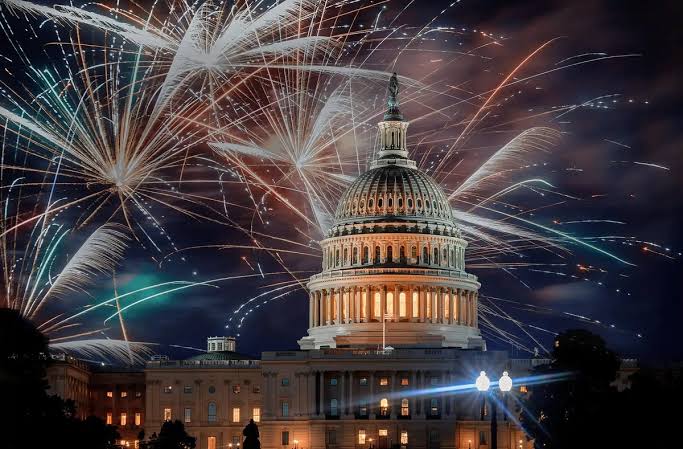
Washington briefly became the world’s most polluted major city after large-scale Fourth of July fireworks celebrations caused a sharp spike in air pollution, according to data from air quality monitoring platform IQAir.
The temporary deterioration in air quality occurred during the Freedom 250 celebrations marking the United States’ Independence Day, with pollution levels returning to safer levels after rainfall helped disperse the smoke.
Fireworks Trigger Sharp Rise in Air Pollution
The large fireworks display was organised as part of the Independence Day celebrations.
According to organisers, the event aimed to set a new world record by launching approximately 850,000 fireworks during a 40-minute show.
While local fireworks had already increased pollution levels across Washington, air quality worsened significantly once the main display began.
The event was delayed by more than an hour because of storm threats before the fireworks eventually lit up the night sky.
PM2.5 Levels Reached Hazardous Range
The celebrations caused a dramatic rise in PM2.5, fine airborne particles that can penetrate deep into the lungs and affect respiratory health.
One monitoring station recorded PM2.5 concentrations exceeding 200 micrograms per cubic metre, far above the U.S. Environmental Protection Agency’s 24-hour guideline of 35 micrograms per cubic metre.
Authorities also issued Code Purple air quality alerts across Washington and parts of Virginia and Maryland, indicating that air conditions had become very unhealthy for everyone, especially people with respiratory or heart conditions.
Washington Ranked World’s Most Polluted Major City
According to IQAir, Washington ranked as the world’s most polluted major city for a brief period between approximately 3 a.m. and 5 a.m. on July 5.
As pollution levels gradually declined, other cities, including Jakarta, Kinshasa, and Addis Ababa, moved higher in the global air pollution rankings.
The ranking reflected temporary air quality conditions rather than long-term pollution trends.
Rain Helped Clear the Smoke
Scientists said the worsening air quality was temporary.
Heavy rainfall following the fireworks helped wash particulate matter from the atmosphere and improved air quality across the region.
Atmospheric scientist Russell Dickerson of the University of Maryland noted that without the rain, pollution levels could have remained elevated for a much longer period.
Health Experts Warn About Firework Smoke
Health experts say smoke from fireworks contains fine particulate matter and chemicals that may irritate the eyes, throat and lungs.
Short-term exposure can worsen asthma and other respiratory illnesses, while repeated exposure to high concentrations of PM2.5 has been linked to long-term cardiovascular and respiratory diseases.
Authorities generally advise people, particularly children, older adults and individuals with underlying health conditions, to limit outdoor exposure during periods of poor air quality.
Fireworks and Air Quality Remain a Growing Environmental Concern
Large public fireworks displays continue to be an important part of national celebrations across many countries.
However, environmental experts increasingly highlight their short-term impact on air quality, especially in densely populated urban areas where smoke can accumulate before dispersing.
The Washington pollution spike has renewed discussions about balancing large public celebrations with environmental and public health considerations.