

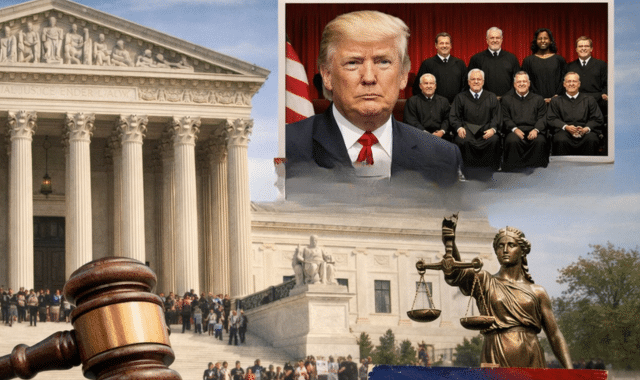
In a landmark decision, the US Supreme Court has struck down former President Donald Trump’s executive order that sought to restrict birthright citizenship.
The ruling, delivered by a 6–3 majority, reaffirmed the constitutional guarantee under the 14th Amendment that grants citizenship to nearly all children born on American soil, regardless of their parents’ immigration status.
Trump’s order, signed in January 2025, aimed to deny automatic citizenship to children born in the United States if their parents were undocumented immigrants or temporary visa holders. The measure would have limited citizenship to children with at least one parent who was a US citizen or lawful permanent resident.
Legal challenges quickly followed, with lower courts blocking the directive on constitutional grounds. The Supreme Court’s decision now cements those rulings, underscoring that the executive branch cannot override constitutional protections through unilateral orders.
Chief Justice John Roberts, writing for the majority, emphasised that the 14th Amendment’s language is clear and has been consistently upheld for more than a century. “Citizenship by birth is a constitutional right, not a privilege subject to executive discretion,” the opinion stated.
The ruling carries far‑reaching implications for immigration policy and constitutional law. It not only halts Trump’s attempt to narrow birthright citizenship but also reinforces the principle that fundamental rights enshrined in the Constitution cannot be curtailed by executive action.
Immigration advocates hailed the decision as a victory for equality and stability, while Trump’s supporters criticised the Court for blocking what they saw as a necessary measure to curb illegal immigration. The outcome marks a significant setback for Trump’s broader immigration agenda, which has faced repeated legal challenges during his presidency.
As the debate over immigration continues to shape American politics, the Supreme Court’s ruling stands as a powerful reaffirmation of constitutional protections and the enduring principle that the United States remains a nation defined by birthright citizenship.