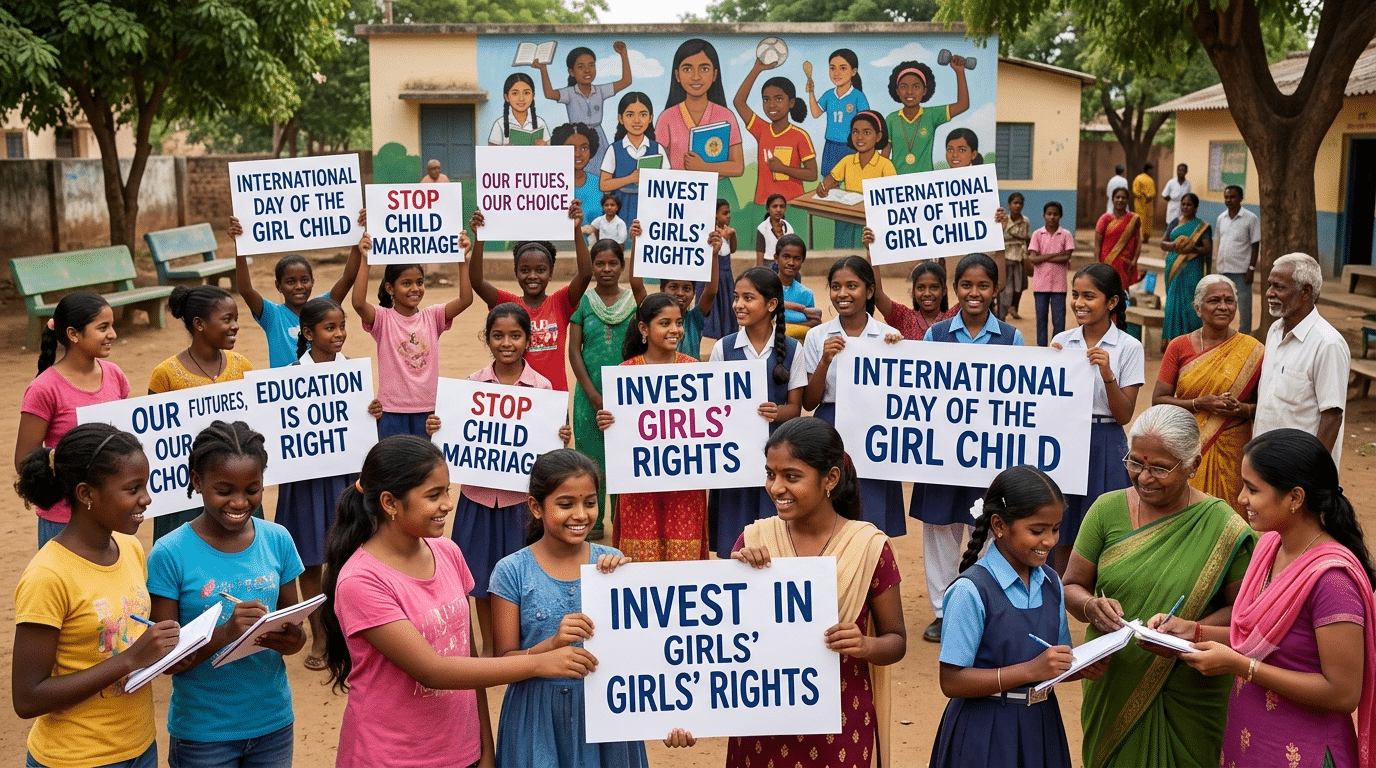
Today marks the annual observance of the International Day of the Girl Child, a global event established by the United Nations General Assembly in 2012 to address the unique challenges facing girls worldwide, promote their empowerment, and advocate for their fundamental human rights.
This year, international focus centres on a critical imperative: “Stop Child Marriage, Invest in Girls’ Rights.” The initiative highlights the urgent need to guarantee girl children access to education, comprehensive healthcare, safety, and the fundamental freedom to shape their own futures.
Breaking the Barriers for 1.1 Billion Girls
There are nearly 1.1 billion (110 crore) girl children globally whose talent, creativity, and leadership possess immense potential to transform societies. However, deep-rooted social and economic obstacles continue to hinder millions from fulfilling their potential.
Key Takeaway: Major barriers impeding the progress of girls include child marriage, poverty, limited access to education, malnutrition, gender discrimination, and gender-based violence—risks that intensify during conflicts, displacement, and climate disasters.
According to United Nations data, one in every five girls worldwide is married before the age of 18. Child marriage frequently forces young girls out of the education system, drastically increases health risks through early pregnancy, and eliminates their autonomy over life decisions.
Actionable Solutions: Education and Social Support
Development experts emphasise that ending child marriage requires a multifaceted approach rather than symbolic observances. Keeping girls in school is widely recognised as one of the most effective deterrents against early marriage.
To achieve lasting change, legal enforcement must be combined with localised awareness campaigns and direct financial support for vulnerable families.
A Shared Responsibility for a Dignified Future
Securing the rights of girl children demands coordinated action across families, educational institutions, civil society, and state governments. Ensuring that a child’s future is never limited by her gender, financial status, or background is both a moral and social necessity.
When girls are guaranteed a safe childhood, quality education, and equal opportunity, they do not merely fulfil their individual potential—they drive economic and social progress worldwide. Today’s call to action urges global leaders and communities to move beyond awareness and deliver sustained, concrete progress for every girl child.