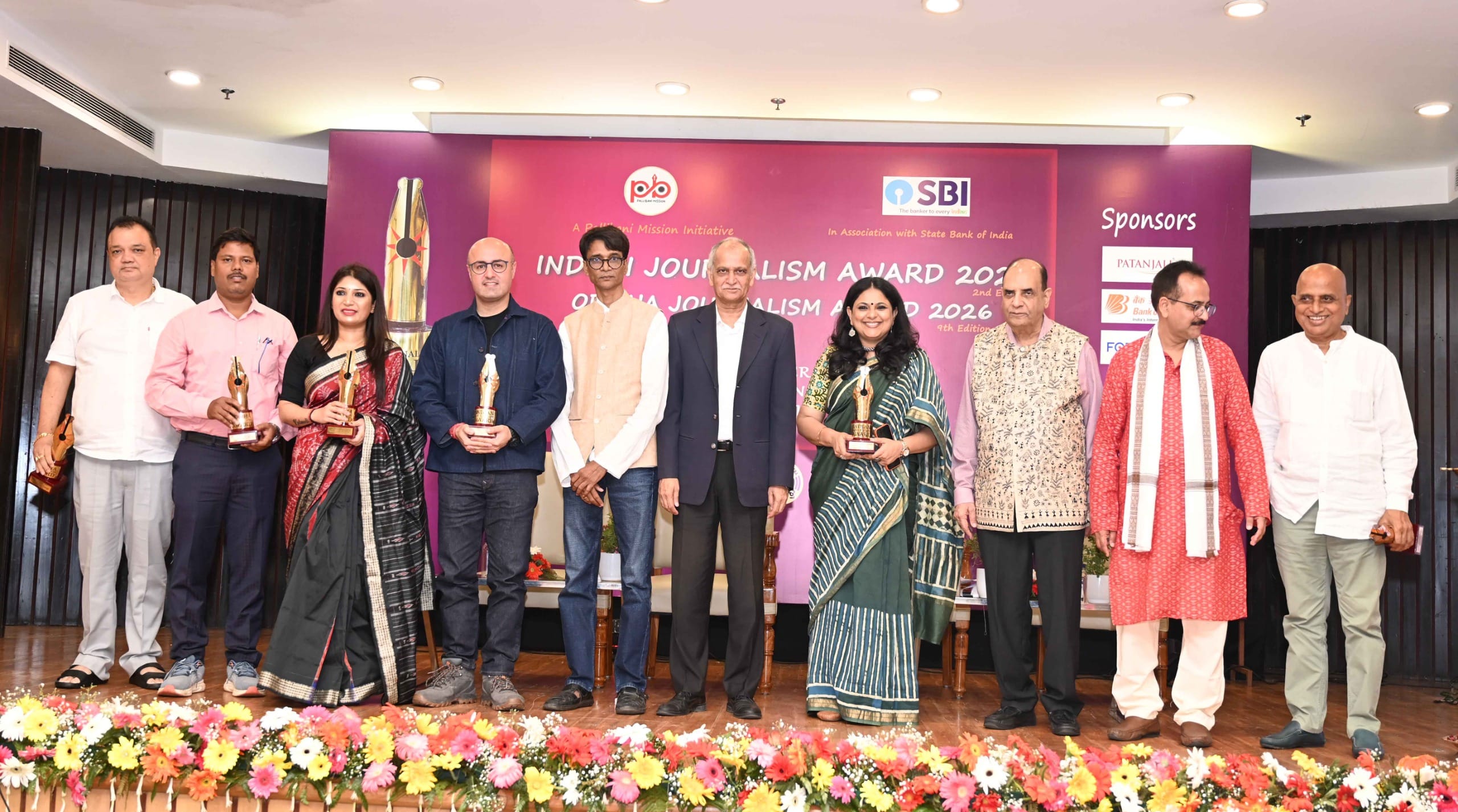
Indian journalism no longer lives only in newspaper offices and television studios. That was the central message from journalist and writer Padma Shri Alok Mehta on Sunday as Pallibani Mission presented the second Indian Journalism Awards and the ninth Odisha Journalism Awards at the India International Centre.
Mehta told the gathering that newspapers and TV channels have lost their old monopoly over news. YouTube, Facebook and other social platforms, he said, have changed what “news” means and now reach people faster than traditional outlets. The result, he added, is a profession under greater pressure: journalists must work faster, compete with unfiltered digital voices, and still face political pressure that makes independent reporting harder.
The evening honoured six media professionals for work that organisers said combined skill, integrity and public impact.
Indian Journalism Award 2026
- Akrur Srivastava, Executive Editor, Navodaya Times
- Richa Aniruddh, producer and presenter of the YouTube channel- Zindagi with Richa
- Aditya Raj Kaul, Editor (Foreign Affairs and National Security), NDTV
Odisha Journalism Award 2026
- Ajit Kumar Dash, Chief Editor, Dainik Sanchar
- Bijayalaxmi Rath, presenter, Kanak News
- Jaladhara Pradhan, Bureau Chief, Prameya (Angola edition)
Diplomat, poet and former ambassador Amarendra Khatua and Sahitya Aajtak editor Jayaprakash Pandey spoke as guest speakers. Both argued that literature and journalism feed each other: good reporting needs the depth of literary sensibility, and literature gains force when it stays close to lived public life.
The awardees used the stage to talk about the same shift Mehta described — the daily change in tools, the constant challenge of credibility online, and a mix of hope and anxiety about what the next decade of Indian journalism will look like.
Pallibani Mission, a long-standing Delhi organisation devoted to Odia literature, culture and quality journalism, has run the Odisha Journalism Award since 2018 and later added a national honour. Chairman Ramachandra Nath delivered the welcome address and set out the purpose of the evening. The programme was steered by Nabajyoti Das, Ispa Pratibimbita Sadangi, Jitendra Nath Tripathy, Debraj Mohanty and Subham Saswat. Sangram Dhar offered the vote of thanks.
A large gathering of writers, journalists and public figures filled the hall. In a media environment where speed often outruns verification, the awards were framed as a reminder that recognition still matters — and that the hardest work in journalism now happens at the meeting point of legacy newsrooms, digital platforms and political scrutiny.