As the chill of winter approaches and the shadow of air pollution looms large over the capital region, the National Highways Authority of India (NHAI) has rolled out a heavy-duty, multi-pronged action plan.
Aimed at curbing dust pollution and accelerating traffic movement across National Highways and Expressways, the fresh push brings a mix of heavy machinery, sustainable waste utilisation, and strict compliance monitoring to the forefront.
Deploying Heavy Artillery Against Dust
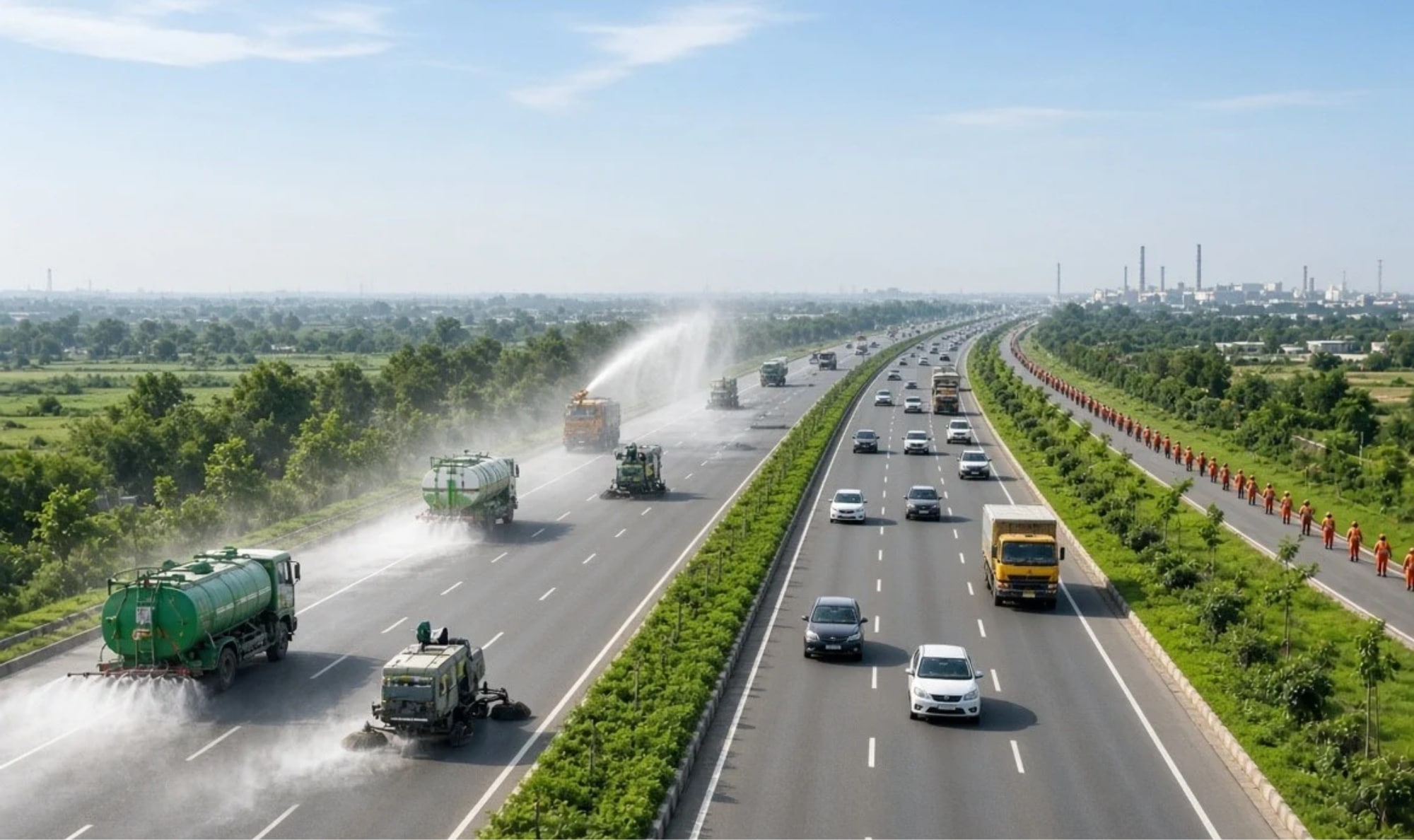
To combat the notorious winter smog, NHAI has mobilised a massive field force and equipment lineup across Delhi-NCR. The deployment includes:
-
~60 water sprinklers and tankers to suppress roadside dust.
-
14 anti-smog guns operating regularly to clear particulate matter.
-
23 Mechanical Road Sweeping Machines (MRSMs) alongside 2 tractor-mounted broomers.
-
Over 900 sanitation and ground workers dedicated entirely to dust mitigation.
Furthermore, 13 MRSMs are actively servicing 157 kilometres of National Highway stretches within the NCR. Shri Alok Deepankar, Member (Technical) at NHAI, personally reviewed these operations, mandating full compliance with Commission for Air Quality Management (CAQM) guidelines, strict adherence to GRAP stages, and daily progress tracking via geo-tagged photographs.
Turning Landfill Waste into Green Infrastructure
Beyond immediate dust control, NHAI is weaving sustainability into the very foundation of its corridors. During the 2025–26 fiscal year, the authority successfully planted roughly 9.80 lakh saplings in the NCR—surpassing its initial target of 9.52 lakh and maintaining an impressive survival rate of over 90%.
In a stellar display of circular economy practices, NHAI has also utilised nearly 13.58 lakh tonnes of inert waste material sourced directly from Delhi’s overflowing landfill sites. This recycled waste has been repurposed into embankment construction for major arterial projects like the UER-II and the DND–Sohna corridors.
Decongestion as an Environmental Strategy
Traffic gridlocks are a primary driver of vehicular emissions. To tackle this, NHAI fast-tracked major decongestion corridors—including UER-II, Dwarka Expressway, DND–Sohna Expressway, and the Delhi–Dehradun Expressway. By streamlining traffic flow, these projects are significantly reducing vehicle idling time and tailpipe emissions.
With public grievances tracked promptly through the Green Delhi app and social media, NHAI is proving that cleaner air requires a blend of technology, accountability, and swift administrative action.