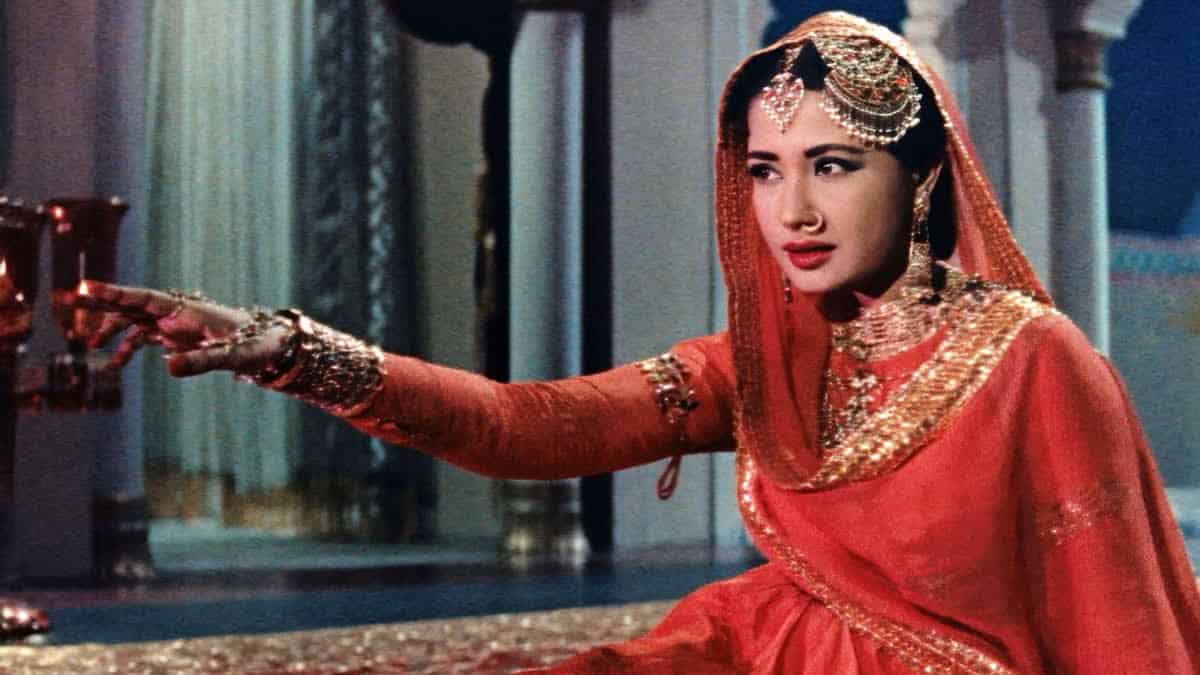
Meena Kumari’s iconic Pakeezah is set to return to the big screen in a new 4K restoration, more than five decades after the classic film first premiered.
The restoration of Kamal Amrohi’s 1972 musical drama, spearheaded by the not-for-profit Film Heritage Foundation (FHF) in association with the Amrohi family, will have its world premiere at the Festival Lumière in Lyon, France, before travelling to London for a gala screening at the BFI London Film Festival.
The restoration took two years and was described by FHF director Shivendra Singh Dungarpur as one of his most challenging projects.
‘Pakeezah’ restoration was a challenging project
Dungarpur recalled that restoring Pakeezah had been a long-held dream since he watched the film as a child with his grandmother in Dumraon, Bihar.
The original camera negative was found to be in extremely poor condition. Dungarpur said the negative had “almost melted”, while other surviving film elements had faded colours, scratches and mould.
The restoration team also discovered original film stills during its research, which helped them recreate aspects of Amrohi’s original visual vision.
Dungarpur consulted Kamal Amrohi’s children, Tajdar and Rukhsaar Amrohi, who had visited the film’s sets and retained memories of its production.
He said the Festival Lumière, regarded as a major celebration of cinema in Lyon, followed by the London screening, would provide an ideal showcase for the restored classic.
‘Pakeezah’ to screen in Lyon and London
The world premiere in Lyon will be led by Festival Lumière chief Thierry Frémaux.
The restored film will then travel to London for a gala screening at the BFI IMAX. The screening will be presented by Dungarpur alongside Amrohi’s children, Tajdar and Rukhsaar, and grandson Bilal Amrohi.
Tajdar Amrohi recalled attending the grand premiere of Pakeezah in 1972 with his father and Meena Kumari, whom the family affectionately called “Choti Ammi”.
He said he never imagined that he would return more than five decades later to present the restored film with his family.
For Tajdar, Pakeezah represented his father’s life’s mission. He recalled that virtually everything in their family’s life revolved around the film during its long production.
A 15-year journey to make ‘Pakeezah’
Pakeezah had an unusually long and troubled production history.
The project was conceived in the mid-1950s as a tribute to Meena Kumari, Kamal Amrohi’s wife and muse. Filming began in black and white in 1956 before production shifted to Eastmancolor in 1958.
The film was shot by acclaimed German cinematographer Josef Wirsching and went through several delays, casting changes and script revisions.
Production eventually stalled in 1964 after Amrohi and Kumari separated.
The film was revived several years later after Sunil Dutt and Nargis saw footage from the unfinished project in 1969 and encouraged Kumari to complete what became one of the defining films of her career.
Meena Kumari’s final film
Set against the twilight era of the nawabs in Lucknow, Pakeezah featured Meena Kumari in the dual roles of courtesan Nargis and her daughter Sahibjaan.
The film finally released on February 4, 1972, after roughly 15 years of production.
It became a major box-office success and received widespread critical acclaim. Its legacy was further shaped by Meena Kumari’s death just weeks after the release.
The actor, who had been diagnosed with liver cirrhosis in 1968, died on March 31, 1972, aged 38.
Film Heritage Foundation’s global restoration push
The restoration of Pakeezah comes during a significant period for the Film Heritage Foundation’s international festival work.
Over the past year, the organisation has presented restored Indian classics at several major global film festivals, including Berlin, Cannes and Venice.
The restoration of Pakeezah now adds another landmark title to that effort, allowing a new generation of audiences to experience Meena Kumari’s celebrated performance and Amrohi’s ambitious cinematic vision in restored form.