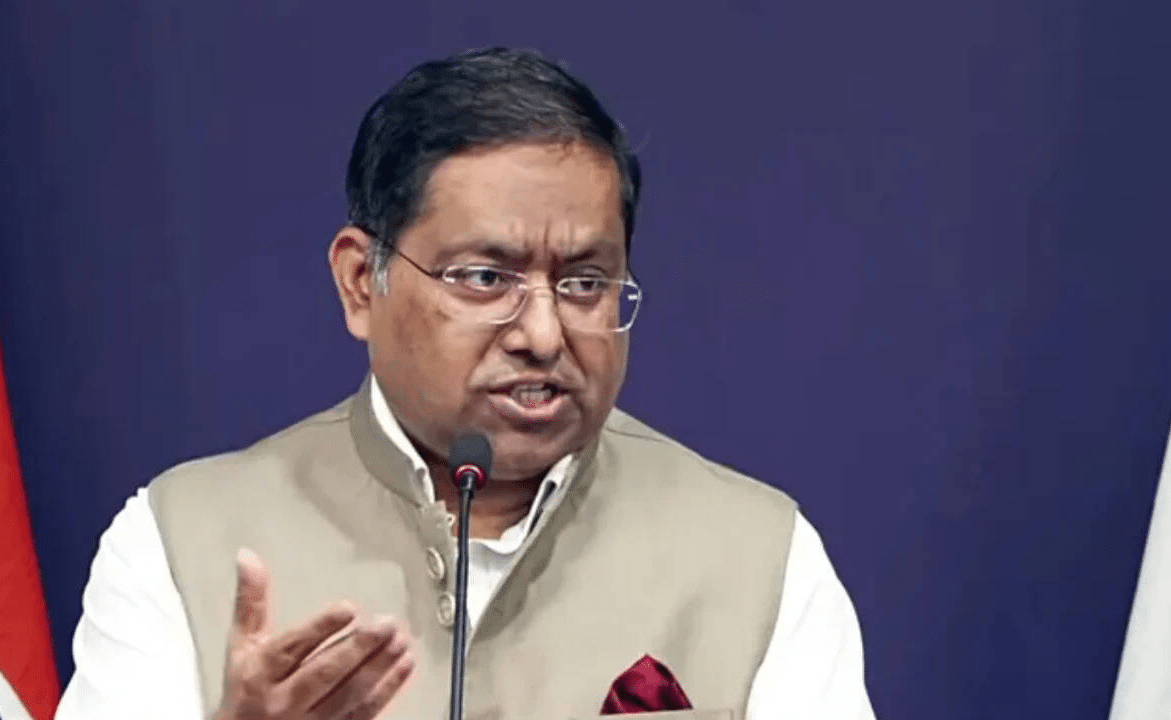
The Ministry of External Affairs (MEA) on Friday firmly rejected comments made by a US lawmaker regarding the proposed Foreign Contribution (Regulation) Amendment Bill, 2026, asserting that legislative decisions taken by India’s Parliament are the country’s internal affairs.
MEA spokesperson Randhir Jaiswal said India has taken note of the remarks but stressed that laws governing foreign funding fall within the sovereign jurisdiction of the country.
MEA Responds to US Congressman
Addressing a media briefing, Randhir Jaiswal said legislative matters concerning India are decided by Parliament and should not invite external interference.
“We have seen the comments on the FCRA. Legislative matters concerning India are our internal affairs on which decisions are taken by Parliament of the country,” Jaiswal said.
He also noted that India is not alone in regulating overseas funding.
“There are several nations, including the United States, which regulate the flow of foreign funds,” he added.
What Triggered the Response?
The MEA’s remarks came after US Congressman Riley Moore criticised the proposed amendments to the Foreign Contribution (Regulation) Act (FCRA).
Moore claimed the changes could allow the Indian government to take control of churches and religious charities and described the proposal as a “clear attack against Christians.” He also suggested that the legislation could affect bilateral ties between India and the United States.
What Does the FCRA Amendment Bill Propose?
Introduced in Parliament in March 2026, the Foreign Contribution (Regulation) Amendment Bill seeks to strengthen oversight of foreign-funded organisations operating in India.
The proposed legislation would empower the government to appoint a designated authority to manage, dispose of or oversee assets created using foreign contributions if an NGO’s FCRA registration is cancelled, suspended or not renewed.
The Bill also expands accountability by extending action to individuals associated with such organisations, including directors and trustees.
In addition, organisations applying for registration would need to specify their objectives from a predefined list of approved purposes and operational areas.
The amendments further provide that organisations with foreign nationals—other than Persons of Indian Origin (PIOs)—serving as key office-bearers would ordinarily not be considered for registration or prior permission to receive foreign contributions.
Concerns Raised by Christian Groups
The proposed amendments have drawn criticism from several Christian organisations and political leaders.
Meghalaya Chief Minister Conrad Sangma expressed concerns over certain provisions, while religious groups urged the Centre to clarify that the law would not adversely affect churches or charitable institutions.
Mizoram Chief Minister Lalduhoma later said Union Home Minister Amit Shah had assured him that the proposed law would not be implemented retrospectively.
A delegation from the Catholic Bishops’ Conference of India (CBCI) also met the Home Minister, after which members said they were assured that the amendments would not apply to past cases.
Centre Says Law Targets Misuse of Foreign Funds
Government officials have maintained that the proposed amendments are aimed at strengthening transparency and oversight of foreign funding rather than targeting any religion or community.
According to officials, the law is intended to prevent the misuse of foreign contributions for unlawful activities while ensuring greater accountability among organisations receiving overseas funds.
The Ministry of Home Affairs has not yet issued an official statement responding to the concerns raised by various organisations.