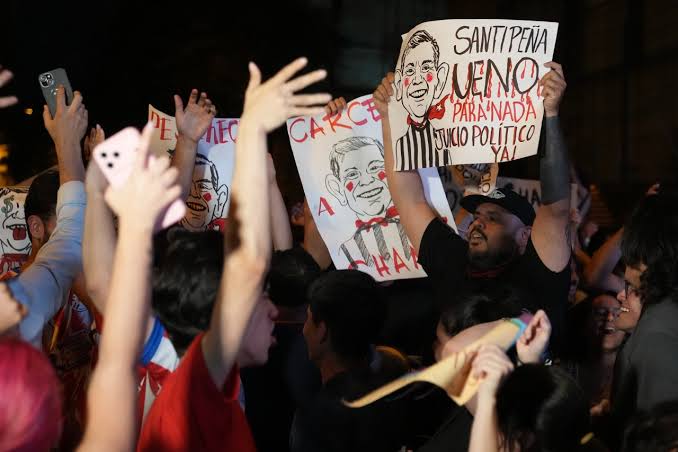
Paraguayan President Santiago Peña resigned on Thursday, November 5, 2026, following three consecutive days of violent street protests and an impeachment motion triggered by the sudden collapse of digital lender Ueno Bank SA.
The solvency crisis—which led Central Bank regulators to seize control of the financial institution—has locked millions of account holders and retirees out of their funds nationwide.
Presidential Resignation & Public Apology
Peña announced his resignation in a video statement posted to X (formerly Twitter) on Thursday evening as thousands of demonstrators faced off with law enforcement outside closed bank branches in Asunción and Ciudad del Este.
“I have made the decision to submit my resignation as president of the republic. I do so thinking of the stability of our country, social peace, and the need to preserve our democratic institutions,” Peña stated, attempting to halt escalating political unrest.
While offering an apology to citizens, Peña stopped short of accepting formal guilt, adding: “I also want to apologize to the people if I have failed them at any point… Today my priority is only one thing: the peace of mind of the Paraguayans who entrusted their savings to our financial system.”
Conflict of Interest Allegations & Regulatory Action
The banking disaster escalated into a major constitutional crisis due to deep political links between the presidency and the failing lender:
- Massive Market Share: Ueno Bank manages accounts for over three million customers—representing nearly half of Paraguay’s population—and oversees millions in state pension funds.
- Central Bank Intervention: Regulators took control of Ueno Bank following severe capital shortfall disclosures caused by excessive insider lending to companies associated with its owners. Central Bank President Carlos Carvallo—who previously chaired Ueno—resigned on Tuesday.
- Impeachment Push: Opposition lawmakers submitted a motion to impeach Peña for gross misconduct and conflict of interest, pointing out that the former president previously held major shares in the financial group controlling Ueno Bank.
Emergency legislation has been enacted allowing affected customers to withdraw a portion of guaranteed state protection funds, though anger remains intense across major cities as depositors demand full restitution.