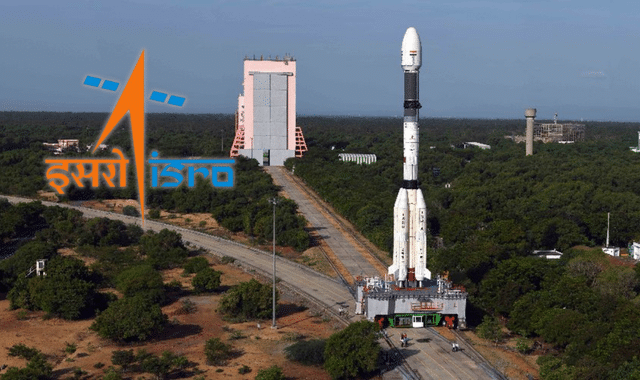
The rumour travelled faster than the rocket. Over recent days, parts of the Indian media suggested that space-sector reforms might hollow out the Indian Space Research Organisation — or even put the national space agency on a path to privatisation.
On Sunday, ISRO answered in public, at length, and without ambiguity.
“These assertions are completely baseless and incorrect,” the agency said in a detailed statement posted on X. “We wish to categorically state that ISRO will neither be privatised nor will its importance be diminished.”
That line is the story. Everything else is the architecture around it.
Clarification regarding media reports on concerns relating to Space Sector Reforms and the role of ISRO
ISRO’s Next Chapter: Leading India’s National Space Ecosystem
There has been considerable reporting in parts of the media around the future role of ISRO including speculations…— ISRO (@isro) September 6, 2026
The charge, and the correction
The statement landed after weeks of anxiety in parts of the space community, including concerns raised by employee associations about the transfer of manufacturing and operational work to industry. ISRO’s reply is designed to separate two ideas that have been collapsing into one: *opening the sector* and *selling the institution*.
Private participation, ISRO said, is not a demotion. It is a division of labour. Industry is being asked to scale what India already knows how to build — mature launch vehicles, routine satellites, established systems. ISRO is being asked to keep the work that cannot be bought off a production line: frontier research, human spaceflight, next-generation launch systems, deep-space missions and strategic national capabilities.
“What is changing is not the importance of ISRO, but the scale and structure of India’s space ecosystem.”
That sentence is the policy in miniature.
An ISRO-led ecosystem, not an ISRO-less one
The reforms themselves are not new. They began in 2020 and were formalised in the Indian Space Policy 2023, alongside a gradual opening of foreign direct investment. The official reading is expansion, not extraction: more factories, more capital, more startups, more global market share — with ISRO still at the centre.
The institutional map is now clearer than the rumour mill allowed:
- The Department of Space sets policy.
- ISRO remains the core for advanced R&D, technology development and national missions.
- IN-SPACe authorises and facilitates non-government players.
- NSIL commercialises mature capabilities.
- Industry, startups and academia supply investment, manufacturing muscle and market access.
Ownership of critical national space infrastructure and strategic capabilities, ISRO stressed, stays with the government. Private operations, where allowed, remain bound by security, safety and regulatory rules. That is not a footnote. It is the firewall.
Why the shift now
India’s space story has outgrown a single organisation’s bandwidth. In 2020, Indian space startups could be counted on one hand. Today there are more than 450, working on launch vehicles, satellites, propulsion, ground systems, Earth observation, communications and applications. The national space economy is estimated at about $8.4 billion. The target is $44 billion by 2033.
No public laboratory, however storied, can hit that number alone. ISRO’s argument is blunt: government budgets and government headcount cannot manufacture at global scale. Private capital can. The agency’s job is to make sure scale does not become substitution.
Technology transfer is part of that bargain. ISRO says it has already moved multiple mature technologies to industry. Transfer, it insists, is not withdrawal. It is how a research organisation stops being a factory and starts being a frontier lab again.
The missions that still require ISRO
The timing is not accidental. India has written dates onto the sky.
Under Space Vision 2047, the country wants a **Bharatiya Antariksh Station by 2035** and an **Indian crewed mission to the Moon by 2040**, plus reusable next-generation launchers and a sustained programme of lunar and planetary exploration. Those are not “routine satellites.” They are the kind of programmes that punish haste and reward institutions with memory.
ISRO’s case is that commercial activity can multiply capacity, but it cannot replace the scientific and strategic core those missions demand. Human spaceflight, advanced payloads, sensors, propulsion and deep-space systems will remain the agency’s centre of gravity.
In other words: industry builds the fleet. ISRO still writes the destination.
The real test
The statement is both reassurance and warning. Reassurance to scientists, engineers and the public that the organisation which put India on the Moon’s south polar region is not being dismantled. Warning to anyone who hoped — or feared — that reform meant a quiet exit from public control of strategic space power.
The measure of success, ISRO said, should not be whether the agency looks smaller on an organisation chart. It should be whether India’s *total* space capability grows: more research at the edge, more industry at scale, more missions that only a confident nation attempts.
If that design holds, Sunday’s clarification will be remembered less as a denial and more as a job description. ISRO stays public. ISRO stays central. And the hard problems — the station, the crew, the next rocket, the next world — stay on its desk.