Iran has sharply escalated its attacks on commercial shipping in the Strait of Hormuz, a strategic maritime chokepoint, resulting in widespread damage to merchant vessels and rising concerns for global trade and energy security.
According to maritime sources, at least 19 ships have been struck by Iranian projectiles as of today, including bulk carriers and tankers. The attacks have caused structural damage to several vessels and led to multiple fatalities and injuries among ship crews.
Despite the escalating risk, two tankers operated by the Shipping Corporation of India (SCI) — Pushpak and Piramal — successfully transited the strait early this morning without naval escort. The safe passage of these Indian‑flagged vessels follows ongoing diplomatic engagement between Indian officials and Iranian authorities.
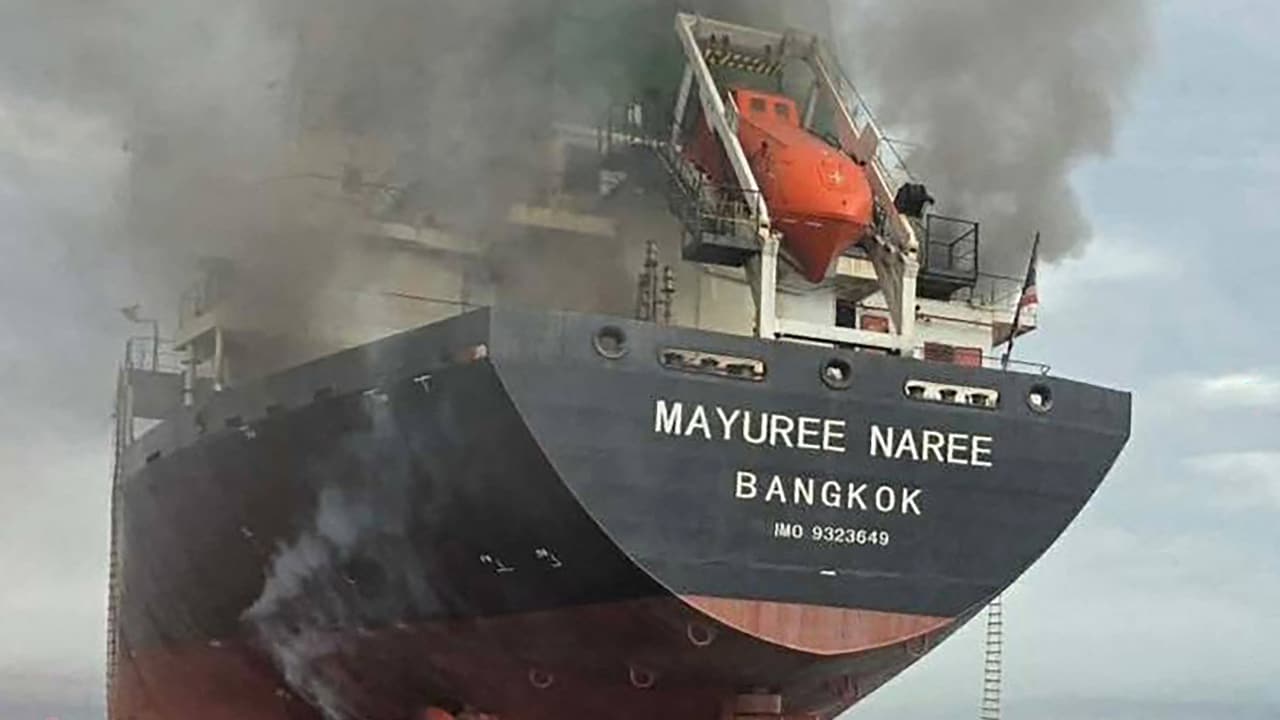
A Thai‑flagged bulk carrier, Mayuree Naree, sustained a direct hit below the waterline while transiting the strait. Smoke was observed rising from the vessel, prompting emergency response efforts and highlighting the grave risk to civilian mariners operating in the region.
Maritime analysts highlight the heightened ambiguity in Iranian military communications and note that restrictions on naval escorts continue to expose commercial vessels to elevated danger. Observers suggest Tehran may be leveraging control over Hormuz to influence broader geopolitical dynamics, including pressures on the United States and its partners.
Iran’s actions in the strait raise legal and diplomatic concerns, particularly violations of the United Nations Convention on the Law of the Sea (UNCLOS), which enshrines freedom of navigation in international waters.
The United Nations Security Council recently adopted a resolution invoking Article 51 of the UN Charter, affirming states’ inherent rights to individual and collective self‑defense. The resolution was supported by a broad coalition of member states, with abstentions from Russia and China.
Global energy markets have already felt the impact of the disruptions. The Strait of Hormuz remains critical to the flow of crude oil and liquified natural gas, and continued instability threatens to exacerbate energy price volatility and strain international supply chains.
Though some regional Gulf states have refrained from overt military response, there is growing speculation that covert defensive measures may be undertaken to protect maritime traffic and economic interests.
As the crisis continues, international stakeholders are calling for urgent diplomatic engagement to restore safe passage through one of the world’s most important trade corridors.