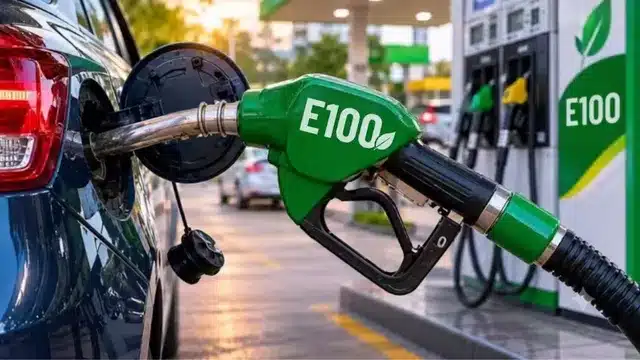
In a major boost to India’s clean energy transition and biofuel roadmap, the Ministry of Road Transport and Highways (MoRTH) has amended the Central Motor Vehicles Rules to formally approve E100 (100% pure ethanol fuel) alongside E85 for certified flex-fuel vehicles.
Regulatory Framework for 100% Ethanol Fuel
The final notification, issued on October 23 and published in the official gazette on October 26, 2026, takes immediate effect following the review of public feedback from draft rules released earlier in April.
Under the new regulatory framework, flex-fuel vehicles (FFVs) equipped with specialized onboard sensors can operate seamlessly on any combination of ethanol and petrol—ranging from standard gasoline to near-100% ethanol blends. Standard petrol vehicles, including those calibrated for the nationwide E20 blend (20% ethanol, 80% petrol), cannot run on E85 or E100 without proper engine and component certification.
Technical Adaptations and Automotive Impact
The notification clears a formal regulatory path for Indian automakers preparing to introduce E100-compatible models aimed at curbing the country’s crude oil import dependency:
- Engine Reconfiguration: Ethanol requires upgraded fuel system components—including seals, fuel lines, and fuel injectors—capable of resisting ethanol’s corrosive properties.
- Fuel Efficiency Considerations: Because ethanol delivers roughly one-third less energy per liter compared to conventional petrol, vehicle designs will require larger fuel tanks or retuned engine control units (ECUs) to balance range and performance.
India’s move mirrors Brazil’s long-running flex-fuel program, where sugarcane-derived ethanol has successfully powered a vast portion of the domestic vehicle fleet since 2003.