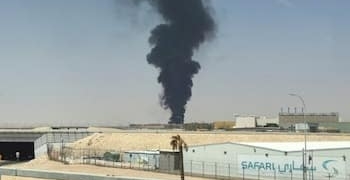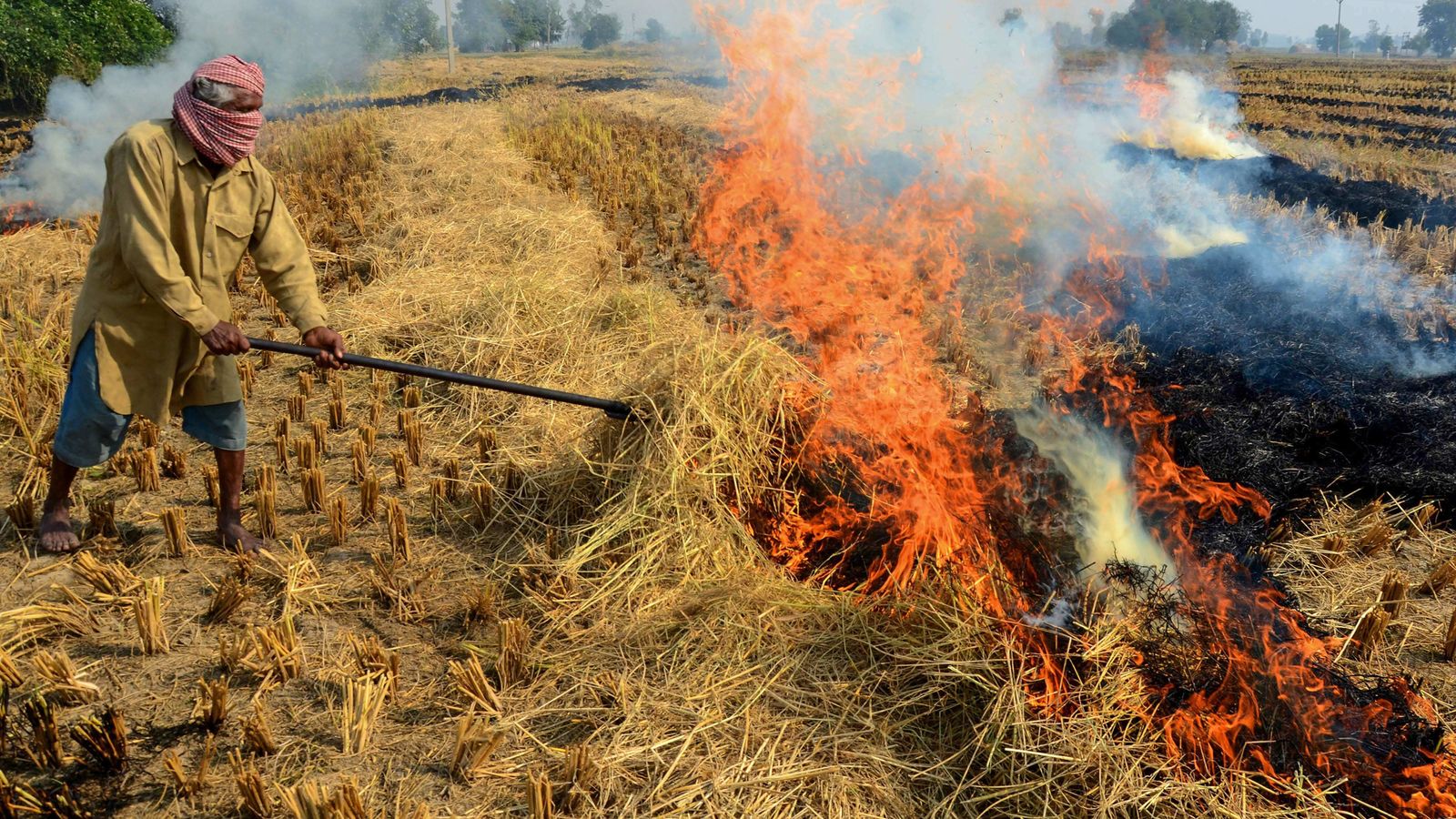
A detailed environmental data analysis by Hindustan Times has revealed that a sharp surge in evening stubble burning across Punjab and Haryana—occurring after daytime satellite passes—was the primary driver behind Delhi’s air quality plunging into the “very poor” category on Monday, November 2, 2026.
While the Central Pollution Control Board (CPCB) recorded a 24-hour average Air Quality Index (AQI) of 324 on Monday, comparative meteorological data indicates that crop fires, combined with shifting north-westerly transport winds, injected heavy loads of fine particulate matter (PM_{2.5}) into the capital’s atmosphere.
Identical Weather, Significantly Dirtier Air
The analysis compared atmospheric conditions on November 1 with earlier dates in October that shared identical weather profiles:
- Particle Load Spike: During the overnight period of November 1 (10 PM to 6 AM Monday), fine particulate matter (PM_{2.5}) averaged 194 micrograms per cubic meter—more than three times India’s safe 24-hour limit of 60 \mu g/m^3.
- Comparative Baseline: On October 18 and 28, despite similar calm surface winds and strong thermal inversion lids holding trapped air near the ground, overnight PM_{2.5} averages stood significantly lower at 68 and 127 \mu g/m^3, respectively.
- External Inflow: Unlike typical urban pollution patterns where street-level emissions disperse during warm afternoons, PM_{2.5} readings remained elevated throughout the afternoon of November 1. Furthermore, fine particles comprised nearly 60% of total particulate weight, signaling dense smoke signatures rather than local road or construction dust.
The Satellite Blind Spot: Shift to Evening Burning
Standard regional stubble-burning metrics rely on NASA’s Suomi NPP satellite, which passes over the region once daily at approximately 1:30 PM IST. However, geostationary satellite data shows that agricultural burning habits have shifted drastically:
- INSAT-3DS Tracking: India’s INSAT-3DS geostationary satellite, which monitors thermal anomalies continuously throughout the day, recorded that over 90% of intense crop fires in Punjab and Haryana were lit after 3:00 PM.
- Surge in Fire Counts: INSAT-3DS detected evening fire counts climbing rapidly from 17 on October 29 to 90 on November 1.
- Wind Trajectories: Upper-level transport winds at 925 hPa blew directly from the north-west over Punjab and Haryana toward Delhi on October 31 and November 1, carrying dense smoke plumes directly into the National Capital Region.