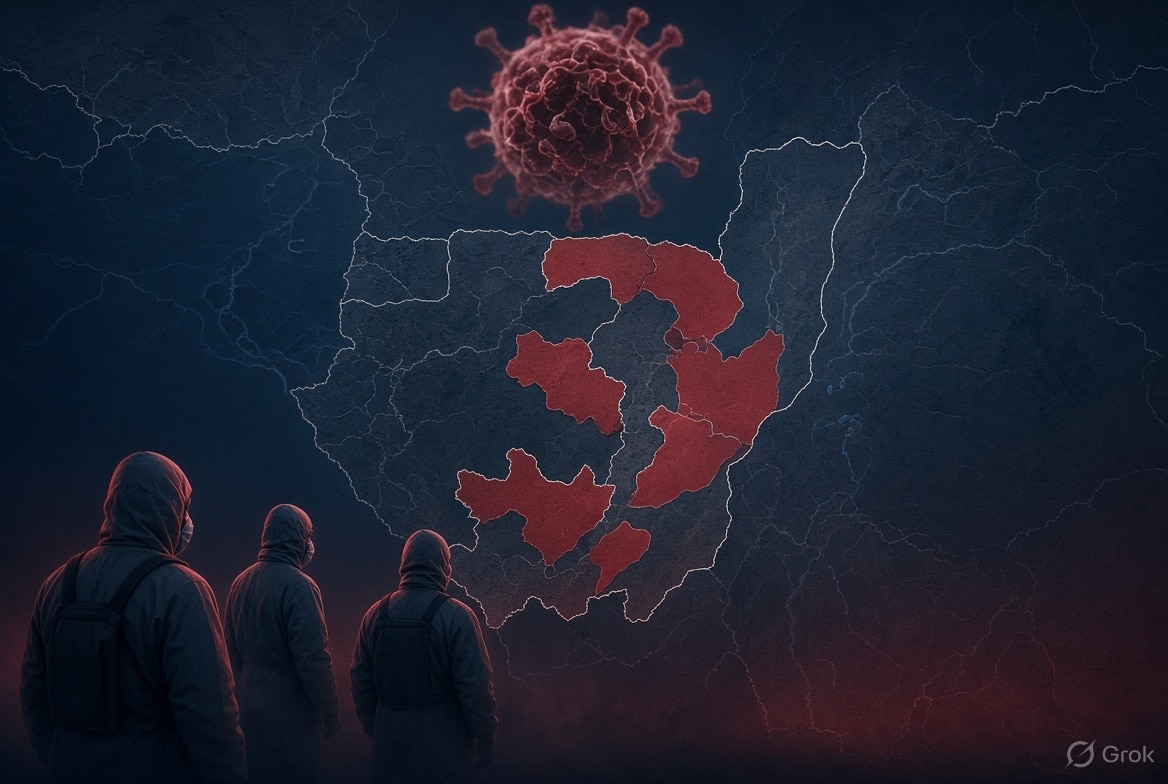
The ongoing Ebola outbreak in the Democratic Republic of the Congo has claimed 4,018 lives among 8,300 confirmed cases, according to the latest figures released by Congolese health authorities, making it the deadliest epidemic in the country’s history.
The outbreak, caused by the Bundibugyo strain of the Ebola virus, was first declared on May 15, 2026. It has since spread across seven provinces and 63 health zones, with 45 still reporting active transmission. The case fatality rate stands at 48.4 percent, while 2,162 patients have recovered so far.
Health officials and international partners say the epidemic is now the largest ever recorded in the DRC, surpassing the 2018–2020 outbreak. It ranks as the second-deadliest Ebola epidemic worldwide, behind only the 2014–2016 West Africa outbreak that killed more than 11,000 people.
Africa Centres for Disease Control and Prevention (Africa CDC) has noted a recent decline in reported cases in some areas. However, the agency cautioned that the drop may reflect gaps in surveillance rather than genuine control of transmission. Médecins Sans Frontières (MSF) has similarly warned that the true death toll is likely higher due to incomplete case detection.
Containment efforts face severe obstacles. Insecurity in eastern provinces, particularly Ituri—the epicenter—has disrupted response operations. Community resistance and mistrust of authorities have further complicated contact tracing and isolation measures. Recent incidents include the burning of an Ebola transit centre near Bunia, which forced thousands of displaced people to flee.
No approved vaccine or specific treatment currently exists for the Bundibugyo strain, though experimental options are under evaluation. The World Health Organization has described the outbreak as “far from over” and warned it remains on a trajectory that could eventually exceed the scale of the West African epidemic if response challenges persist.
Health authorities continue to urge increased international support for surveillance, community engagement, and logistics in the affected regions.