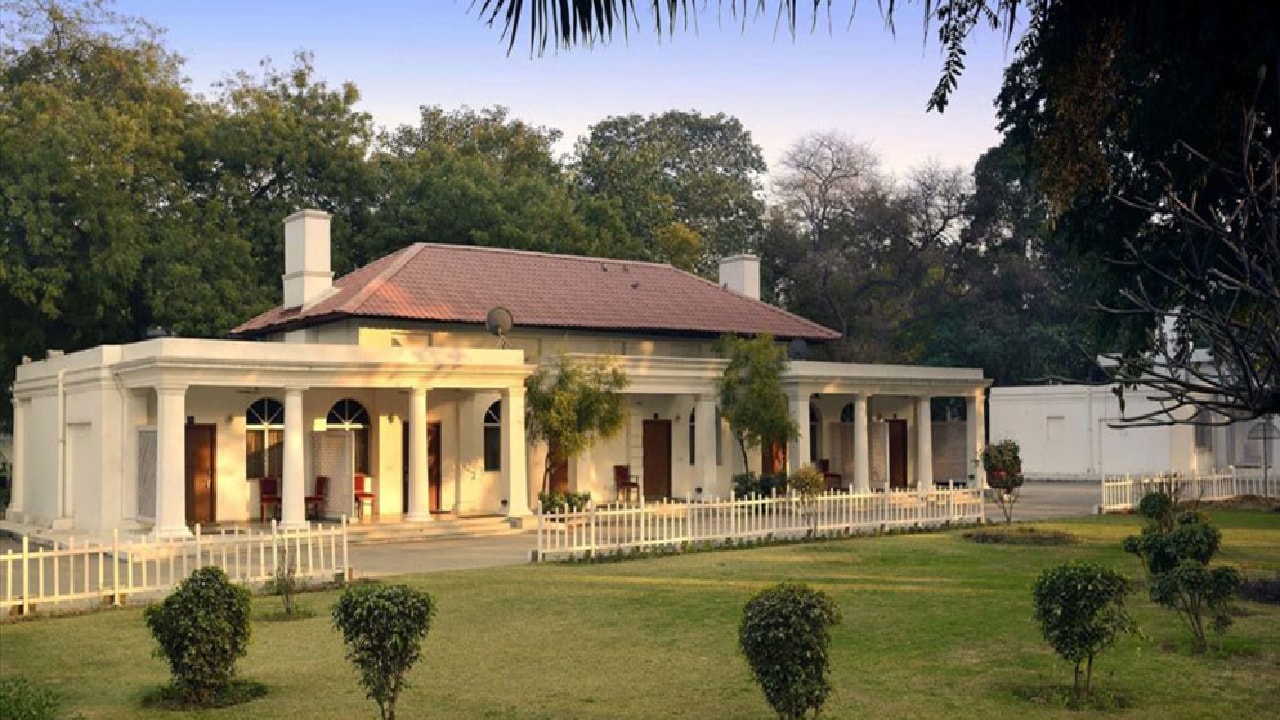
Delhi Gymkhana Club, one of the capital’s most iconic colonial-era institutions, is facing possible displacement after the government reportedly asked it to vacate its 27.3-acre premises by June 5.
The land, located on Safdarjung Road in New Delhi, lies close to highly sensitive government and defence establishments, including the Prime Minister’s residence on Lok Kalyan Marg.
Authorities reportedly cited the need to secure defence infrastructure while issuing the notice.
Historic Landmark at Centre of Controversy
Founded during the British era, the Delhi Gymkhana Club has long been associated with India’s political, bureaucratic and diplomatic elite.
The possible closure or relocation of the club has sparked intense reactions from former officials, politicians, historians and public figures.
Kiran Bedi Calls Move “Tragic”
Kiran Bedi described the development as “unfortunate and tragic,” arguing that the club represented far more than just valuable real estate.
She said the institution carried decades of sporting heritage and memories, particularly in tennis and other elite sporting events hosted there.
According to her, history and legacy deserved careful preservation even if changes became necessary.
Debate Over Elitism and Public Land
Veteran journalist Prabhu Chawla supported stronger scrutiny of elite clubs operating on subsidised public land.
He argued that many such institutions historically functioned as exclusive spaces for bureaucrats and influential elites, limiting access to ordinary citizens.
Former diplomat KC Singh countered that such clubs also provided affordable recreational and sporting spaces for government officials whose salaries were historically lower than those in the private sector.
He argued these spaces reduced dependence on wealthy business interests.
Historians and Former Officials React
Historian Swapna Liddle acknowledged the institution’s elitist colonial roots but said it had evolved over time by including Indian members.
She said the real conversation should focus on reforming and widening access instead of simply dismantling historic institutions.
Former RAW chief AS Dulat emotionally described the club as a “home” for many elderly residents of Delhi.
According to him, relocating the institution elsewhere would fundamentally change its identity.
Supreme Court lawyer Sanjay Hegde compared the controversy to earlier political attempts to take over elite institutions like the Patna Golf Club, describing such conflicts as an old struggle between populist politics and elite establishments.
Political Leaders Divided
The issue also triggered political reactions.
Congress leader Udit Raj criticised the move, calling the club a historic institution rather than merely a piece of land.
Saurabh Bharadwaj termed the action “dictatorial” and accused the government of displacing different sections of society over time.
On the other hand, Abhishek Verma strongly defended the move, arguing that elite clubs had functioned for decades as exclusive “drawing-room ecosystems” built on inherited privilege and restricted access.
Larger Debate Beyond One Club
The controversy surrounding the Delhi Gymkhana Club has now evolved into a broader national debate involving:
- Heritage preservation
- Public access to elite institutions
- Use of government land
- Colonial-era legacy spaces
- Security concerns around sensitive government zones
Whether the club ultimately relocates, reforms or survives in its present form, the debate has already reignited larger questions about privilege, history and urban public spaces in modern India.