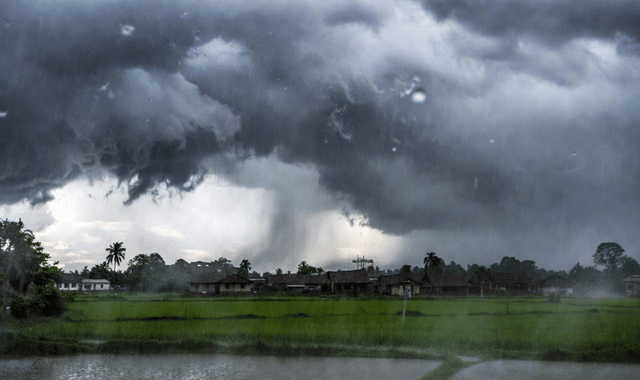
A powerful low-pressure system swirling over the northwest Bay of Bengal and adjoining Gangetic West Bengal and north Odisha coast has unleashed torrential rains across the state, turning vast stretches into waterlogged zones and prompting the India Meteorological Department (IMD) to issue a red alert for Kendujhar on Sunday.
The Bhubaneswar Regional Meteorological Centre has already placed six districts under red warning for Saturday, while Sunday’s red alert is specifically for Kendujhar. Ten districts are under orange warning and 13 under yellow, signalling heavy to very heavy rainfall accompanied by thunderstorms and lightning across Odisha.
“The system is expected to intensify into a well-marked low-pressure area within the next two days. Northern Odisha will continue to receive heavy to very heavy rainfall till July 31,” said Manorama Mohanty, Director of the Regional Meteorological Centre.
In the last 24 hours, extremely heavy rainfall exceeding 8 cm was recorded at three locations in the north interior regions. Continuous downpours have raised water levels in the upper reaches of the Mahanadi, Brahmani and Baitarani rivers, creating a serious risk of flash floods in low-lying areas.
Coastal north Odisha is also facing rough seas with winds of 40-60 kmph. Fishermen have been strictly advised not to venture into the sea until July 27.
Orange Warning (Sunday – Heavy to Very Heavy Rain):
- Jajpur, Cuttack, Dhenkanal, Angul, Deogarh, Sambalpur, Jharsuguda, Sundargarh, Mayurbhanj and Bargarh.
Yellow Warning (Heavy Rain):
- Kalahandi, Nuapada, Balangir, Sonepur, Boudh, Kandhamal, Nayagarh, Khordha, Puri, Jagatsinghpur, Kendrapara, Bhadrak and Balasore.
A statewide yellow warning for thunderstorms and lightning remains in force.
Despite the active El Niño conditions, Odisha’s monsoon has shown resilience. After a 46% rainfall deficit in June, the first 25 days of July have more than compensated, pushing the seasonal total to 19% above normal — a positive sign for agriculture and farmers across the state.
Authorities have urged residents in vulnerable areas to remain vigilant, avoid unnecessary travel, and stay updated on official weather advisories as the system continues to evolve.