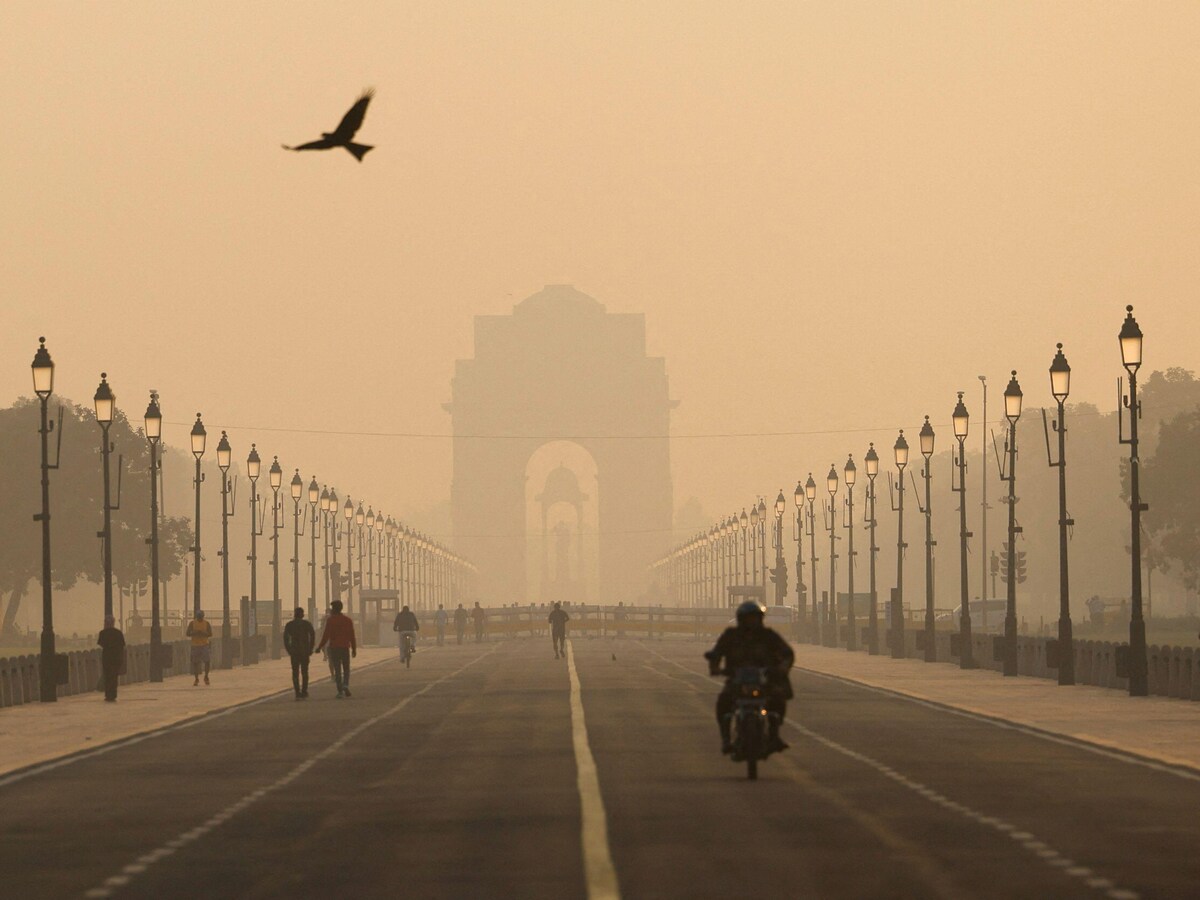
Delhi’s air quality worsened sharply on Friday, plunging several areas into the ‘severe’ category and prompting health experts to issue a red alert, calling the situation “life-threatening” and a public health emergency.
Health surveys indicate that nearly 80% of households in Delhi-NCR had at least one family member fall ill in the past month due to toxic air. Doctors report a surge in patients experiencing respiratory distress, burning eyes, headaches, and aggravated asthma.
Key Developments in Delhi’s Air Quality Crisis
1. AQI remains dangerously high
Delhi recorded a 24-hour average AQI of 370 at 9 am on Friday, according to the Sameer App. This marks the eighth straight day that the city has remained in the ‘very poor’ category.
Recent AQI readings:
-
Wednesday: 392
-
Tuesday: 374
-
Monday: 351
2. Over 18 stations log ‘severe’ AQI
More than 18 monitoring stations—including Chandni Chowk, Anand Vihar, Mundka, Bawana, Wazirpur, and Narela—recorded AQI levels above 400, signalling hazardous air.
3. Forecast: No relief for at least six days
The Ministry of Earth Sciences’ Air Quality Early Warning System predicts that Delhi’s air quality will continue to stay in the ‘very poor’ to ‘severe’ range for the next six days due to stagnant winds and winter inversion.
4. Pollution sources: Vehicles, weather, and crops
According to IITM’s Decision Support System:
-
Vehicular emissions: 17.3% of PM2.5 on Thursday; expected to be 16.2% Friday
-
Stubble burning: 2.8% Thursday; expected to be 1.8% Friday
5. Farm fire data
Satellite imagery detected:
-
Punjab: 16 fires
-
Haryana: 11 fires
-
Uttar Pradesh: 115 fires
Though lower than previous years, these still add to background pollution.
6. Hospitals report a surge in cases
AIIMS specialists warned that Delhi has entered a “medical emergency zone.” Hospitals are witnessing a 10–15% spike in pollution-linked cases, with many patients requiring ventilators.
“The pollution here is severe and life-threatening… We are seeing damage not just to lungs, but to the heart, brain, and other organs. Life expectancy is being affected,” said Dr. Anant Mohan of AIIMS.
Dr. Saurabh Mittal added, “Delhi can’t treat pollution as a November-only issue. Year-round action is essential.”
7. Do masks and purifiers help?
Doctors emphasise that while masks and air purifiers provide limited individual protection, they cannot replace long-term policy solutions.
8. 80% of households affected
A LocalCircles survey found that:
-
8 in 10 households had at least one member fall ill
-
36% reported four or more family members experiencing symptoms
Common issues include persistent cough, wheezing, breathlessness, burning eyes, and aggravated asthma.
9. Supreme Court intervention
The Supreme Court urged CAQM to consider postponing school sports events to protect children from hazardous air, noting that conducting outdoor activities now is like “training in gas chambers.”
The court also called for stricter enforcement of stubble-burning guidelines.
10. Public protests intensify
Residents—including children and parents—are gathering at India Gate and Jantar Mantar to demand immediate action. Many express frustration over year-round political inaction, weak enforcement, and the severe impact of restrictions on daily-wage workers.