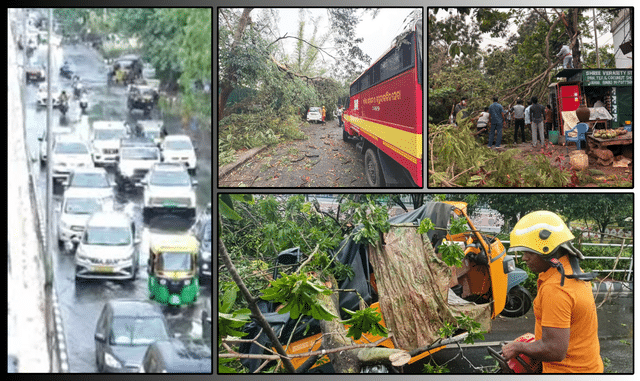
Just when the Odisha capital felt like an oven — with temperatures crossing 40°C and heat index touching a punishing 50°C for two straight days — nature struck back with a vengeance.
A ferocious Kalbaisakhi thunderstorm ripped through Bhubaneswar and parts of Khordha district on Saturday afternoon, unleashing hail, torrential rain and winds gusting between 50 and 70 kmph.
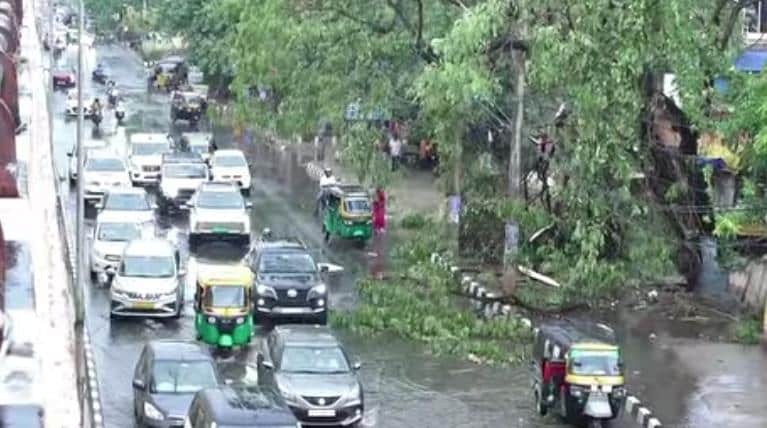
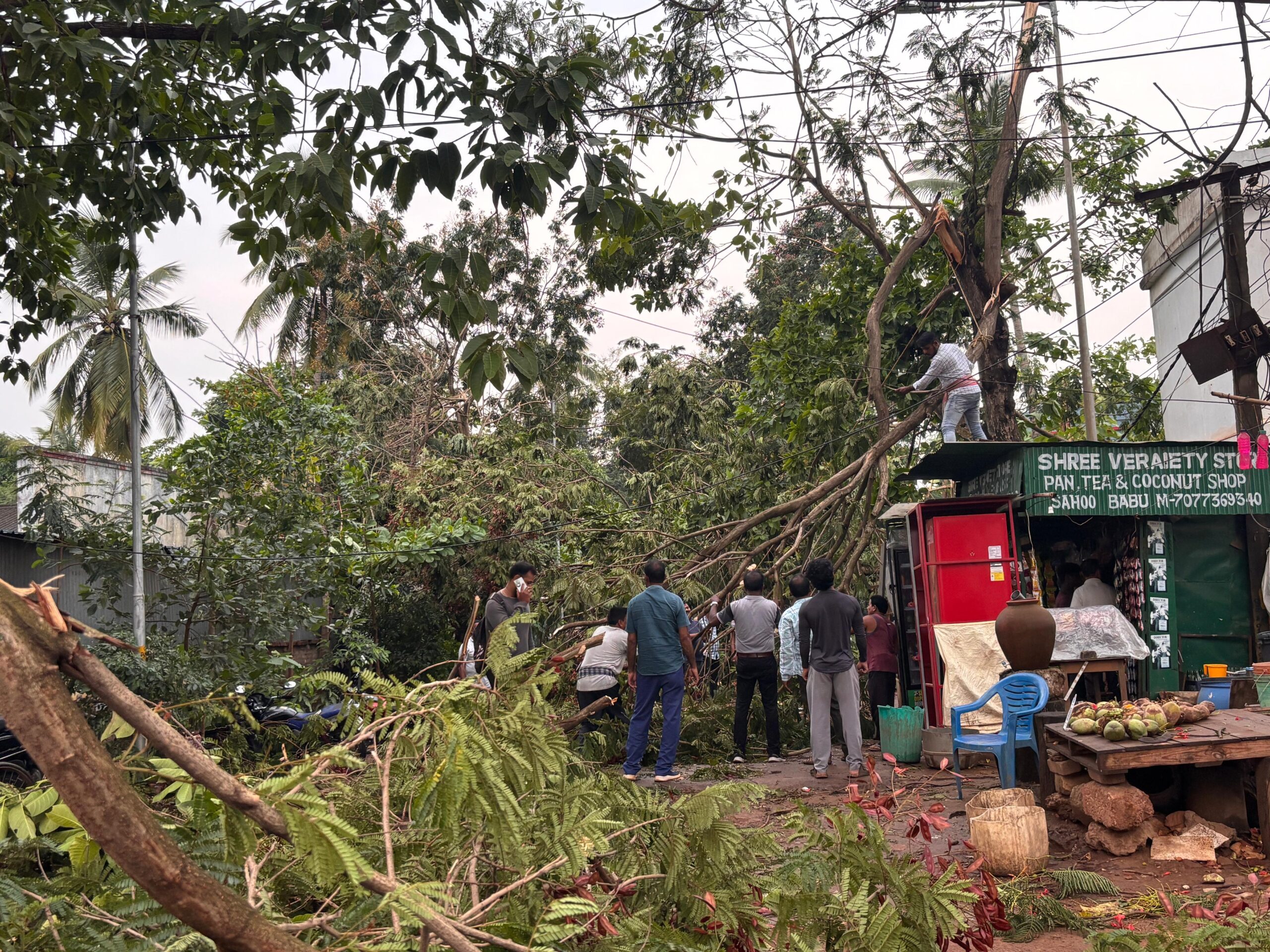
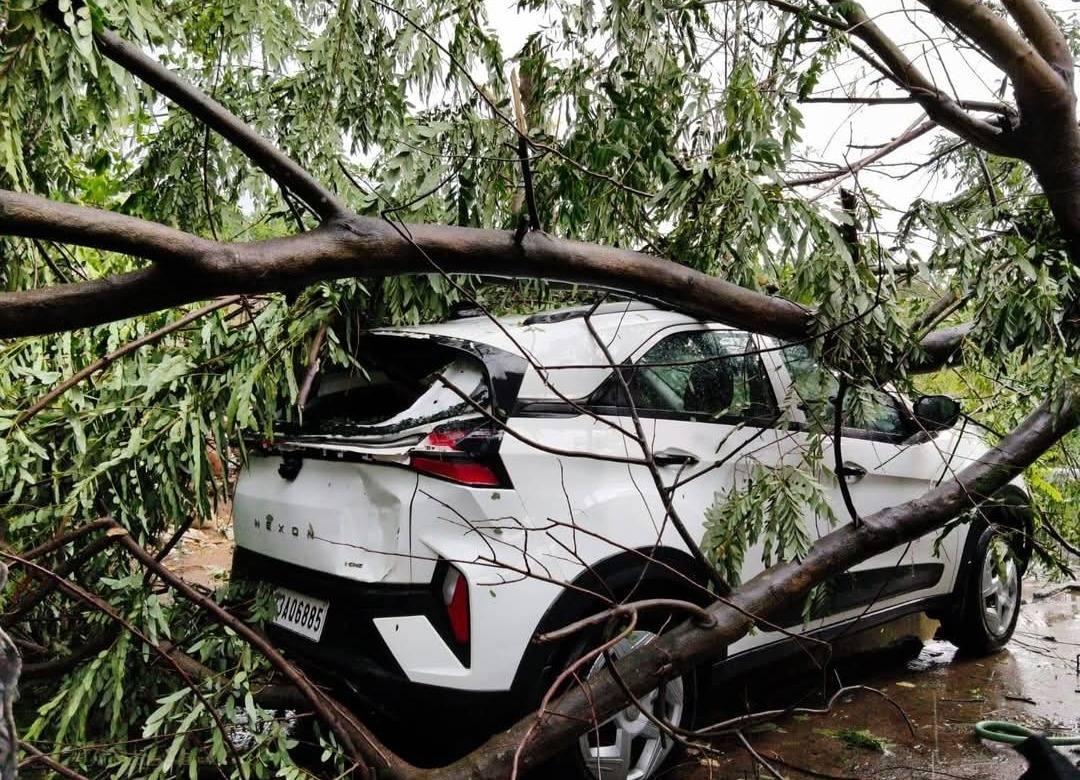
What began as a much-awaited breather from the blistering heat quickly turned into a scene of destruction. From 2:30 pm to 4 pm, the sky turned dark as the storm unleashed its full fury. Trees crashed onto busy roads, electric poles snapped like matchsticks, and massive traffic snarls brought the city to a standstill. In just one-and-a-half hours, 2.6 cm of rain fell — but it was the accompanying hail and gale-force winds that did the real damage.
The human cost was tragic. On the National Highway near Palasuni Chhak (before Saptasati Vihar), a bike skidded on the wet road after the storm. A speeding truck crushed the two-wheeler from behind. One young man died on the spot; his companion was critically injured and rushed to Capital Hospital. Police have recovered the body for post-mortem, while traffic remained jammed for over four hours.
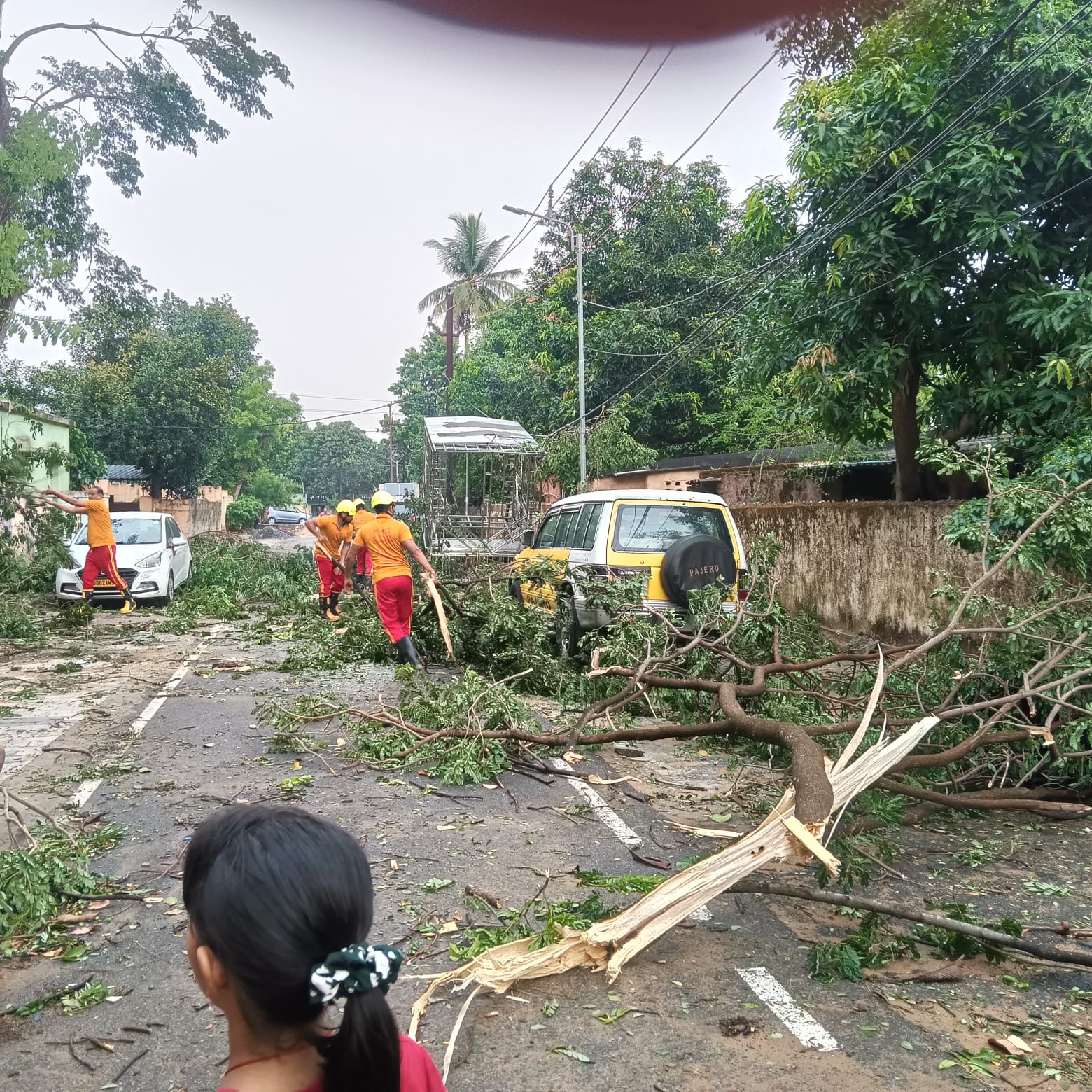
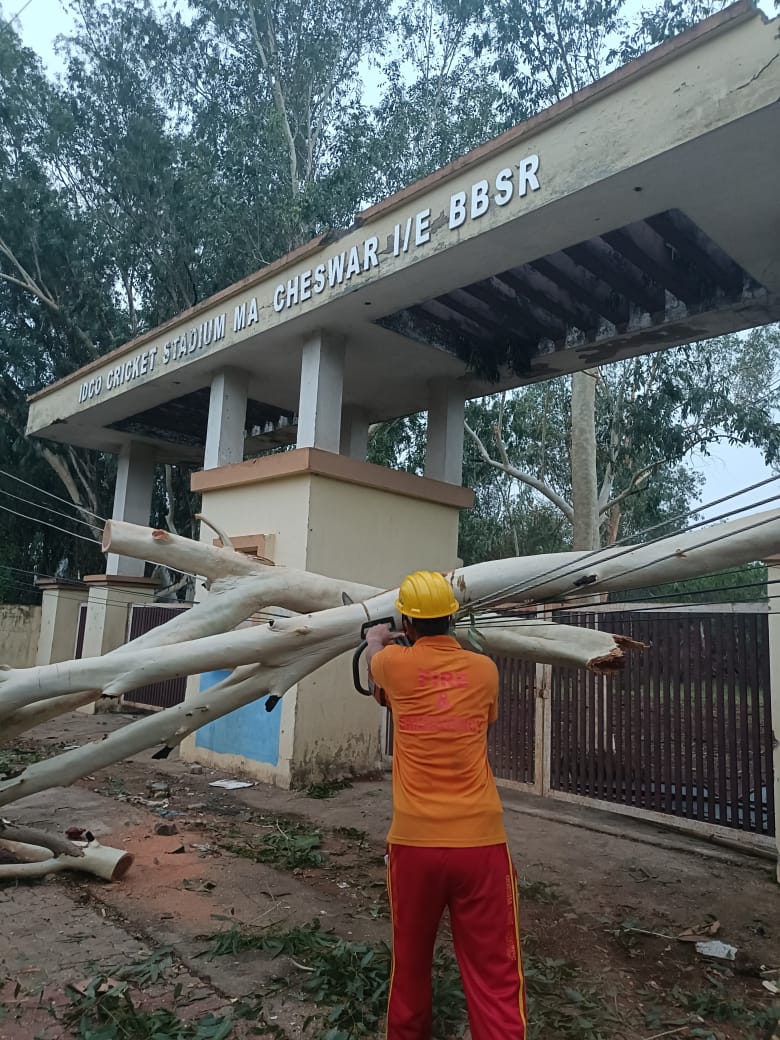
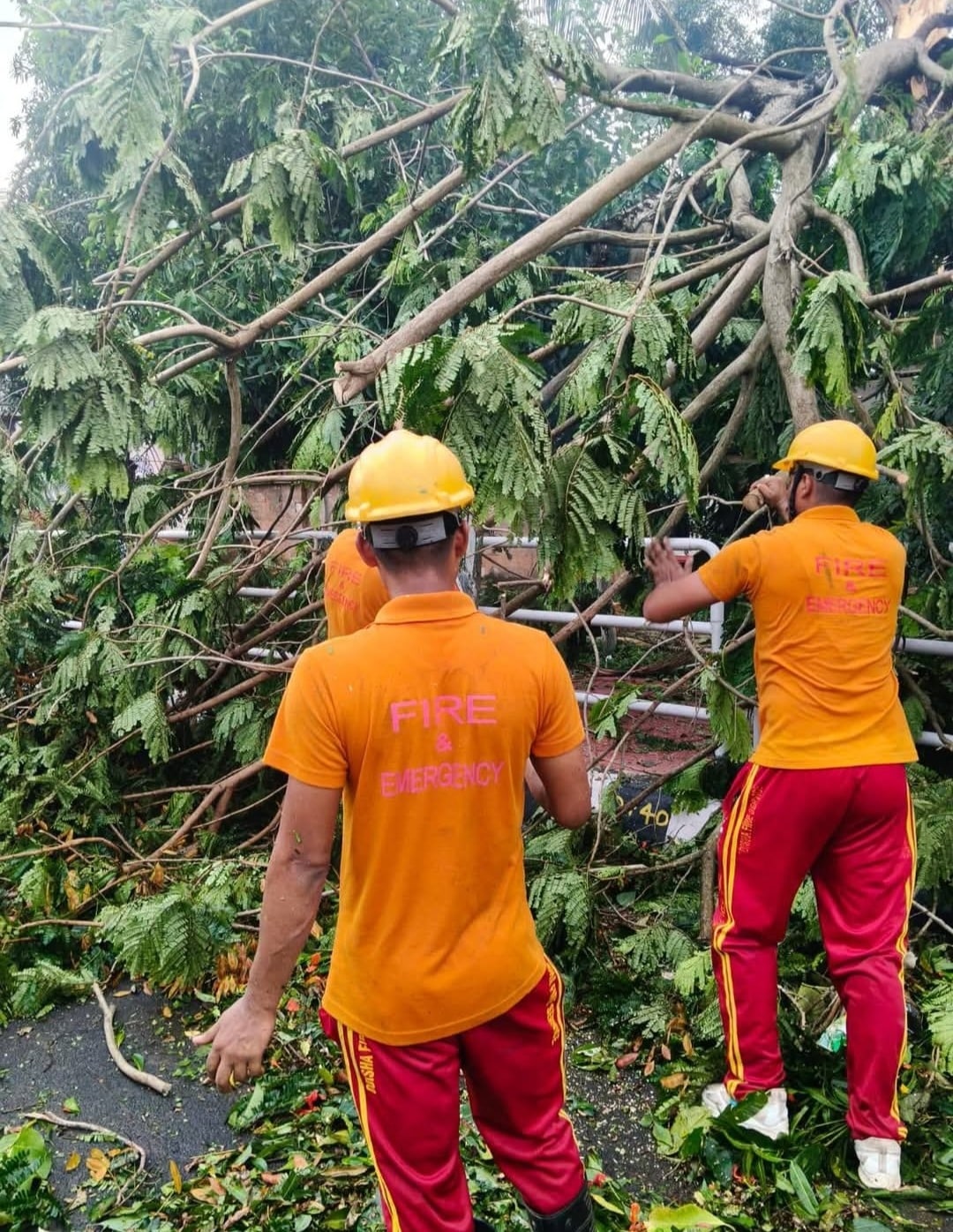
Across the city, the story was the same. Major roads were blocked by uprooted trees and fallen electric poles. In Bhoi Nagar near Sai Mandir and around Mancheswar IDCO Cricket Stadium, fire services and ODRAF teams worked at lightning speed, using cutters to clear massive branches and restore movement. Residents watched in awe as firefighters in safety gear sliced through fallen trees, earning loud cheers from locals.







The damage was not limited to roads. The ongoing International Raja Utsav Trade Fair at Janata Maidan suffered heavy losses. Over 250 of the 300+ stalls were destroyed or severely damaged. Rainwater flooded the stalls, ruining goods worth lakhs. Businessmen, many from outside the state, expressed anger at the organisers for inadequate safety measures. Air-conditioning units lay toppled on the ground.
Power supply took the biggest hit. Thousands of households in Nayapalli, Saheed Nagar and several other localities plunged into darkness for more than five hours. Residents complained they were forced to sit outside in the humid post-storm air because there was no electricity to run fans. Repair crews from the electricity department and fire services were working round the clock, promising restoration by late night.
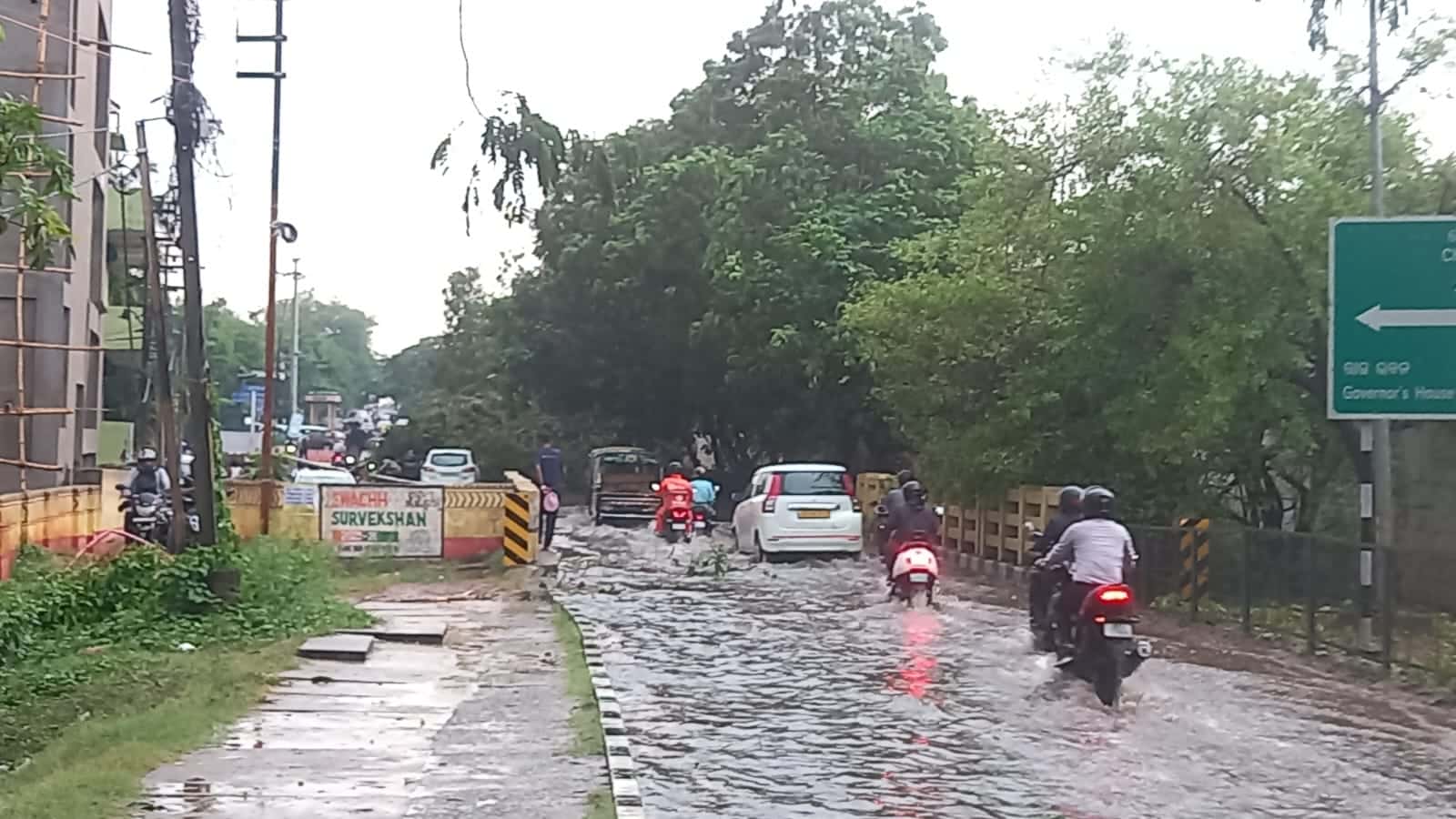
Low-lying areas like Bomikhal, Rasulgarh, Acharya Vihar, and Jaydev Vihar turned into waterlogged zones. Water reached knee-deep levels in front of the ISKCON temple, completely halting vehicle movement.
Yet, for many, the storm brought relief too. The maximum temperature of 40.7°C plummeted, and the heat index dropped dramatically from over 50°C to just 22°C — a 14-degree respite in a single afternoon. The oppressive humidity remained, but the killer heat had finally eased.
The Regional Meteorological Centre has already issued a fresh alert: a low-pressure area is likely to form over the Bay of Bengal during the current week (June 8–14). This could trigger more pre-monsoon rains across the state, giving hope that the long-awaited monsoon is finally on its way.
As night fell, Bhubaneswar’s streets were still being cleared by emergency teams working under floodlights. The city, battered but breathing easier after days of scorching heat, now waits to see what the next spell of weather will bring.