The Bhubaneswar Municipal Corporation (BMC) marked a significant milestone in its quest to make the temple city flood-resilient.
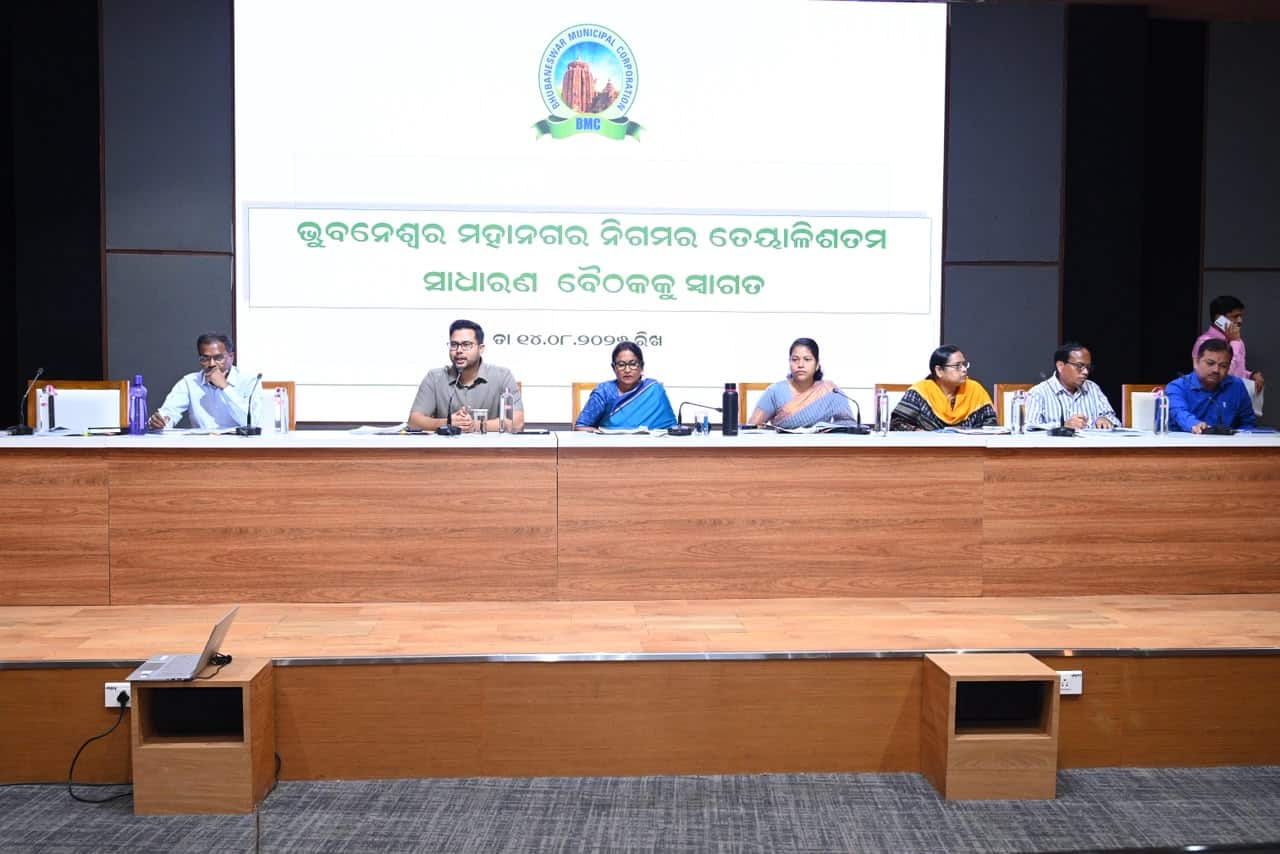
During the 43rd General Council meeting held at Ekamra Hall under the chairmanship of Mayor Sulochana Das, the Draft Comprehensive Stormwater Drainage Master Plan—prepared in association with IIT Roorkee—was formally presented.
The partnership traces back to 18 February 2025, when BMC and IIT Roorkee signed a Memorandum of Understanding to develop a scientific, city-wide stormwater management plan and Detailed Project Reports (DPRs). The study spans approximately 256 square kilometres of the BMC area and treats the entire drainage network as an interconnected system—from micro-catchments and tertiary drains to primary channels and final outfalls.
Using advanced tools such as GIS, Digital Elevation Models (DEM), drone mapping, DGPS and Total Station surveys, rainfall analysis, catchment delineation and hydraulic modelling, the team has assessed existing drains, natural channels, water bodies, culverts, syphons and critical outfalls. The exercise has pinpointed flood hotspots, bottlenecks and capacity shortfalls while looking far beyond current needs. The plan factors in projected urbanisation, population growth and changing hydro-climatic conditions up to 2050, ensuring the system remains robust for decades.
Proposed interventions include drain augmentation, creation of new drainage links, removal of bottlenecks, improvement of syphons and outfalls, detention and retention structures, groundwater recharge measures, and pumping arrangements at critical locations. Modern technology—SCADA systems, level sensors and flood early-warning mechanisms—has also been incorporated. Once finalised, the Master Plan will serve as the technical blueprint for prioritising and implementing projects in phases, guided by flood risk, hydraulic importance, feasibility and land availability.
Mayor Das emphasised that the plan is still in draft form and that technical observations and suggestions from all stakeholders will be carefully considered before finalisation. “Our ultimate objective is to move from reactive, location-specific fixes to a scientifically planned, integrated and future-ready drainage system that makes Bhubaneswar a flood-resilient, climate-ready and sustainable city,” she said.
The same meeting also discussed several other progressive steps. Proposals were considered for merging surrounding panchayats into BMC so that peri-urban areas can access better civic amenities. Progress on the waste-to-energy plant at Meherpalli was reviewed, with wet waste-to-biogas production expected to become operational soon. Ponds across the city will be auctioned for fish farming on a three-year basis, with preference given to local communities, clubs and organisations; successful bidders will also be responsible for maintaining the cleanliness of the water bodies and their surroundings. Plans for Local Self-Government Day celebrations on 31 August—including competitions for students, sports events for corporators and staff, and a friendly cricket match between BMC and CMC—were also finalised.
With the draft plan now on the table, Bhubaneswar has taken a decisive step toward transforming its drainage infrastructure from a patchwork of temporary solutions into a comprehensive, climate-smart system designed to protect citizens for generations.