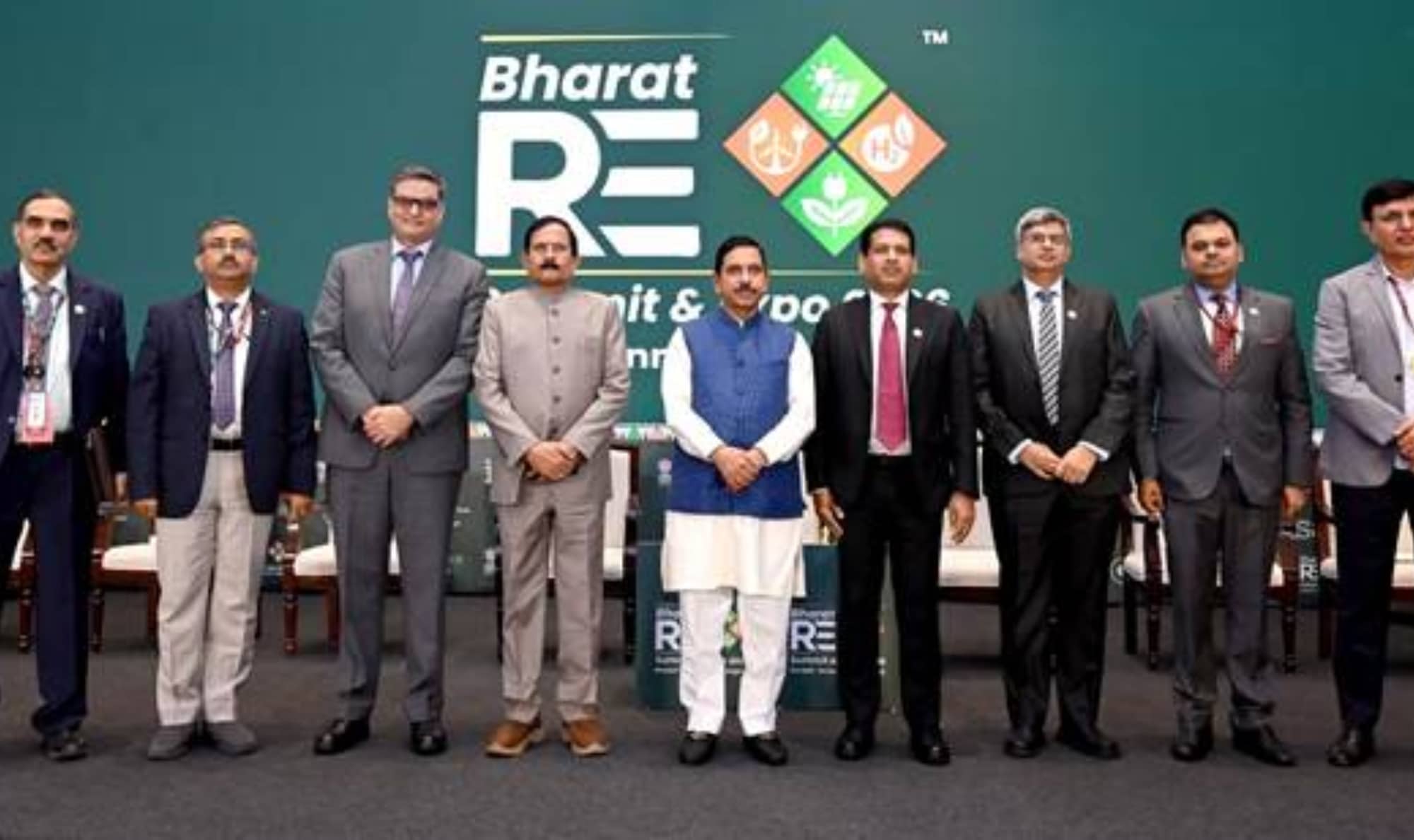
The four-day Bharat Renewable Energy (BRE) Summit & Expo 2026 concluded today at Bharat Mandapam, cementing India’s status as a major global force in clean energy.
Inaugurated on November 2 by Prime Minister Narendra Modi, the landmark summit brought together over 75,000 visitors, 400 exhibitors, and 627 speakers across 113 sessions. With participation from 135 countries—including 32 international ministers, 6 chief ministers, and 10 state energy ministers—the event marked a historic milestone as three major renewable energy sector events were hosted concurrently.
Key Highlights & Strategic Takeaways
-
Massive Global & Domestic Turnout: Over 800 international delegates, diplomatic missions, and ISA members converged to discuss transcontinental clean energy frameworks.
-
Investment Confidence: To achieve India’s target of 500 GW of non-fossil fuel capacity, the nation requires an estimated USD 220 billion. Global investors—ranging from traditional strategic partners to pension funds and long-term institutional capital providers—signalled that capital availability is robust and extends well beyond 2030 projections.
-
Green Molecule Breakthroughs: Highlighting India’s emerging prowess in green hydrogen, the Solar Energy Corporation of India (SECI) signed a major MoU with Rotterdam-based Power2X. The agreement targets an initial volume of 3 lakh tonnes per annum of green methanol for international markets.
-
Global South Leadership: Under the International Solar Alliance (ISA) Ninth Assembly, a proposed USD 200 million Africa Solar Facility was announced to accelerate solar deployment and financing across African nations, alongside initiatives targeting Small Island Developing States (SIDS).
-
Innovation & Youth Engagement: Over 300 startups participated in the RE Hackathon and RE GEN Challenge, supported by 70 startup pods showcasing next-generation tech like perovskite cells, long-duration storage, and AI-driven grid forecasting.
Driving the Electro-Economy Forward
Union Minister for New and Renewable Energy Shri Pralhad Joshi emphasised that India’s clean energy policies have successfully decoupled economic development from fossil-fuel emissions. With over a quarter of India’s annual electricity consumption sourced from renewables last financial year, discussions shifted toward building a flexible, integrated grid capable of handling rising industrial, electric mobility, and data centre demands.
The summit also witnessed the launch of 37 crucial reports, assessments, and digital platforms—including the Ease of Doing Solar framework and the Skilling Blueprint for the top 100 RE districts—providing investors, policymakers, and developers with clear empirical data to accelerate the nation’s green transition.