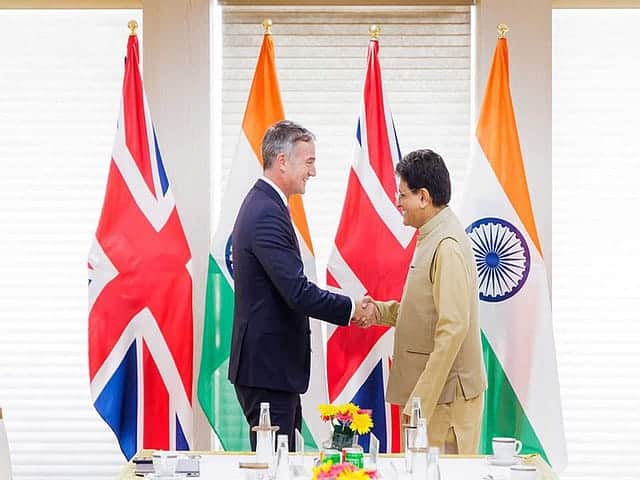
India and the United Kingdom have announced that their landmark Comprehensive Economic and Trade Agreement (CETA) will officially come into force on July 15, 2026, marking a major step forward in bilateral economic relations.
The announcement was jointly confirmed by Prime Minister Narendra Modi and UK Prime Minister Keir Starmer, with British officials describing it as the fastest implementation of a trade agreement after signing in modern UK history.
Historic Milestone for India-UK Relations
Calling the agreement a historic achievement, Prime Minister Narendra Modi said the deal would significantly strengthen trade and investment ties while creating new opportunities for businesses, workers, farmers, startups and innovators.
India’s Commerce Ministry described the development as a major advancement in India’s global economic engagement and an important step toward deeper cooperation with one of its key strategic partners.
The agreement was originally signed on July 24, 2025, but its implementation was delayed due to regulatory approvals and subsequent negotiations over steel trade measures.
What the India-UK Trade Deal Means
The Free Trade Agreement is expected to deliver substantial economic benefits to both countries.
According to official projections:
- Bilateral trade could increase by £25.5 billion annually in the long term.
- The UK economy could gain approximately £4.8 billion each year.
- India’s economy could grow by around £5.1 billion annually.
- Ninety-nine percent of UK tariffs will be liberalised.
- Ninety percent of Indian tariffs will be reduced or eliminated.
Officials believe the agreement will create a more efficient trading environment while improving market access for businesses on both sides.
Steel Trade Dispute Resolved
One of the final hurdles before implementation involved Britain’s planned steel safeguard measures.
India had raised concerns that the proposed restrictions could negatively impact its steel exports and undermine the spirit of the agreement.
Following negotiations, both sides reached a compromise that protects a significant portion of Indian steel exports while maintaining market stability.
The resolution paved the way for the agreement’s implementation and reinforced confidence in the broader trade partnership.
Major Tariff Reductions Across Sectors
Consumers and businesses are expected to benefit from immediate tariff reductions once the agreement takes effect.
Key changes include:
Scotch Whisky Becomes Cheaper
Import duties on Scotch whisky will be reduced significantly, falling from 150 percent to 40 percent.
The move is expected to make premium British spirits more affordable for Indian consumers.
Automotive Sector Gets a Boost
Tariffs on selected automobile imports will drop from 100 percent to 10 percent under a quota-based system, improving access for manufacturers and buyers.
Cosmetics and Consumer Goods
Several cosmetic products and consumer goods currently facing tariffs of up to 22 percent will see duties removed either immediately or gradually.
Better Access for Indian Exports
The UK will lower tariffs on a range of Indian products, including:
- Clothing and apparel
- Footwear
- Selected food products
- Consumer goods
These changes are expected to improve the competitiveness of Indian exports in the British market.
Social Security Agreement Also Begins
Alongside the trade pact, the India-UK Double Contribution Convention (DCC) will also come into force on July 15.
The agreement allows Indian professionals working in the UK and British nationals working in India to continue contributing to their home country’s social security system for up to 60 months without facing dual contributions.
The arrangement is expected to reduce costs for highly skilled professionals and international employers operating in both countries.
Growing Momentum in India’s Trade Diplomacy
The implementation of the India-UK trade agreement comes at a time when India is actively expanding its global economic partnerships.
Recent discussions with European Union leaders have accelerated negotiations on a comprehensive India-EU trade agreement, while talks with Canada are also progressing.
These developments reflect India’s broader strategy of strengthening trade partnerships, attracting investment and integrating more deeply into global supply chains.
A New Chapter in Bilateral Cooperation
The India-UK Free Trade Agreement represents one of the most comprehensive economic partnerships signed by either country in recent years.
By reducing trade barriers, expanding market access and encouraging investment, the agreement is expected to unlock new opportunities for businesses, consumers and professionals in both nations.
As the deal takes effect on July 15, policymakers and industry leaders will closely watch its impact on trade flows, economic growth and future cooperation between India and the United Kingdom.