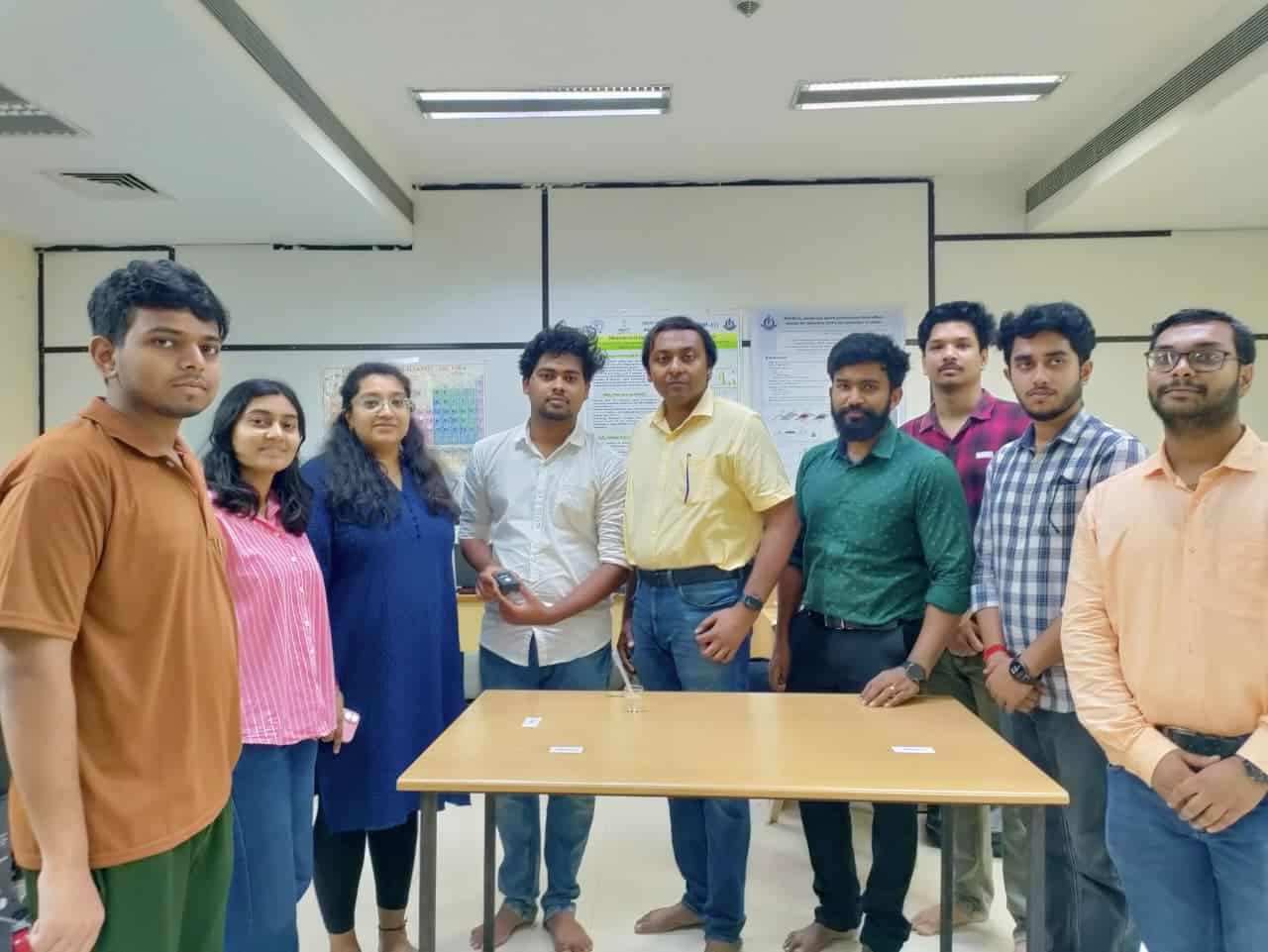
Researchers at IIT Bhubaneswar have unveiled a breakthrough in arsenic detection technology with the launch of a portable device named ArsenSafe.
Led by Dr Sayan Dey and his team from the Sensors and Spectroscopy Research Group, School of Electrical and Computer Sciences, the innovation addresses one of India’s pressing public health challenges—arsenic contamination in drinking water. The device, developed through Nano Semic Pvt. Ltd., a startup incubated at IIT Bhubaneswar, offers rapid, cost-effective, and on-site testing.
ArsenSafe uses a reduced graphene oxide (rGO)-based sensing mechanism that enables accurate detection of arsenic without laboratory infrastructure. Its compact design ensures easy operation with minimal training, making it suitable for government agencies, public health departments, environmental monitoring organisations, water treatment providers, NGOs, industries, and even individual households.
The prototype has achieved a high Technology Readiness Level and has already been tested on water samples from the IIT campus and nearby areas. Researchers emphasise that the device complies with World Health Organisation safety recommendations, ensuring reliable results for community health.
In addition, the team’s article in Environmental Science: Nano, published by the Royal Society of Chemistry, highlights the advanced microsensor technology. The Editorial Board selected the work for its special themed collection on “Nanosensing,” recognising its global significance.
By blending nanotechnology with machine learning, the researchers have created a solution that strengthens arsenic detection technology and contributes to safer drinking water. The recognition from the Royal Society of Chemistry underscores IIT Bhubaneswar’s growing role in nanotechnology-driven environmental monitoring and its commitment to solving critical societal challenges.