
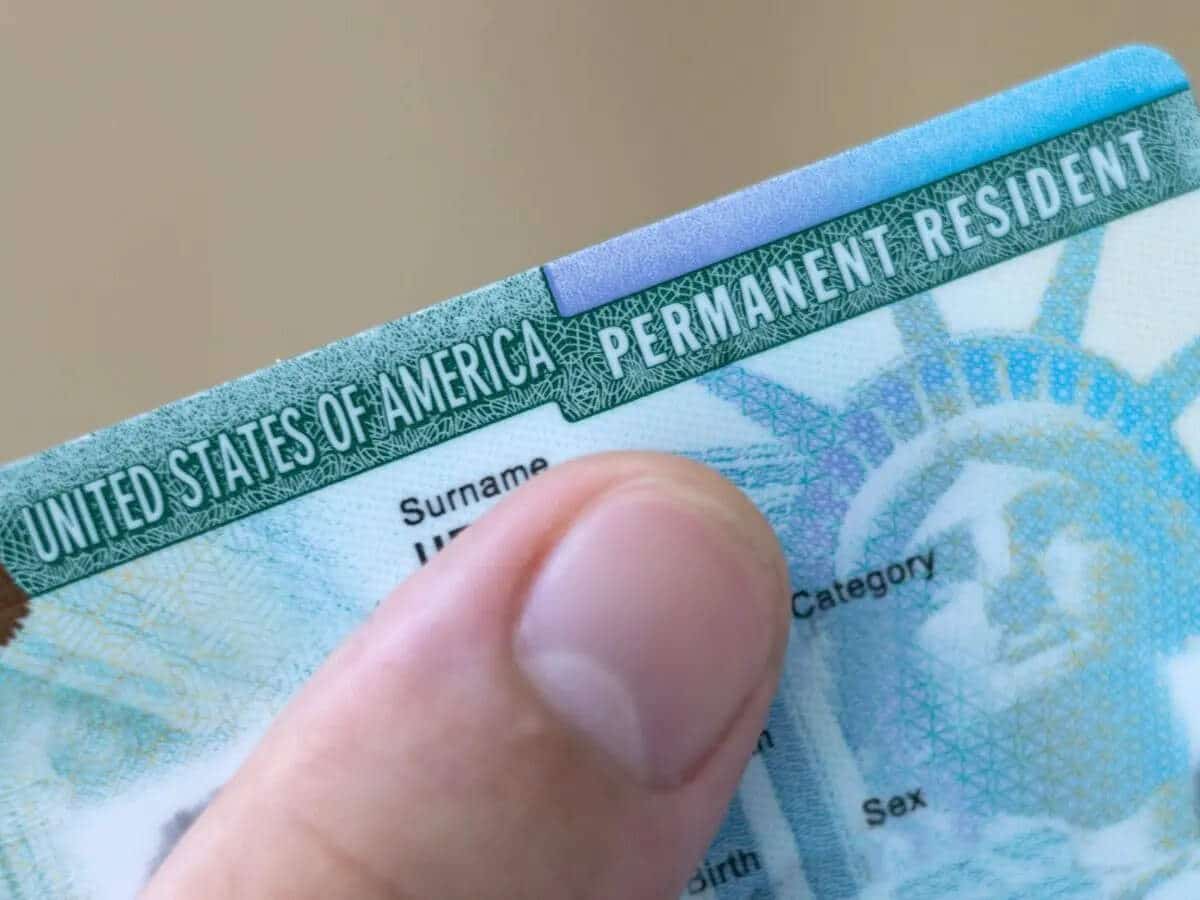
The United States has partially rolled back its controversial new green card policy just hours after announcing stricter rules that would have forced many foreign professionals to leave the country before applying for permanent residency.
The sudden policy shift by the US Citizenship and Immigration Services (USCIS) has brought temporary relief to thousands of Indian professionals working in America on H-1B and other temporary visas.
Earlier on Friday, USCIS introduced a policy memo that significantly changed the green card application process for foreign nationals staying in the United States on temporary visas. Under the new rule, applicants were expected to return to their home country and complete the green card process through a US embassy or consulate instead of applying from within the US.
The move triggered concern among immigrant communities, especially Indian professionals stuck in long employment-based green card backlogs under EB-2 and EB-3 categories. Many feared they would be forced to leave the US after years of working and living there legally.
However, hours later, USCIS appeared to soften its stance by introducing two key exemptions — “economic benefit” and “national interest.”
USCIS spokesperson Zach Kahler said the agency was “reasserting the intent of Congress” regarding adjustment of status applications but added that individuals whose applications provide an economic benefit or are considered in the national interest would likely continue on the existing path without being required to leave the US.
The statement has provided cautious optimism for international workers, although immigration experts noted that the terms “economic benefit” and “national interest” have not yet been clearly defined.
Previously, foreign nationals on temporary visas, including H-1B workers, could remain in the United States while applying for adjustment of status to become permanent residents.
The revised USCIS approach initially instructed immigration officers to favour “consular processing,” which would require applicants to travel back to their home countries and complete visa formalities through US embassies or consulates abroad.
The policy particularly affected Indian professionals because of the massive green card backlog in employment-based categories. Many applicants already face waiting periods of 10 to 15 years before receiving permanent residency.
Immigration analysts warned that forcing applicants to leave the US during the process could create uncertainty around jobs, family stability and visa renewals.
Indian nationals form one of the largest groups of H-1B visa holders in the United States. Thousands of skilled professionals working in technology, healthcare, engineering and finance sectors depend on adjustment-of-status provisions while waiting for green cards.
The proposed changes sparked anxiety across the Indian diaspora, with many worried about disruptions to employment and long-term residency plans.
While the latest exemptions may reduce the immediate impact, experts believe the lack of detailed clarification from USCIS continues to create uncertainty for applicants.
More guidance from US immigration authorities is expected in the coming weeks regarding how the exemptions will be applied and which categories of applicants may qualify for relief.