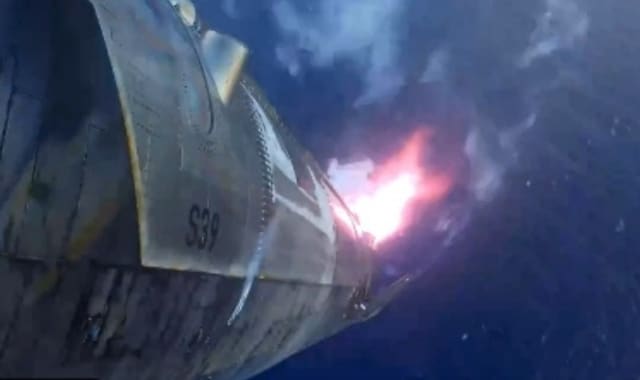
SpaceX launched its third-generation Starship V3 from Starbase, Texas, marking a pivotal step for NASA’s Artemis lunar program.
The 407-foot rocket carried 20 mock Starlink satellites and featured enhanced thrust, larger grid fins, upgraded fuel systems, and docking hardware designed for future Moon missions.
The launch came just two days after Elon Musk announced SpaceX’s IPO plans, underscoring the mission’s significance for both exploration and investor confidence.
During descent, the Super Heavy booster exploded over the Gulf of Mexico, highlighting ongoing challenges in developing a fully reusable launch system. The upper-stage Starship completed its mission, splashing down in the Indian Ocean as planned. SpaceX’s rapid test-and-iterate approach treats such failures as part of refining recovery systems.
NASA’s Artemis III mission, restructured as an Earth-orbit docking test in 2027, depends on Starship V3’s reliability. Artemis IV aims for a crewed lunar landing in 2028, the first since Apollo 17. Each Starship milestone directly influences these timelines, with orbital refuelling and docking capabilities still to be proven.
If SpaceX resolves booster recovery issues, Artemis III’s docking trial could proceed on schedule, paving the way for a 2028 lunar landing. Continued setbacks, however, may delay Artemis IV, potentially giving Blue Origin’s Blue Moon lander an edge. Commercially, a proven Starship could accelerate Starlink expansion and private Moon/Mars missions, strengthening SpaceX’s market position post-IPO.