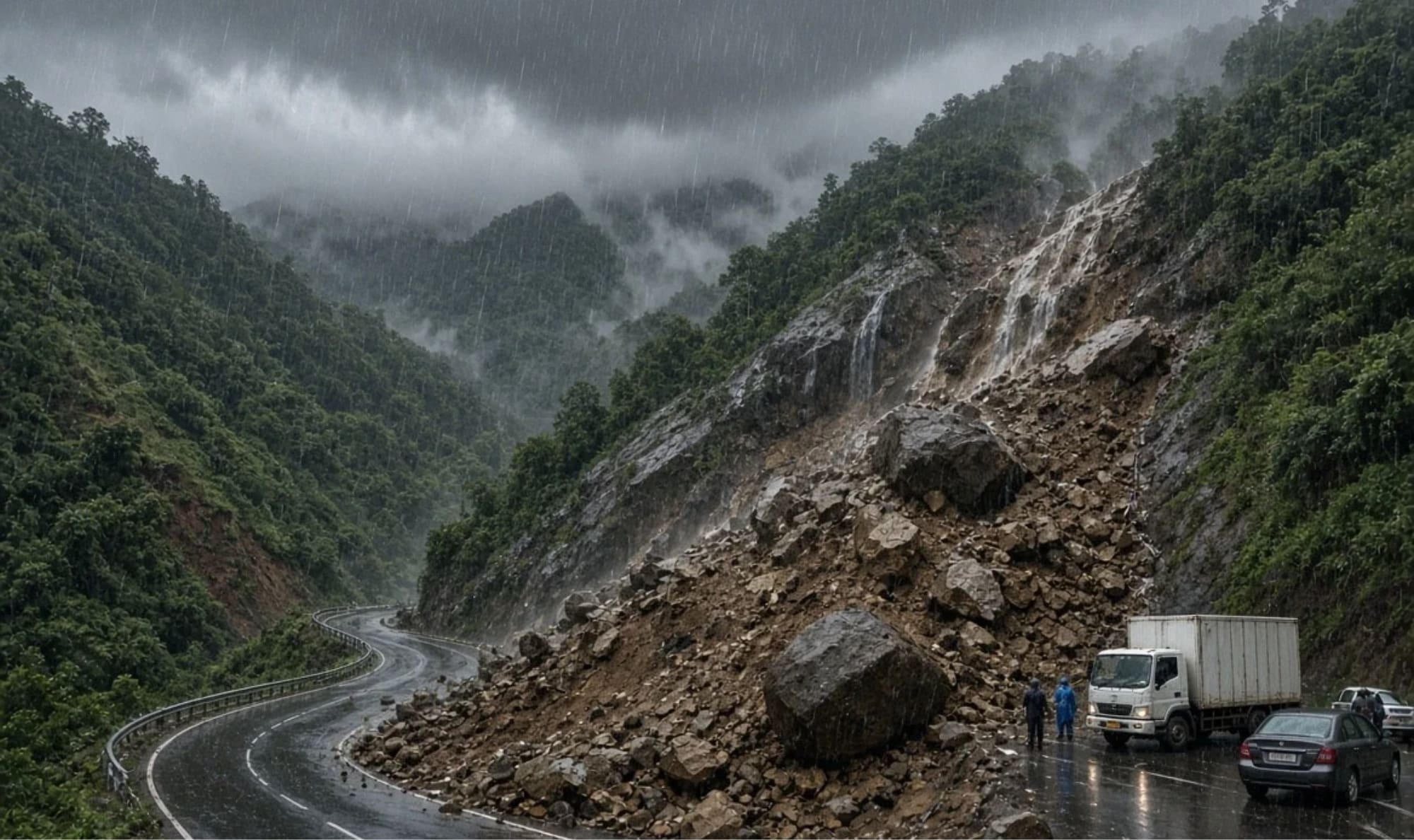
The remnant impact of Cyclone Arnab has unleashed relentless downpours across southern Odisha, triggering a series of massive landslides in multiple hilly regions.
Critical communication routes, including the prominent Kalinga Ghat, Taptapani Ghat, and Laxmipur block, have been severely disrupted after huge boulders and mud slid down onto the main roads, stranding travellers and vehicles.
In Kandhamal district, fresh landslides struck the vulnerable Kalinga Ghat (NH-157) near Andharikot, where massive rock fragments crashed onto the roadway. Notably, a previous landslide had occurred at the exact same spot on September 24, and incomplete repair works have complicated current rescue and clearance operations. Because Kalinga Ghat serves as a vital economic link between Ganjam and Kandhamal, commuters and freight carriers are now forced to take detours extending over 50 kilometres.
Similarly, heavy mountain runoffs and landslides have crippled transit along the Taptapani Ghat on the Ganjam-Gajapati border. Huge boulders blocking the path have entirely cut off connectivity between the two districts, leaving several tourists stranded. The gravity of the situation was underscored earlier when an ambulance carrying a critical patient was forced to turn back due to the blocked road, eventually routing the patient to Mohana Hospital.
In Koraput district, persistent overnight rains and gusty winds triggered a landslide along the road leading to Talamitinga village under the Goudaguda Panchayat in Laxmipur block, completely cutting off local access. Authorities warn that the threat of further landslides remains high across other hilly pockets of Koraput.
District administrations and state disaster response teams have mobilised machinery to clear the debris and restore connectivity. Although a specialised expert team from IIT Delhi had previously visited the Kalinga Ghat to recommend permanent geotechnical solutions, the recurring nature of the disaster has compounded challenges. With rain forecasts continuing, the administration has issued strict travel advisories urging citizens to avoid non-essential transit through vulnerable hill passes as monitoring teams remain on high alert.